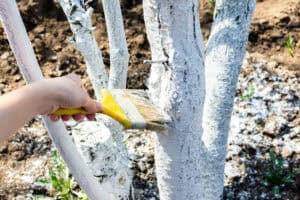
Sunscald and Bark Damage Trees DFW
Protect Your Trees from Sunscald and Bark Damage As May arrives in the Dallas-Fort Worth area, homeowners begin to enjoy …


Locally owned and family operated, proudly serving North Texas. Get your free, no-obligation quote. Or call (972) 521-1552.
Free QuoteTrees Hurt Too, Inc. is Tarrant County's plant health care specialist, led by ISA Certified Arborist Ken, license number Tx-3265-A. We specialize in the science of tree health, diagnosing and treating the diseases, pests, and soil conditions that cause trees to decline across the DFW metroplex. Our approach is built on professional credentials, regional expertise, and a commitment to honest, science-backed recommendations.
"Most people call us when they notice something wrong with a tree. What we have learned over more than 20 years in plant health care is that by the time the problem is visible to the homeowner, it has usually been developing for months underground or inside the vascular system. That is why we emphasize early evaluation. A tree that looks stressed today may have been in trouble since last summer." Ken, ISA Certified Arborist Tx-3265-A | Owner, Trees Hurt Too, Inc.
Our team includes 3 Texas Department of Agriculture Certified Applicators licensed in tree and lawn care. We are members of the International Society of Arboriculture and the Texas Tree Care Industry Association. When you hire Trees Hurt Too, you are hiring one of the most credentialed plant health care teams serving Tarrant County and the broader DFW area.
We offer free on-site evaluations with no obligation. Call (972) 521-1552 to schedule yours or check our service area to confirm we cover your neighborhood. If you have a sick or declining tree and need urgent attention, visit our tree doctor services page.
The majority of companies offering tree services in Tarrant County do not employ a single ISA Certified Arborist. They may have field experience, but experience without tested professional knowledge leads to misdiagnosis and treatments that can accelerate the very decline they are meant to stop. Our credentials represent a different standard entirely.
To verify our ISA credentials independently, visit the International Society of Arboriculture and search by certification number Tx-3265-A. Learn more about what ISA certification means in practice on our ISA Certified Arborist page.
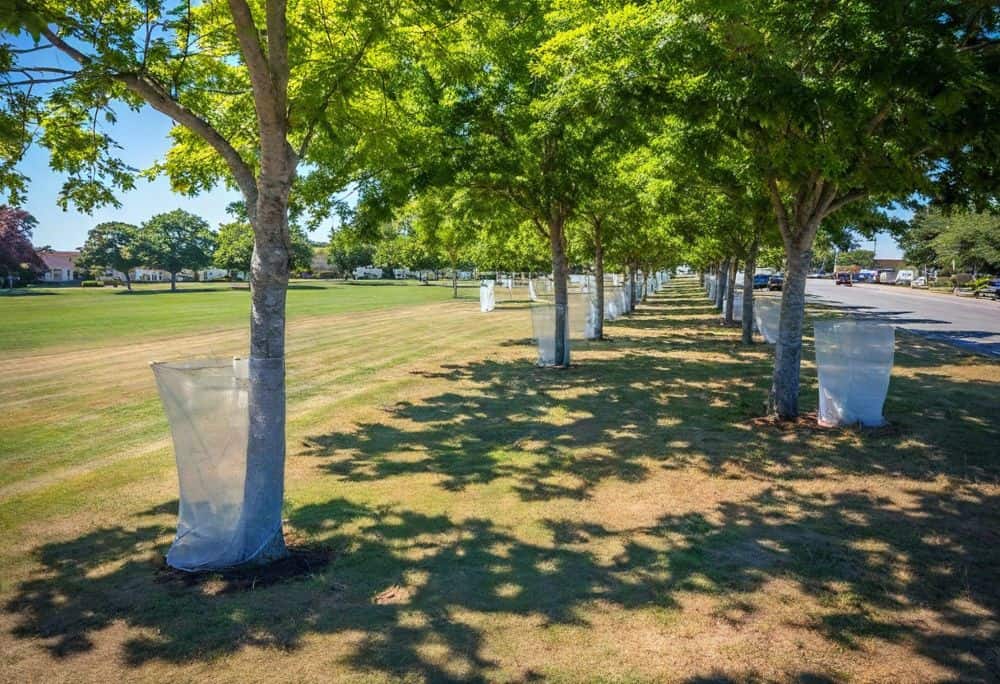
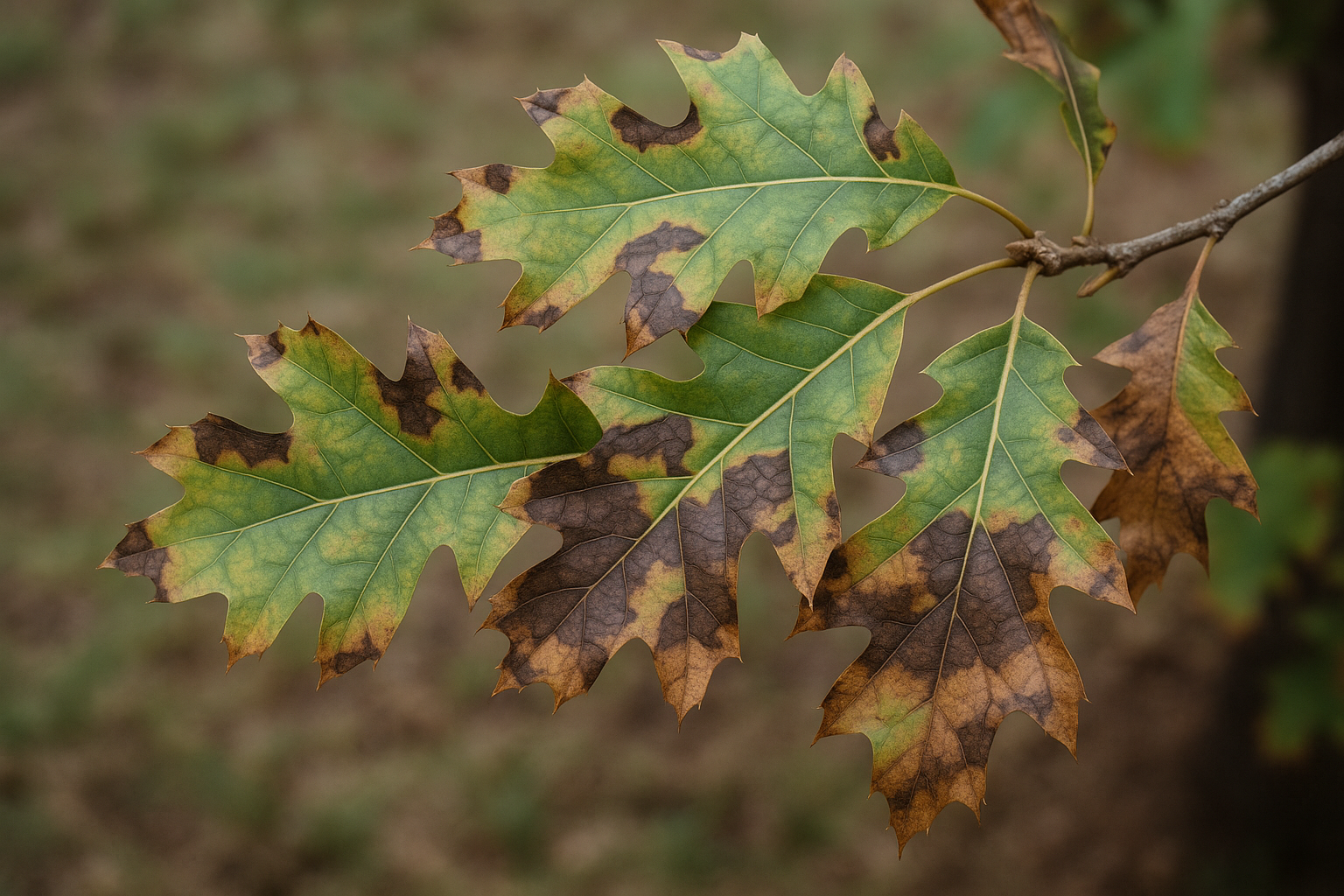
Professional tree health care begins with accurate diagnosis. Many of the most serious tree conditions in North Texas develop underground or inside the vascular system long before surface symptoms appear. By the time homeowners notice visible decline, the condition is often well advanced. Understanding what to look for is the first line of defense.
"In North Texas, we see more tree decline caused by soil stress than by any single disease. Our clay soil is the underlying factor in a majority of the cases we diagnose. It compacts, it holds water in the wrong places, and it starves root systems of oxygen. Fix the soil environment and you dramatically improve the tree's ability to fight everything else on its own." Ken, ISA Certified Arborist Tx-3265-A | Owner, Trees Hurt Too, Inc.
Our ISA Certified Arborist classifies tree health into four categories to help homeowners understand what they are looking at and what options are available:
For a detailed guide to identifying specific tree diseases visit our North Texas Tree Disease Identification page.
Oakley says...
No charge. No obligation. An ISA Certified Arborist visits your property and gives you honest answers before recommending anything.
Every tree health care program at Trees Hurt Too begins with a free on-site evaluation by a Licensed Plant Health Care Professional. We inspect your trees, assess soil conditions, identify existing disease or pest activity, and build a customized treatment plan before recommending a single product or service. Here is what our arborist services include:
Accurate diagnosis is the foundation of effective tree health care. Our ISA Certified Arborist identifies fungal diseases, bacterial infections, pest damage, nutrient deficiencies, and environmental stress factors using professional diagnostic methods. Common conditions we diagnose and treat in Tarrant County include oak wilt, hypoxylon canker, root rot, leaf spot, anthracnose, and fire blight. Learn more at our North Texas tree disease identification page.
Oak wilt is the most destructive tree disease in Texas. Our certified arborist provides preventive propiconazole fungicide injections for high-value oaks, early-stage treatment for trees showing initial symptoms, and root barrier installation to stop underground spread through live oak root grafts. For full detail visit our Oak Wilt Treatment page.
Our microinjection technology delivers nutrients, fungicides, or insecticides directly into a tree's vascular system, bypassing surface applications and ensuring treatment reaches the source of the problem. Protection lasts up to two years and is the most effective delivery method available for vascular diseases, borer control, and micronutrient deficiencies. Learn more at our tree injection services page.
Our deep root feeding program delivers carbon-based nutrients and beneficial microbes directly into the root zone under pressure, bypassing Tarrant County's compacted clay surface and reaching feeder roots where absorption is most effective. Root inoculation introduces mycorrhizal fungi that can expand a tree's effective root surface area by up to 700 times. Learn more at our deep root feeding page.
Fungal diseases require treatment calibrated to the specific pathogen and seasonal conditions. Our certified arborist selects product chemistry and application timing based on the diagnosed condition and the tree species involved. For a full breakdown of the fungal diseases we treat visit our tree fungus treatment page.
Destructive insects including borers, aphids, scale, spider mites, and bagworms cause damage that is often invisible until it becomes severe. Our pest control program uses systemic injections, soil drenches, and targeted foliar treatments depending on the pest species and infestation stage. Learn more at our shrub and tree pest page.
Tarrant County's heavy clay soils create chronic challenges for tree root systems. Our soil health program includes targeted aeration, pH correction, organic matter amendments, and Hydretain Root Zone Moisture Management to maintain consistent root zone hydration between watering cycles. Learn more at our moisture management page.
Applied during the winter dormant season, horticultural oil sprays eliminate overwintering pests and their eggs before spring populations establish. This centuries-proven technique breaks pest breeding cycles, protects new growth, and creates a barrier against home-invading insects.
Trees Hurt Too was built from the ground up around the science of plant health care. We are not a general pest control company that added tree services to the menu. Our entire operation is focused on the biological health of trees, shrubs, and turf, which means every evaluation, every diagnosis, and every treatment decision is made through the lens of plant science rather than pest management.
"When I started this company, I made a deliberate decision to focus on plant health care rather than trying to do everything. I have seen too many trees damaged or killed by well-intentioned treatments from companies that did not understand tree biology. The ISA certification, the Texas Department of Agriculture licenses, the membership in the Texas Tree Care Industry Association, those are not just credentials on a wall. They represent a commitment to doing this the right way, every time, based on science rather than guesswork." Ken, ISA Certified Arborist Tx-3265-A | Owner, Trees Hurt Too, Inc.
Our ISA Certified Arborist understands tree biology at the vascular level. The difference between treating oak wilt and hypoxylon canker. Which fungal conditions respond to propiconazole injection and which ones require soil treatment. When a tree can be saved and when honesty means recommending against further investment. This is the knowledge that separates a credentialed arborist from a general service provider.
We also understand the North Texas environment specifically. The clay soils, the heat stress cycles, the seasonal pest pressures, and the disease patterns that are unique to Tarrant County are built into every evaluation and treatment plan we provide. Generic approaches designed for other regions do not work here. Region-specific expertise does.
Oakley says...
Oakley has seen what happens when tree problems go undiagnosed. A free on-site evaluation from our ISA Certified Arborist costs nothing and could save your trees.
Every tree health care program at Trees Hurt Too follows a structured process designed to ensure we treat the right condition with the right solution at the right time.
For established trees, our Tree Health Care Program applies a root zone treatment each spring and fall to support root development, soil biology, and stress tolerance before decline sets in.
A Licensed Plant Health Care Professional visits your property at your convenience for a thorough evaluation at no cost and no obligation. We assess every tree on your property for signs of disease, pest activity, root zone stress, and environmental factors contributing to decline. You receive a clear explanation of what we find before any treatment is recommended.
Our ISA Certified Arborist identifies the specific pathogen, pest, or environmental stress factor responsible for what you are seeing. This step prevents misdiagnosis, which is one of the most common and costly mistakes in tree care. Treating a fungal disease with an insecticide, or fertilizing a tree suffering from root rot, wastes money while the actual problem advances.
Based on the diagnosis and your property's conditions, we build a treatment plan tailored to the tree species, condition, soil type, time of year, and your budget. We explain every recommended treatment, why it is being recommended, and what you can expect from the results. We do not recommend treatments you do not need.
All treatments are performed by our licensed applicators using professional-grade equipment and certified products. Every application is executed with precision and documented for your records.
Many of our treatments, including microinjection technology, provide protection for up to two years. We monitor tree health as part of our ongoing programs and return at no charge if you notice any concerning changes. Trees enrolled in our Lawn and Ornamental Annual program receive regular tree health inspections as part of every scheduled service visit.
Tarrant County presents tree health challenges that are unlike most other parts of the country. Understanding these regional factors is what allows our certified arborists to deliver results that generalist companies cannot match.
Tarrant County's dense clay soils hold water for extended periods, creating oxygen-poor root zones that lead to root rot and fungal colonization. During dry periods the same clay contracts and cracks, creating severe drought stress. Most trees in this region are fighting soil conditions that actively work against them without professional support.
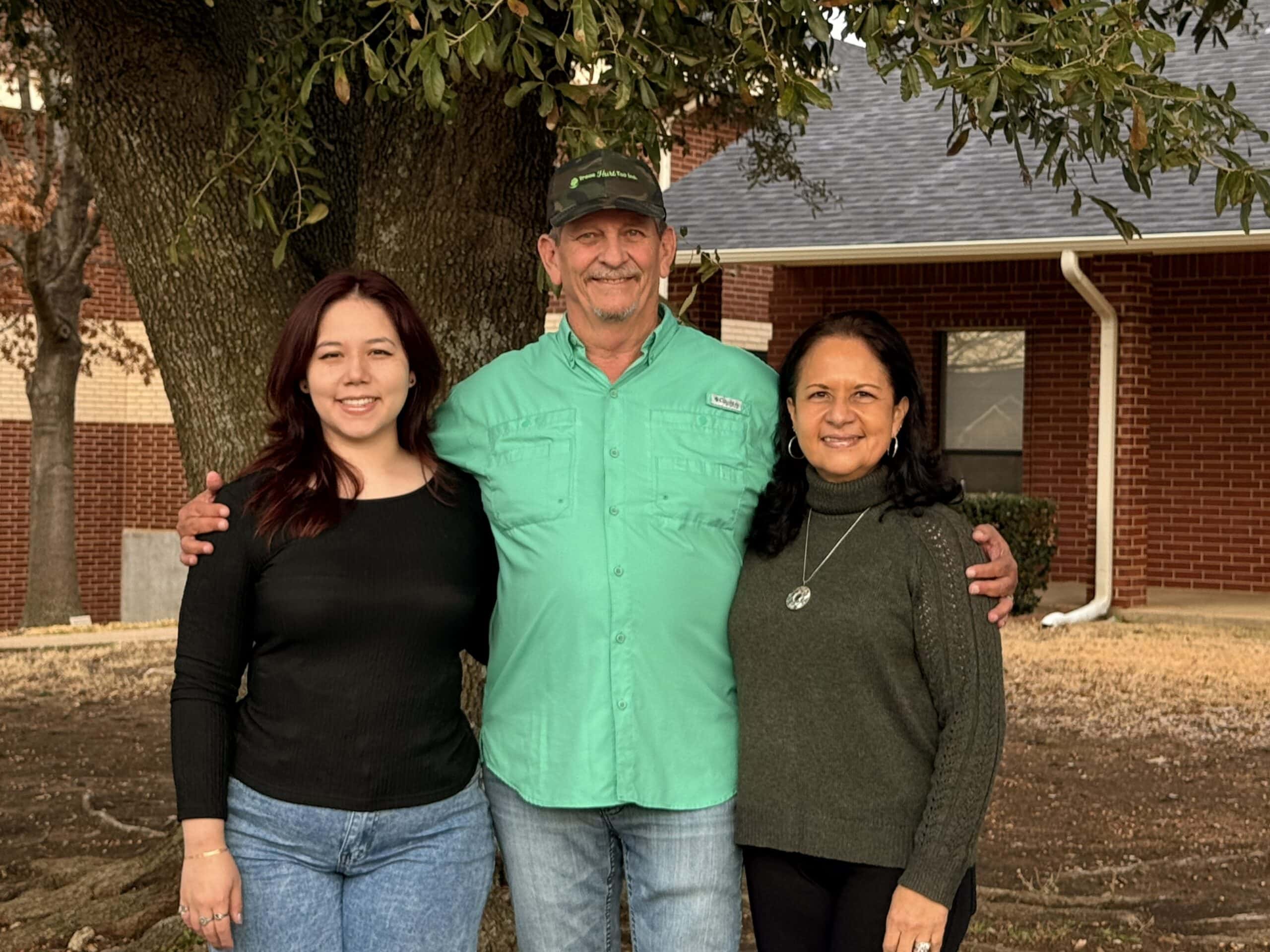
"I tell homeowners this all the time: you can have the healthiest looking tree above ground and a disaster happening below. Tarrant County clay does not behave like normal soil. It swings between waterlogged and bone dry faster than most trees can adapt to. That swing is where disease gets its opening. When we deep-feed a tree and address that root zone moisture, we are not just fertilizing, we are changing the entire environment the tree is living in." Ken, ISA Certified Arborist Tx-3265-A | Owner, Trees Hurt Too, Inc.
North Texas summers routinely exceed 100 degrees for extended periods. Heat stress weakens tree defenses and creates ideal conditions for opportunistic pathogens like hypoxylon canker to colonize already-compromised trees. In severe drought years we see hypoxylon canker cases increase significantly across our entire service area.
Texas has one of the highest concentrations of oak wilt infection in the United States. The Texas A&M Forest Service estimates oak wilt has killed millions of trees across Texas, with losses continuing to grow each year in the DFW region. Properties throughout Tarrant County are at ongoing risk, particularly during the high-risk spring season when beetle activity peaks.
Wood-boring insects destroy vascular tissue from inside the bark before surface damage is visible. North Texas winters increasingly feature false spring events where early leaf-out followed by hard freezes stresses root systems and creates wound points that disease and insects exploit throughout the growing season.
Trees Hurt Too provides ISA Certified Arborist and tree health care services for a full range of property types across Tarrant County and the DFW metroplex, including Tarrant County and Denton County communities.
From a single declining shade tree to a property full of mature oaks, our residential programs protect the trees that define your landscape, provide shade, and contribute directly to your home's value. Healthy mature trees increase property value by 10 to 15 percent and reduce home cooling costs by up to 30 percent during North Texas summers. Protecting them is one of the highest-return investments a homeowner can make.
We provide professional arborist services for commercial properties including office complexes, retail centers, HOA communities, apartment properties, schools, hospitals, and municipal properties. Our commercial tree care program delivers the same science-backed diagnostics and treatments as our residential service, scaled for larger and more complex landscapes.
Trees in shared landscapes require consistent professional monitoring to prevent disease spread from one property to another. Our HOA and property management programs provide scheduled inspections, proactive treatments, and documented service records that protect both the landscape and the management team.
Oakley says...
Oakley has seen what happens when tree problems go undiagnosed. A free on-site evaluation from our ISA Certified Arborist costs nothing and could save your trees.
The cost of professional tree health care is a fraction of the cost of losing a mature tree. A single mature oak removal in Tarrant County ranges from several hundred to several thousand dollars depending on size and location, not including the decades required to grow a replacement to the same size.
"The hardest conversations I have are with homeowners who waited. They watched a tree decline over two or three seasons thinking it would come back on its own, and by the time we get the call the tree is past the point where we can save it. I never want to tell someone their tree is gone when a single evaluation a year earlier could have changed the outcome. That is why we offer free consultations. There is no reason not to get a professional opinion early." Ken, ISA Certified Arborist Tx-3265-A | Owner, Trees Hurt Too, Inc.
We have helped homeowners across Arlington, Fort Worth, Mansfield, Keller, Southlake, and dozens of other Tarrant County communities save trees that other companies had given up on. If your trees are struggling, call us first before making any decisions. For additional information on professional tree health care standards, visit the Texas A&M AgriLife Extension.
An ISA Certified Arborist is a tree care professional who has passed a rigorous examination administered by the International Society of Arboriculture covering tree biology, disease diagnosis, soil science, and treatment protocols. Trees Hurt Too owner Ken holds ISA certification number Tx-3265-A. Our team also includes 3 Texas Department of Agriculture Certified Applicators for tree and lawn care, making us one of the most credentialed plant health care teams in Tarrant County.
Professional tree health care includes tree disease diagnosis, oak wilt prevention and treatment, microinjection technology for vascular diseases and pests, deep root feeding and root inoculation, fungal disease management, insect and pest control, soil health programs, root zone moisture management, and dormant oil spray programs. Every service is delivered by our licensed applicators following an accurate diagnosis from our certified arborist.
The most common tree diseases in Tarrant County include oak wilt, hypoxylon canker, root rot, leaf spot, anthracnose, fire blight, and powdery mildew. Clay soils, extreme summer heat, and drought cycles make North Texas trees especially vulnerable without professional monitoring and proactive care. Learn more at our North Texas tree disease identification page.
Our microinjection treatments typically provide protection for up to two years. The treatment circulates through the tree's vascular system internally, delivering far longer-lasting results than surface applications. We return at no charge if any concerns arise during the treatment period.
In many cases yes, particularly when disease or pest damage is caught early. Trees showing early signs of oak wilt, borer activity, fungal disease, or nutrient stress can often be successfully treated and restored. The critical factor is acting before the condition becomes irreversible. Call us at the first sign of any concern. If you believe your tree needs urgent attention visit our tree doctor services page.
Yes. All treatments are applied by our licensed professionals using carefully selected, eco-friendly products. Microinjection technology keeps treatment inside the tree's vascular system with no residue on grass, soil, or surrounding plants. Dormant oil sprays and fungicide applications are timed to protect pollinators and beneficial insects. Once treated areas have dried, your yard is safe for children and pets.
Yes. Trees Hurt Too provides completely free on-site tree health evaluations and no-obligation estimates throughout Tarrant County. A Licensed Plant Health Care Professional will assess your property, identify any issues, and explain your options clearly before recommending any treatment plan. Call (972) 521-1552 or request your evaluation online.
A general tree service focuses on mechanical work such as structural support. A certified arborist focuses on the biological health of the tree including disease diagnosis, pest identification, soil and root zone analysis, and science-based treatment. Trees Hurt Too is a plant health care company first, which means our focus is always on saving and strengthening your trees rather than simply servicing them.
Yes. We provide certified arborist services for homes, apartments, HOA communities, schools, hospitals, retail centers, and municipal properties. Learn more about our commercial tree care and arborist services.
Call us at (972) 521-1552 or request a free consultation online. A Licensed Plant Health Care Professional will visit your property, evaluate your trees, and build a customized plan with no pressure and no obligation. See our full service area to confirm we cover your neighborhood.
Your Tree Cannot Wait
Early diagnosis is the difference between saving and losing a tree. Call our ISA Certified Arborist directly for same-week evaluations throughout the DFW area.
(972) 521-1552Free on-site evaluation • No obligation • Honest answers
Trees Hurt Too, Inc. provides ISA Certified Arborist and professional tree health care services throughout Tarrant County and surrounding North Texas communities. View our full service area or call (972) 521-1552 if you do not see your city listed below.
Do not see your city? Call us at (972) 521-1552. We serve additional communities throughout the DFW metroplex and are always expanding our service area.
Stay informed about lawn care, tree care and pest related issues in your area!
Protect Your Trees from Sunscald and Bark Damage As May arrives in the Dallas-Fort Worth area, homeowners begin to enjoy …
Why Trees Drop Leaves in May in the Dallas-Fort Worth Area If you’ve noticed leaves scattered across your lawn in …
Identify and control bagworms before they damage your North Texas trees and shrubs this season.