Sunscald and Bark Damage Trees DFW
Protect Your Trees from Sunscald and Bark Damage As May arrives in the Dallas-Fort Worth area, homeowners begin to enjoy …

(Various species)

Locally owned and family operated, proudly serving North Texas. Get your free, no-obligation quote. Or call (972) 521-1552.
Free QuoteWeeds are more than just an eyesore in your lawn; they're a serious threat to long-term turf health. In Texas, especially here in North Texas, invasive weeds compete aggressively with turfgrass for sunlight, water, and nutrients. If left untreated, they weaken your lawn, create thin or bare patches that invite pests, and quickly reduce your property's curb appeal.
That's why proactive weed management is essential. Knowing when to treat for weeds is the key to success, as different species emerge at different times of year. For example, crabgrass germinates in early spring, while many broadleaf weeds thrive in fall and winter. Without a seasonal strategy, these invaders can take over even the healthiest turf.
At Trees Hurt Too Inc., we build customized lawn care programs that include fertilization, weed control, and soil health management. Our specialists know the science behind local weeds and apply targeted treatments that get results. One of the biggest advantages we offer is the use of pre-emergent benefits,barrier treatments designed to stop weeds before they ever sprout. By preventing germination, pre-emergents dramatically reduce weed populations and protect your grass from unnecessary stress.
Our programs are tailored for every type of property, including residential yards, commercial landscapes, and HOA-managed green spaces. Whether you're dealing with broadleaf weeds, grassy invaders, or stubborn sedges, we create a long-term plan that restores both the health and beauty of your lawn.
With the right timing, effective products, and ongoing care, you can finally enjoy a lush, weed-free landscape that thrives season after season.
Effective weed control begins with accurate identification. Each weed species in Texas has its own growth cycle, preferred habitat, and level of herbicide resistance. Some thrive in compacted soil, others in shady areas or nutrient-poor ground. Misidentifying a weed not only wastes time and money but can also cause ongoing lawn damage.
For example:
Our trained technicians rely on regional knowledge, seasonal timing, and integrated pest management (IPM) principles to ensure precise, effective results for every property.
Accurate identification also protects your desirable turfgrass from accidental harm. Some herbicides are non-selective, meaning they can kill grass along with weeds if applied incorrectly. Others may leave behind residue that affects soil health or future plant growth.
At Trees Hurt Too Inc., we take a targeted approach, using the least amount of product necessary to achieve lasting control. We choose herbicides, application rates, and timing based on your specific lawn conditions, ensuring safe and effective results.
We provide professional weed control services across Texas, including:
Our process looks beyond the surface. We not only address the weeds you see, but we also evaluate underlying soil conditions; compaction, pH imbalances, nutrient deficiencies, that may be encouraging weed growth. This allows us to deliver long-term solutions, not just temporary fixes.
For a more in-depth look at weed prevention, see our page on Pre-Emergent Weed Control in Arlington.
Texas lawns face a unique mix of invasive and nuisance weeds. Our list below outlines some of the most common types of weeds we encounter in residential and commercial properties, along with how to spot and treat them.
Overview
Dallisgrass is one of the most persistent and difficult-to-control grassy weeds in Texas lawns, particularly in North Texas. It spreads rapidly through both seeds and underground rhizomes, allowing it to return year after year if not properly managed. Once established, its coarse texture and tall seed stalks stand out sharply against desirable turf, reducing the uniform look of your lawn.
Type: Perennial grassy weed
Appearance: Coarse, upright clumps with wide, flat blades. Seed heads typically have 3–5 finger-like branches, each dotted with black or purple specks (fungal spores).
Preferred Conditions: Thrives in compacted soils, low-maintenance turf, and areas with poor drainage. Common along roadside edges, open fields, and neglected lawns.
Region: Found statewide but especially invasive in North Texas cities like Dallas, Fort Worth, McKinney, and Plano.
Growth & Seasonal Pattern
Why It's a Problem
Control Tips
For long-term prevention, integrate Dallisgrass control with a full lawn care package such as our Commercial Weed Control & Fertilization Services, which includes pre-emergent and post-emergent treatments, soil health improvement, and turf-thickening practices.
Overview
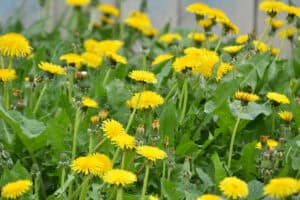
Crabgrass is one of the most common and aggressive annual grassy weeds found in Texas lawns. It thrives in bare or thin spots where sunlight can easily reach the soil surface. Because it grows rapidly during warm weather, crabgrass can quickly overtake a lawn, robbing desirable turfgrass of nutrients, water, and space. Without timely control, it produces thousands of seeds that will germinate the following season.
Type: Annual grassy weed
Appearance: Low-growing, sprawling grass with coarse, light-green blades that can grow up to 6 inches long. Produces finger-like seed heads that radiate from a single stalk.
Preferred Conditions: Bare or thin turf, compacted soil, full sun exposure, and areas with inconsistent watering or mowing.
Region: Found throughout Texas, but most problematic in North Texas (Dallas, Fort Worth, Arlington, McKinney) and Central Texas (Waco, Austin, Temple).
Growth & Seasonal Pattern
Why It's a Problem
Control Tips
Our Pre-Emergent Weed Control Program targets crabgrass before it can sprout, providing season-long protection and keeping your lawn looking healthy and uniform.
Overview
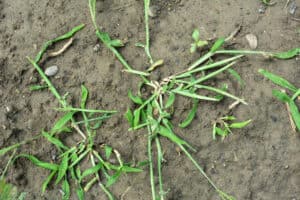
Nutsedge, sometimes called "nutgrass," is a persistent perennial sedge that often masquerades as regular turfgrass. Unlike most lawn weeds, nutsedge grows faster than turf, creating uneven patches that stand out just days after mowing. It spreads through underground tubers called nutlets, which can survive in the soil for several years, making this weed extremely difficult to eradicate once established.
Type: Perennial sedge
Appearance: Grass-like plant with a distinctive triangular stem (roll the stem between your fingers to feel the edges). Leaves are glossy, light to bright green, and arranged in groups of three. Produces either yellow or purple seed heads depending on the species.
Preferred Conditions: Thrives in wet, poorly drained, or over-irrigated areas. Common along lawn edges, near downspouts, in low-lying areas, and in compacted soils.
Region: Found throughout Texas, especially in areas with poor drainage or heavy summer rainfall.
Growth & Seasonal Pattern
Why It's a Problem
Control Tips
Our Weed Control Services include targeted nutsedge treatments that stop it at the root while improving overall lawn health to reduce reinfestation risk.
Overview
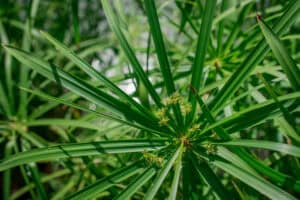
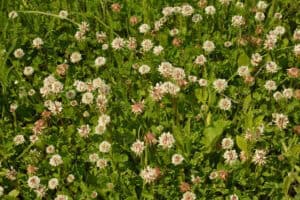
Clover is a broadleaf perennial that some homeowners appreciate for its green cover and pollinator-friendly blooms, but many view it as a sign of an unhealthy or under-fertilized lawn. It spreads rapidly, especially in low-nitrogen soils, and can crowd out desirable turfgrass, creating uneven patches in your lawn's appearance.
Type: Broadleaf perennial
Appearance: Distinctive three rounded leaflets per stem, often with a faint white crescent mark. Produces white, pink, or red flowers depending on the species, which attract bees and other pollinators.
Preferred Conditions: Thrives in nutrient-poor soils, areas with minimal mowing, and lawns that are not regularly fertilized. Can also persist in compacted soils and shaded locations.
Region: Found statewide across Texas, from North Texas suburbs like Fort Worth and Arlington to Central and South Texas regions.
Growth & Seasonal Pattern
Why It's a Problem
Control Tips
Our Lawn Care Package includes fertilization and targeted weed control to eliminate clover while restoring soil health, ensuring your lawn stays lush, green, and weed-free year-round.
Overview
Spurge is one of the most heat-tolerant annual broadleaf weeds in Texas, making it a persistent problem during the long, hot summers common in North and Central Texas. It thrives in compacted or disturbed soils and often appears in areas with little turf competition. Once established, spurge forms dense, low-growing mats that can quickly spread across open areas, displacing desirable grass.
Type: Annual broadleaf weed
Appearance: Prostrate, mat-forming plant with reddish stems, small oval-shaped green leaves (often with a reddish spot in the center), and a milky, sticky sap that oozes when the plant is broken. Produces small, inconspicuous flowers that can lead to rapid seed production.
Preferred Conditions: Hot, dry sites with thin turf, bare soil, or cracks in hard surfaces. Common in sidewalk seams, driveway edges, mulch beds, and open lawn areas with minimal shade.
Region: Widespread across Texas, with heavy presence in North Texas (Dallas, Fort Worth, Arlington) and Central Texas (Waco, Austin, Temple).
Growth & Seasonal Pattern
Why It's a Problem
Control Tips
Our Pre-Emergent Weed Control Program targets heat-loving weeds like spurge before they sprout, while our Full-Service Lawn & Ornamental Package provides ongoing protection and soil health improvements for year-round weed resistance.
Overview
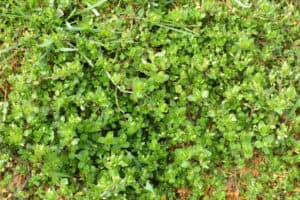
Chickweed is a cool-season annual that thrives in shaded, moist, and nutrient-rich areas of Texas lawns. In North Texas, it often appears in fall when soil temperatures begin to drop, quickly forming thick mats that can crowd out desirable turf. Left untreated, chickweed can persist through winter and into early spring, producing seeds that ensure a return the following year.
Type: Cool-season annual broadleaf weed
Appearance: Low-growing, sprawling plant with small teardrop-shaped leaves arranged opposite each other on the stem. Produces tiny white star-shaped flowers that are visible in late winter to early spring.
Preferred Conditions: Shaded lawn areas, overwatered spots, gardens, and areas with poor drainage.
Region: Common in shaded lawns and landscapes throughout North Texas, including Dallas, Fort Worth, Arlington, and surrounding areas.
Growth & Seasonal Pattern
Why It's a Problem
Control Tips
Our Weed Control Services combine pre-emergent and post-emergent strategies to prevent chickweed before it appears and to eliminate any existing growth without harming your lawn.
Overview
Henbit is a member of the mint family and one of the most common broadleaf winter annual weeds found in Texas lawns. It germinates in the fall, grows actively through the mild winter months, and rapidly takes over in early spring before warm-season turf has a chance to green up. Its aggressive growth, ability to spread by both seeds and creeping stems, and colorful flowers make it easy to identify but frustrating to control.
Type: Broadleaf winter annual weed
Appearance: Distinct square stems characteristic of the mint family, with rounded, scalloped leaves arranged in pairs along the stem. Produces small, tubular purple to pinkish flowers clustered at the top of the stems in spring.
Preferred Conditions: Thrives in cool, moist conditions and areas with thin turf, bare patches, or compacted soil. Often found in lawns, garden beds, fields, and along roadsides.
Region: Widespread throughout Texas: common in North Texas (Dallas, Fort Worth, Arlington) and equally present in Central and South Texas.
Growth & Seasonal Pattern
Why It's a Problem
Control Tips
Our Pre-Emergent Weed Control Program is designed to prevent cool-season weeds like henbit before they can germinate, while our targeted post-emergent treatments stop existing infestations without harming your lawn.
Overview
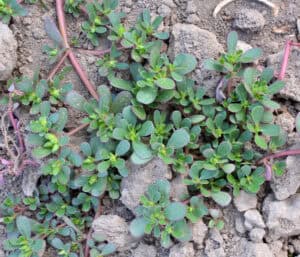
Purslane is a heat-loving succulent broadleaf annual weed that thrives in the hottest, driest parts of Texas. While it is technically edible and sometimes cultivated as a leafy vegetable, it is considered an invasive nuisance in manicured lawns, flower beds, and landscaped areas. Its ability to store water in its thick, fleshy leaves allows it to survive extreme drought and remain green when surrounding turf is stressed.
Type: Succulent broadleaf annual weed
Appearance: Low-growing, sprawling plant with reddish stems, smooth round to oval fleshy leaves, and small yellow flowers that open in bright sunlight.
Preferred Conditions: Purslane thrives in dry, compacted, or disturbed soils, particularly in areas with poor turf coverage. It is often seen in sunny garden beds, along sidewalks, in cracks of driveways, and in bare patches of turfgrass.
Region: Found statewide in Texas, but especially abundant in South Texas and Central Texas dry zones.
Growth & Seasonal Pattern
Why It's a Problem
Control Tips
Our Weed Control Services include targeted treatments for drought-tolerant weeds like purslane, along with soil improvement strategies that make your lawn less hospitable to invasive plants.
While many weed species can be found statewide, certain weeds thrive in specific Texas regions due to differences in temperature, rainfall, soil type, and turfgrass varieties. Understanding these regional variations allows for more targeted weed control strategies, improving effectiveness and protecting long-term soil health.
North Texas lawns are often planted in Bermuda or St. Augustine grass and face challenges from clay-heavy soils, inconsistent rainfall, and extreme temperature swings. This environment encourages a mix of both grassy and broadleaf weeds.
Central Texas soils are limestone-based and alkaline, with hotter average temperatures and variable irrigation needs. Weeds here often adapt to both drought and periodic overwatering.
With hot, arid conditions and sandy soils, South Texas weeds are often drought-tolerant, succulent, or spiny, making them especially challenging for turf managers.
Beyond residential and commercial landscapes, pasturelands face their own set of invasive plants that threaten livestock health and reduce forage quality.
Targeting weeds based on regional conditions ensures treatments are more effective and sustainable. Whether it's adjusting application timing for North Texas pre-emergents, improving soil drainage in Central Texas, or combating drought-hardy weeds in South Texas, customizing your approach delivers better long-term results.
While DIY herbicides can work for small, isolated weed problems, large or recurring infestations often require professional intervention. Without expert guidance, it's easy to misidentify weeds, apply the wrong product, or miss the critical treatment window, all of which can lead to wasted time, money, and repeated outbreaks. Many homeowners also overlook underlying soil issues like compaction, pH imbalance, or nutrient deficiencies that allow weeds to thrive.
Our expert services go beyond simply spraying weeds, we address the root causes of infestations to ensure long-lasting results:
Our approach emphasizes sustainable weed control, which means fewer chemical applications over time, healthier grass, and improved resilience against weed resurgence.
Whether you're dealing with aggressive grassy invaders like crabgrass and Dallisgrass or persistent broadleaf weeds like clover, chickweed, or spurge, Trees Hurt Too Inc. offers professional weed identification and targeted treatment services across Texas.
We proudly serve:
Our trained technicians will:
Schedule Your Lawn Inspection Today
Don't let weeds take over your yard. Contact us today to schedule a comprehensive lawn inspection and take the first step toward a healthier, weed-free landscape.
Learn more about our Commercial Weed Control & Fertilization Services and how we can help protect your lawn year-round.
Weeds are unwanted in our yards for many reasons, including their ability to attract stinging insects, reduce our wanted plants' viability, and act as resting spots for unwanted insects like mosquitoes.
Weeds are also well known for ruining the aesthetics of lawns and taking away your lawn's ability to gain nutrients from the soil and the sun's light. While weeds may not be a problem out in nature, when they find a way to our yards, they take over and become difficult to control and eliminate!
In addition to ruining the look of your yard, another issue with weeds is that many people are allergic to them. Weeds can cause skin allergies and symptoms like runny noses and eyes.
You have a problem with weeds because they can take over whatever space they end up in. Weeds grow fast, much faster than grass, using up the nutrients available in the soil. Things like bare spots and unfertilized grass may make a lawn more attractive to weeds.
Some other reasons weeds quickly become a problem in our Texas yards include:
You can and will find weeds almost anywhere. There is a weed for every location and environmental condition. If your yard is sunny, shady, dry, or wet, there is a weed that will grow.
Maintaining your lawn and keeping it free of weeds is easiest done with a professional's help. At Trees Hurt Too, Inc., we want to help you keep your lawn lush, healthy, and free of unsightly weeds. Using natural and organic products, our licensed plant health care professionals will help you eliminate weeds and maintain a healthy yard full of lush green grass. To learn more about our lawn control services that will target weeds, reach out to us today and speak with one of our helpful experts!
Limit the chances of your yard becoming overrun with weeds with the following prevention tips:
Stay informed about lawn care, tree care and pest related issues in your area!
Protect Your Trees from Sunscald and Bark Damage As May arrives in the Dallas-Fort Worth area, homeowners begin to enjoy …
Why Trees Drop Leaves in May in the Dallas-Fort Worth Area If you’ve noticed leaves scattered across your lawn in …
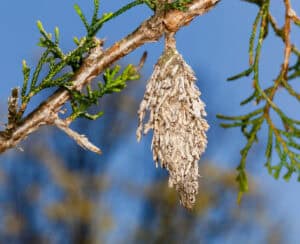
Identify and control bagworms before they damage your North Texas trees and shrubs this season.