

Spring is one of the most important times of year for managing tree health across North Texas. As trees transition out of their winter dormancy, they begin using stored energy reserves to start and support new growth. Buds expand, roots become more active, and nutrient demand increases rapidly. This seasonal shift creates a narrow window where proper fertilization can significantly increase tree performance for the entire year.
In many DFW area yards, trees are growing in compacted clay soil with low organic matter. These type of conditions restrict oxygen movement, slow water infiltration, and limit nutrient availability. Even when nutrients are present in the soil, they might not be accessible to the tree roots. This is why spring tree fertilization strategies play such a major role in maintaining healthy landscapes.
When applied correctly, fertilization supports root expansion, improves canopy density, and strengthens a tree’s ability to tolerate heat, drought, and environmental stress factors common across North Texas.
Why Spring Fertilization Matters for Tree Health
Trees rely heavily on stored carbohydrates during the winter months. As temperatures rise in early spring, these reserves are rapidly used to fuel new leaf development and root growth. Without sufficient nutrients available in the soil, trees struggle to maintain this growth cycle.
Spring fertilization helps bridge that gap by providing essential nutrients exactly when and where trees need them most.
- Supports early root development
- Encourages fuller canopy growth
- Improves resistance to environmental stress
- Enhances soil microbial activity
- Promotes consistent nutrient availability
In urban and suburban environments, soil conditions are usually far from perfect. Construction activity, foot traffic, and natural clay composition reduce the soil quality over time. This leads to nutrient deficiencies that can limit growth and increase susceptibility to external stress factors.
To understand how nutrients are effectively delivered into the root zone, visit our post on the benefits of deep root feeding for Texas trees.
Understanding North Texas Soil Conditions
The structure of soil is one of the most overlooked factors in tree health. Across North Texas, clay soils dominate the landscape, creating several challenges for root systems.
- Restricted airflow limits oxygen availability
- Compaction prevents root expansion
- Water movement is slow and inconsistent
- Nutrients become chemically locked in soil
Clay soil particles are extremely small and tightly packed. This makes it difficult for roots to penetrate deeply and access nutrients. It also limits the movement of water, which is essential for transporting nutrients to root systems.
Because of these conditions, traditional surface fertilization methods are often ineffective. Nutrients remain near the surface instead of reaching the deeper root zones where they are needed most.
Improving soil moisture balance is a critical part of solving this problem. Learn more about our soil moisture solutions for North Texas landscapes.
When to Fertilize Trees in North Texas
Timing is a crucial to tree fertilization. Applying nutrients at the wrong time can reduce effectiveness or even create additional stress.
The perfect fertilization window in North Texas typically falls between late February and early May. During this period, soil temperatures begin to rise, and root systems become active.
- Roots begin absorbing nutrients efficiently
- Buds transition into active leaf growth
- Energy demand increases rapidly
- Growth cycles accelerate
Applying fertilizer too early may result in limited uptake due to the cold soil temperatures. Applying too late can stimulate excessive growth during periods of heat stress.
Deep Root Feeding Schedule
Most trees benefit from a structured fertilization schedule.
Early Spring
- Supports new growth
- Replenishes nutrient reserves
- Strengthens root systems
Early Fall
- Encourages root expansion
- Supports energy storage
- Improves seasonal resilience
Why Deep Root Feeding Is More Effective
Tree roots responsible for nutrient absorption are typically located several inches below the soil surface. Surface applied fertilizers often fail to reach these roots, especially in when soil is compacted.
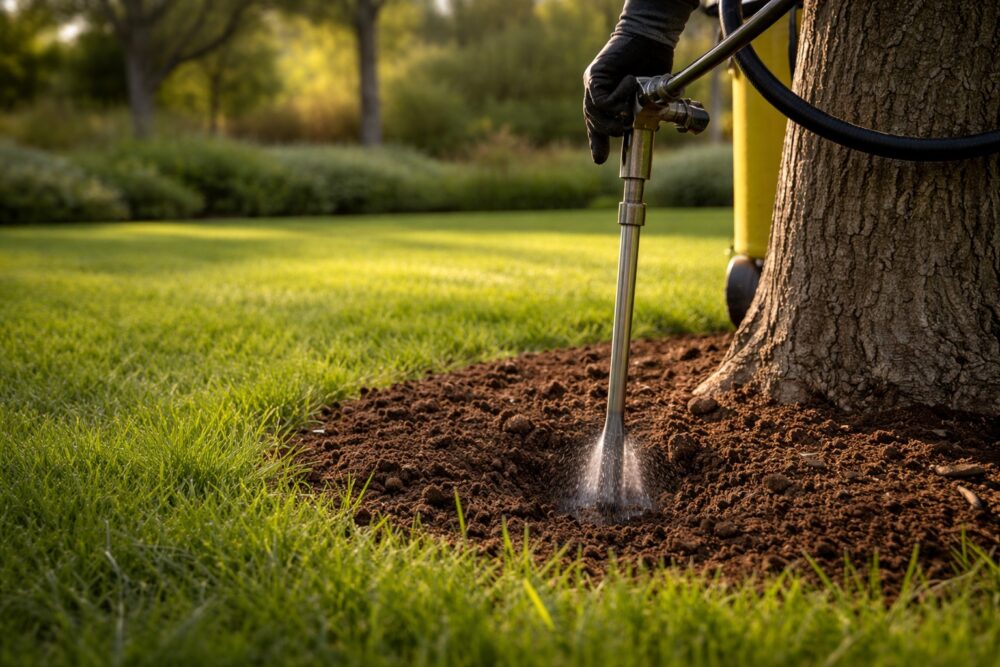
Deep root feeding delivers nutrients directly into the active root zone.
- Direct nutrient delivery to feeder roots
- Reduced nutrient runoff
- Improved soil aeration
- Increased microbial activity
- Better nutrient absorption
This method also introduces organic material into the soil, which helps support beneficial microorganisms for tree and shrub care. These organisms play a critical role in breaking down nutrients into forms that roots can absorb.
Signs Your Trees May Need Fertilization
Not all trees need to be fertilized every year, but many trees will show signs when nutrient levels are insufficient.
- Pale or yellowing leaves
- Reduced canopy density
- Slower than normal growth
- Premature leaf drop
- Smaller leaves compared to previous seasons
These symptoms often mean nutrient deficiencies, especially in urban and suburban soils.
Trees experiencing stress are also more vulnerable to insects and disease. Early detection is important.
Which Trees Benefit Most From Fertilization
Certain species commonly found in North Texas landscapes tend to respond especially well to fertilization.
- Live oak
- Red oak
- Cedar elm
- Bur oak
- Maple varieties
- Magnolia
- Pecan
Young trees benefit significantly because their root systems are still developing. Mature trees may also benefit when growing in compacted or nutrient poor soil.
Deep root feeding helps ensure nutrients reach these trees efficiently.
How Much Fertilizer Do Trees Need
Applying the correct amount of fertilizer is critical. Over application can lead to excessive leaf growth, which places additional stress on trees during hot weather.
Balanced fertilization programs typically include:
- Nitrogen for leaf development
- Phosphorus for root growth
- Potassium for stress tolerance
- Micronutrients for overall function
Professional assessments often consider tree size, soil conditions, and overall health when determining proper application rates.
Pairing fertilization with moisture management ensures nutrients move effectively through the soil.
The Role of Soil Biology in Tree Health
Healthy soil contains a complex ecosystem of microorganisms that support plant growth. These include beneficial bacteria and fungi that help break down organic material and release nutrients. This underground ecosystem is often referred to as the soil food web, and it plays a direct role in how well trees can access the resources they need.
In natural environments, this biological system remains balanced through continuous organic input such as fallen leaves and decomposing plant material. In many managed landscapes, however, soil conditions become depleted over time. Compacted soil, limited organic matter, and inconsistent moisture levels reduce microbial activity and limit nutrient cycling.
Deep root feeding can stimulate this biological activity by introducing organic compounds into the soil. These compounds help reestablish microbial populations and encourage beneficial interactions between roots and soil organisms. As microbial activity increases, nutrients that were previously unavailable become accessible to tree roots.
Benefits of improved soil biology include:
- Increased nutrient availability
- Improved root growth
- Better soil structure
- Enhanced resilience to stress
In addition to these benefits, active soil biology also improves water retention and drainage balance. Microorganisms help bind soil particles into stable aggregates, allowing oxygen, water, and nutrients to move better through the root zone. This creates a more stable environment for long-term tree health.
When soil biology is active, trees are better able to absorb nutrients and maintain consistent growth. Over time, this leads to stronger root systems, improved canopy density, and greater tolerance to environmental stress conditions commonly found in Texas landscapes.
Supporting Tree Health Through the Growing Season
Fertilization is only one part of maintaining healthy trees. A complete care strategy includes monitoring environmental conditions and responding early to those changes. Trees are constantly interacting with their surroundings, and even small shifts in soil moisture, temperature, or nutrient availability can influence its overall health.
During the growing season, trees need consistent support to maintain steady development. Rapid spring growth, followed by increasing summer stress, can place significant demands on root systems and energy reserves. Without proper monitoring, early signs of decline may go unnoticed until more visible symptoms appear.
Maintaining awareness of changing conditions allows homeowners and property managers to make timely changes that support long-term tree vitality. Proactive care helps reduce stress before it impacts tree growth, canopy density, or structural integrity.
- Monitor soil moisture levels
- Improve soil structure over time
- Watch for early signs of stress
- Address pest activity early with pest control
In addition to these steps, seasonal monitoring plays a vital role in identifying patterns. Changes in leaf color, delayed growth, or uneven canopy development can indicate underlying issues within the root zone or surrounding environment. Addressing these concerns early helps prevent more complex problems later in the season.
Trees under stress are often targeted first by insects and disease. When internal defenses are weakened, pests and pathogens are more likely to establish and spread. Understanding how these problems develop is essential for prevention and helps maintain strong, resilient trees throughout the growing season.
Environmental Benefits of Proper Fertilization
Healthy trees provide significant benefits beyond just its appearance. Proper fertilization helps trees deliver important environmental advantages.
- Increased shade coverage
- Reduced urban heat buildup
- Improved air quality
- Better stormwater management
- Support for local ecosystems
Stronger root systems also help trees remain stable during storms and extreme weather conditions.
Long Term Benefits of Consistent Fertilization
Tree health improves over time when consistent care practices are applied. Fertilization plays a major role in long term landscape performance.
- Stronger root systems
- Denser canopy growth
- Increased resistance to environmental stress
- Longer lifespan for landscape trees
When combined with proper soil management, moisture control, and tree injections, fertilization becomes a major part of sustainable tree care in North Texas.
Protecting Tree Health Across North Texas
Tree health isn't just about seasonal growth. It's about building a strong foundation that allows your trees to withstand the extreme conditions common across North Texas landscapes. From compacted clay soil to heat stress and unpredictable rainfall, trees face constant challenges that can weaken their structure over time.
Spring fertilization is one of the most effective ways to support that foundation. When nutrients are delivered properly into the root zone, trees are better equipped to develop strong root systems, maintain dense canopies, and resist environmental stress throughout the year.
However, every property is different. Soil composition, tree species, and surrounding conditions all influence how nutrients move through the landscape. A one-size fits all approach often leads to inconsistent results.
At Trees Hurt Too, the focus is on education, inspection, and long term tree health strategies tailored to North Texas conditions. By evaluating soil structure, moisture patterns, and overall tree vitality, it becomes possible to create a targeted fertilization approach that supports lasting results.
If your trees are showing signs of stress, slow growth, or declining canopy density, this is the time to take action. Early season care can make a measurable difference in how trees perform through the rest of the year.
Schedule a professional tree health evaluation with Trees Hurt Too to better understand what your trees need below the surface. A proactive approach today can help preserve shade, improve landscape performance, and support stronger, more resilient trees for years to come.