

Every spring across the Dallas-Fort Worth metroplex, homeowners and property managers start noticing unusual symptoms and signs on trees and shrubs. Leaves may develop dark spotting, new growth may distort, and entire tree canopy sections can appear stressed or uneven. These signs often appear suddenly, leaving many wondering what caused the change.
In reality, most spring fungus outbreaks follow a predictable scientific principle known as the fungal triangle. This concept explains why fungal diseases appear rapidly during certain environmental conditions and remain absent during others.
The fungal triangle describes three conditions that must exist at the same time for fungal disease to occur:
- A susceptible host plant
- The presence of fungal spores
- Favorable environmental conditions
When these three elements overlap during the humid spring season in North Texas, fungal diseases can spread rapidly through plants and entire landscapes.
Understanding this triangle allows homeowners and property managers to focus on prevention rather than dealing with the damage. Managing soil moisture, supporting tree health, and monitoring for early warning signs can dramatically reduce your fungal risk.
For more insight on common fungal diseases affecting trees in North Texas, visit our Texas tree fungus guide.
How to Prevent Spring Tree Fungus in Texas in 60 Seconds
Spring fungal outbreaks in the DFW area occur when susceptible trees, fungal spores, and humid environmental conditions develop at the same time. Preventing fungal diseases focuses on interrupting one or more sides of the fungal triangle.
Homeowner can reduce fungal risk by following these key prevention strategies:
- Maintain balanced soil moisture around root systems
- Monitor new leaves for early spotting or discoloration
- Encourage airflow through dense canopy growth
- Support tree vigor with balanced soil nutrients
- Watch for extended rainy periods that increase humidity
- Inspect lower canopy leaves where infections often begin
Soil moisture management is one of the most important prevention strategies. Proper soil moisture solutions for healthy tree roots help reduce environmental stress that allows fungal pathogens to spread.
What Is the Fungal Triangle
Plant pathologists use the fungal triangle to explain how diseases develop in plants. If one side of the triangle is missing, infection usually don't occur. When all three sides exist simultaneously, fungal pathogens gain the opportunity to infect plant tissue.
Susceptible Trees
Healthy trees naturally resist many fungal pathogens. However, environmental stress can weaken plant defenses and increase vulnerability.
Common stress factors affecting trees in North Texas landscapes include:
- Rapid temperature changes in early spring
- Compacted clay soil that restricts oxygen flow
- Inconsistent soil moisture levels
- Nutrient imbalance within urban soil
- Root disturbance caused by construction activity
When trees become stressed, fungal spores that normally remain harmless can begin infecting leaves and bark.
Presence of Fungal Pathogens
Fungal spores are naturally present throughout outdoor environments. They can be found on tree bark surfaces, leaves, soil particles, and airborne dust.
Many fungal species remain dormant until the environmental conditions support growth. Once humidity and temperature reach ideal levels, spores germinate and begin colonizing plant tissue.
Common fungal pathogens seen in Texas landscapes include:
- Anthracnose fungi
- Powdery mildew spores
- Leaf spot fungi
- Rust fungi
- Root related fungal pathogens
The Texas A and M Forest Service provides extensive research on fungal diseases affecting trees across the state.
Favorable Environmental Conditions
Environmental conditions are the third side of the fungal triangle and often the most influential during spring in North Texas.
Fungal pathogens thrive when the following conditions develop:
- Frequent rainfall events
- Elevated humidity levels
- Temperatures between 60 and 80 degrees
- Reduced air circulation within dense canopy growth
- Wet soil conditions following storms
When these factors occur together, fungal spores can quickly spread through leaves and branches.
Why Spring Is Peak Season for Tree Fungus in Texas
Although fungal spores exist year round, spring provides the environmental conditions that allow them to thrive. Several seasonal patterns contribute to this increased activity across Dallas Fort Worth landscapes.
Spring Rainfall Patterns
North Texas commonly receives significant rainfall during March, April, and May. Extended moisture allows fungal spores to remain active on plant surfaces longer.
Temperature Fluctuations
Spring weather in Texas often includes warm afternoons followed by cooler nights. These shifts create condensation on leaf surfaces that helps fungal spores germinate.
New Growth Vulnerability
Trees produce tender new foliage during spring. Young plant tissue is more susceptible to fungal infection than mature leaves.
Fungal pathogens often target:
- Newly emerging leaves
- Developing buds
- Young stems
Early Warning Signs of Tree Fungus
Early detection greatly improves the ability to manage fungal problems. Subtle changes in foliage, bark, and overall canopy structure often appear weeks before serious decline becomes visible. Homeowners who routinely monitor their trees often catch these red flags early, allowing for more precision intervention and long-term tree and shrub care.
Leaf Symptoms
Leaves are usually the first noticeable sign that fungus is starting. Because foliage is directly exposed to moisture, humidity, and airborne spores, it often shows early-stage infection before the other parts of the tree are affected.
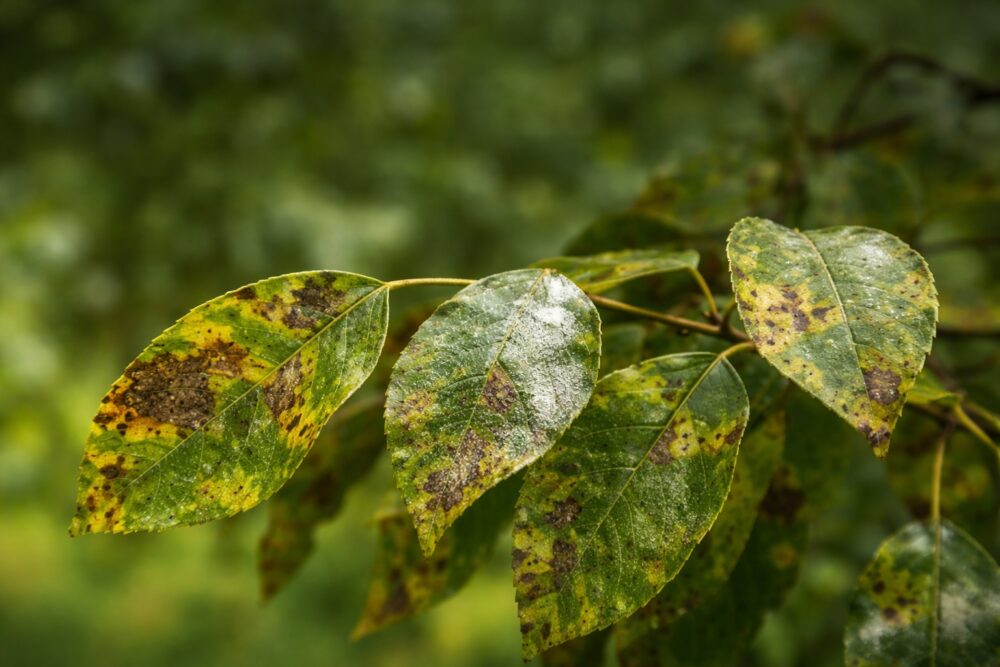
Dark Spots or Blotches
These may begin as small specks and gradually expand into larger irregular patches. In some cases, the spots may merge, creating large discolored areas across the leaf surface.
Yellow Halos Surrounding Spots
A yellow ring around dark lesions is a common indicator of fungal infection. This occurs as the surrounding leaf tissue begins to break down and loses chlorophyll.
Distorted Leaf Shape
Infected leaves may curl, twist, or develop uneven growth patterns. This distortion is caused by fungal interference with normal cell development.
Powdery Residue on Surfaces
A white or gray powder-like coating may appear on leaves, stems, or buds. This residue is often associated with fungal spores actively spreading across the plant surface.
Premature Leaf Drop
Leaves may fall earlier than expected, even outside of seasonal changes. This is a stress response and can reduce the tree’s ability to produce energy.
In many cases, these leaf symptoms begin on lower branches where the airflow is more limited and moisture lingers longer.
Branch Symptoms
As fungal activity spreads, it starts to impact tree branches and structural growth. These symptoms may be less noticeable at first but indicate deeper internal stress.
Discolored Bark Patches
Sections of bark may appear darker, lighter, or water-soaked compared to surrounding areas. This can signal that fungal colonization is beneath the surface.
Sunken Lesions Along Branches
These depressions in the bark may indicate areas where tissue has been compromised. Over time, these lesions can expand and weaken branch integrity.
Twisting or Curling New Shoots
New growth may appear abnormal, with shoots bending or curling in unusual directions. This is a sign that fungal pathogens are interfering with the tree's healthy development.
Delayed Leaf Development
Branches affected by fungus may leaf out later than the rest of the tree or produce smaller, weaker foliage. This uneven growth pattern is a key early indicator of localized stress.
Monitoring branch-level symptoms alongside leaf changes provides a more complete picture of tree health. Educational resources ,like our North Texas Tree Disease Identification, on pest and disease interactions can also help differentiate fungal symptoms from insect-related damage.
Canopy Changes
The overall appearance of the canopy reveals patterns that aren't always obvious when looking at individual leaves or branches. These larger-scale changes indicate that the fungal damage is spreading.
Uneven Leaf Density
Sections of the canopy may appear fuller while others look sparse. This inconsistency often reflects areas where fungal activity is limiting growth.
Sudden Thinning Areas
Rapid thinning in specific sections of the tree occur as infected leaves drop prematurely or fail to develop fully.
Patches of Discoloration Within the Canopy
Clusters of yellowing, browning, or dull-colored foliage may stand out against otherwise healthy leaves. These patches mark the progression of fungal spread.
These canopy-level symptoms are especially important to look for because they indicate that the issue is moving beyond isolated areas. Comparing these patterns with other common tree health concerns, such as insect infestations, can help narrow down the cause.
Many of these symptoms appear first on lower canopy leaves where humidity remains higher and airflow is reduced. Shaded areas tend to retain moisture longer, creating ideal conditions for fungal development. Over time, if conditions remain favorable, the infection can move upward into the rest of the tree.
Trees Often Affected by Spring Fungus in North Texas
Several tree species commonly planted throughout the DFW area may show symptoms during humid spring weather.
These may include:
- Live oak
- Red oak varieties
- Cedar elm
- Magnolia
- Crepe myrtle
Monitoring these species during periods of heavy rainfall and humidity can help identify fungal symptoms early.
Soil Moisture and Fungal Risk
Soil moisture plays a major role in tree health and fungal disease development. Clay heavy soils common across Dallas Fort Worth retain water longer than sandy soils.
When soil remains saturated for extended periods, roots may experience reduced oxygen availability. This can weaken tree vigor and increase susceptibility to fungal pathogens.
Balanced moisture levels help support healthy root function and improve disease resistance. Property owners and property managers can learn more about soil moisture solutions for Dallas Fort Worth trees.
Preventing Spring Fungal Outbreaks
While fungal diseases can be difficult once established, there are prevention strategies that significantly reduce the likelihood of infection.
Important prevention practices include:
- Maintain consistent soil moisture levels
- Monitor new growth during early spring
- Support overall tree health
- Watch for extended rainy weather patterns
- Identify symptoms early in lower canopy leaves
Protecting Trees From Spring Fungus in DFW
Spring fungal activity across North Texas is a common occurrence for most landscapes. By this point, you understand how predictable the pattern really is. When tree stress, fungal presence, and favorable environmental conditions overlap, the risk of infection increases quickly.
The key difference between trees that struggle and trees that remain resilient often comes down to timing.
Homeowners who stay aware of changing conditions, monitor early growth, and recognize subtle warning signs are in a much stronger position to protect their landscape before visible damage spreads.
Even small shifts matter:
- Slight leaf discoloration during early flush
- Minor thinning within sections of the canopy
- Uneven growth patterns compared to surrounding trees
- Early leaf drop before seasonal norms
North Texas spring weather can accelerate these issues quickly. Periods of humidity, moisture retention, and warming temperatures create a narrow window where fungal diseases can move from minor symptoms to widespread canopy impact.
Taking action during this window is what protects long term tree health.
Consistent observation, balanced soil conditions, and an understanding of how fungal problems develop all contribute to stronger, more resilient trees. When these factors are in place, the likelihood of severe outbreaks is significantly reduced.
If you are seeing changes in your trees this spring, it is important not to wait for the problem to become obvious.
Subtle symptoms today can become widespread stress tomorrow.
At Trees Hurt Too, we focus on helping homeowners across Dallas Fort Worth identify early stage fungal issues before they progress. Through detailed tree health inspections and ongoing monitoring, we help you understand exactly what your trees are experiencing and how to protect them moving forward.
Schedule your tree health inspection today and take control of spring fungal risk before it impacts the health, appearance, and longevity of your landscape.