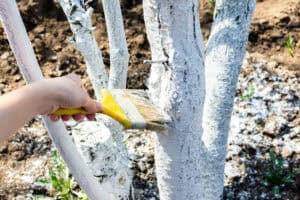
Sunscald and Bark Damage Trees DFW
Protect Your Trees from Sunscald and Bark Damage As May arrives in the Dallas-Fort Worth area, homeowners begin to enjoy …


Locally owned and family operated, proudly serving North Texas. Get your free, no-obligation quote. Or call (972) 521-1552.
Free QuoteAnthracnose is one of the most visible fungal diseases affecting North Texas trees during wet spring seasons, causing the brown leaf spotting, early defoliation, and twig dieback that many DFW homeowners see on their oaks, sycamores, and elms in the weeks after sustained spring rainfall. While anthracnose is rarely fatal to established healthy trees on its own, repeated severe infections drain energy reserves and weaken trees entering the high-stress summer season with reduced photosynthetic capacity. Trees already managing clay soil stress, drought pressure, and other conditions cannot afford this additional spring energy deficit without consequences. Trees Hurt Too, Inc. provides ISA Certified Arborist diagnosis and targeted fungicide treatment for anthracnose affecting trees across North Texas and the DFW metroplex.
"Anthracnose is one of those diseases where people see dramatic symptoms in the spring and then the tree seems to recover over the summer, so they think the problem resolved itself. What actually happened is that the pathogen became inactive in the heat and low humidity. But the tree went into summer already running a caloric deficit from the spring infection, and it will do that again next spring, and the one after that. Over time those repeated infections compound, and the tree that looks like it recovered is actually getting weaker each year." Ken, ISA Certified Arborist Tx-3265-A | Owner, Trees Hurt Too, Inc.
We provide free on-site evaluations throughout North Texas. Call (972) 521-1552 if you see brown spotting or early leaf drop on your trees during spring, or visit our Tree Health Care and Arborist Services page.
Anthracnose is a collective term for a group of fungal diseases caused by Colletotrichum, Discula, Gnomonia, and related fungi. Each tree species tends to be affected by its own specific anthracnose pathogen, though the symptoms and general management approach are similar across species.
Anthracnose fungi overwinter in infected leaf debris and in cankers on affected twigs. In spring, spores are released during rain events and spread by water splash to emerging leaves and new shoots. The spores germinate on leaf surfaces when temperatures are favorable and the leaf remains wet for sufficient time. Extended periods of leaf wetness during North Texas spring rain events create ideal conditions for spore germination and infection. Once the infection is established on a leaf, visible symptoms appear within 7 to 14 days.
North Texas springs provide the combination of warm temperatures and periodic heavy rainfall that makes anthracnose particularly active in this region. When multiple consecutive days of rain keep foliage wet during the period when trees are pushing new growth, anthracnose spores have extended windows for germination on the most vulnerable new tissue. In years with exceptionally wet springs, sycamores and oaks throughout DFW can show nearly complete early defoliation from anthracnose before summer heat slows the pathogen.
In the DFW area, the tree species most susceptible to anthracnose include:
Accurately identifying anthracnose requires distinguishing it from other spring leaf diseases including leaf spot and early-stage oak wilt. Here is what characterizes each stage of anthracnose infection:
For a complete visual guide to anthracnose and other North Texas tree diseases visit our North Texas Tree Disease Identification page.
Oakley says...
No charge. No obligation. An ISA Certified Arborist visits your property and gives you honest answers before recommending anything.
Anthracnose management requires a combination of well-timed fungicide applications and supporting the tree's overall health to improve natural disease resistance. Our ISA Certified Arborist selects treatment products and application timing based on the specific pathogen, the tree species, and the current seasonal conditions.
The most effective anthracnose management uses preventive fungicide applications timed to the spring bud break period before infection establishes. Applications are timed to protect new leaf emergence when the tissue is most vulnerable. Multiple applications spaced according to the product label may be needed during extended wet spring periods. Our certified arborist selects the appropriate chemistry for the specific pathogen and tree species involved.
Fungicide applications made during an active infection can slow the progression and reduce the severity of late-season spread, though they cannot reverse damage already done to infected tissue. Curative applications are most valuable when spring conditions continue to favor disease development after the initial infection has established.
Trees with adequate nutrition and root zone health demonstrate improved tolerance to anthracnose infections. Our deep root feeding program delivers the root zone nutrition that helps trees sustain their natural disease resistance and recover more effectively from spring defoliation. Avoiding overhead irrigation that keeps foliage wet during spring also significantly reduces anthracnose infection pressure.
Anthracnose is frequently diagnosed alongside other spring fungal diseases including leaf spot. For complete information on the full range of fungal conditions we treat visit our tree fungus treatment page and our leaf spot treatment page.
We diagnose and treat anthracnose throughout the DFW metroplex in communities throughout Tarrant County and Dallas County. Sycamores and oaks with anthracnose are common in communities including Fort Worth, Arlington, Grapevine, Colleyville, and Southlake where mature sycamore and oak canopy is well established. Call (972) 521-1552 to schedule your free evaluation anywhere in our service area.
Your Tree Cannot Wait
Early diagnosis is the difference between saving and losing a tree. Call our ISA Certified Arborist directly for same-week evaluations throughout the DFW area.
(972) 521-1552Free on-site evaluation • No obligation • Honest answers
Anthracnose is a group of fungal diseases caused by Colletotrichum, Discula, and related fungi that infect leaves, twigs, and shoots during warm wet conditions. In North Texas, anthracnose most commonly affects sycamores, oaks, elms, and pecans during wet spring seasons. It causes irregular brown lesions that often follow leaf veins and can lead to premature defoliation in severe infections.
Anthracnose causes irregular brown or tan spots and lesions on leaves that often follow the veins in an angular pattern. Severe infections cause premature leaf drop and twig dieback at branch tips. Sycamores may show near-complete defoliation in wet spring years. For a visual guide visit our North Texas tree disease identification page.
Anthracnose is rarely fatal to established healthy trees on its own, but repeated severe annual infections weaken trees significantly by draining energy reserves. Chronically anthracnose-weakened trees become more vulnerable to secondary stressors including summer heat, drought, and opportunistic diseases like hypoxylon canker.
Anthracnose is most active during warm, wet spring conditions from late February through May. The fungus requires extended leaf wetness to germinate and infect. Summer heat and lower humidity significantly slow the disease. Preventive treatment is timed to spring bud break when new leaves are most vulnerable.
Sycamores, oaks, elms, pecans, and dogwoods are most susceptible in the DFW area. Sycamores are particularly vulnerable and often show severe defoliation in wet spring years. Young trees are more severely affected than established mature trees with larger energy reserves.
Anthracnose and leaf spot are related but distinct fungal diseases. Anthracnose typically causes larger, vein-following lesions and can cause twig dieback, while leaf spot produces smaller, more circular spots. Both are treated with spring fungicide programs. Learn more at our leaf spot treatment page.
Anthracnose treatment involves preventive fungicide applications timed to spring bud break, before infection establishes on new leaves. Curative applications during active infection can slow progression. Deep root feeding supports the tree's natural resistance and recovery capacity. Our certified arborist selects the correct chemistry for the specific pathogen and tree species involved.
Call us at (972) 521-1552 or request your evaluation through our contact page. Free on-site visit, no charge, no pressure.
Trees Hurt Too provides ISA Certified Arborist anthracnose diagnosis and treatment throughout North Texas. View our complete service area or call (972) 521-1552. For additional information on anthracnose research visit the Texas A&M AgriLife Extension.
Protect Your Trees Year-Round
Our certified arborist-supervised annual programs include:
On-site evaluation and custom program quote
Get My Custom Program QuoteNo contracts • Cancel anytime
Stay informed about lawn care, tree care and pest related issues in your area!
Protect Your Trees from Sunscald and Bark Damage As May arrives in the Dallas-Fort Worth area, homeowners begin to enjoy …
Why Trees Drop Leaves in May in the Dallas-Fort Worth Area If you’ve noticed leaves scattered across your lawn in …
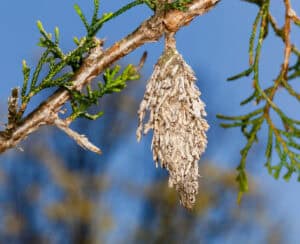
Identify and control bagworms before they damage your North Texas trees and shrubs this season.