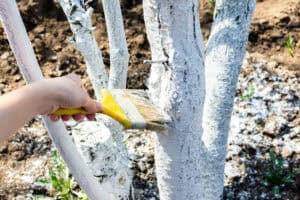
Sunscald and Bark Damage Trees DFW
Protect Your Trees from Sunscald and Bark Damage As May arrives in the Dallas-Fort Worth area, homeowners begin to enjoy …


Locally owned and family operated, proudly serving North Texas. Get your free, no-obligation quote. Or call (972) 521-1552.
Free QuoteEvery effective tree disease treatment starts with one thing: an accurate diagnosis. At Trees Hurt Too, Inc., we do not recommend treatments before we understand exactly what is happening with your trees. Our ISA Certified Arborist conducts a comprehensive tree health evaluation covering every factor that could contribute to decline, from the condition of the canopy and bark to the soil chemistry and root zone oxygen levels underground. This diagnosis-first approach is the foundation of everything we do, and it is what separates genuine plant health care from generic service programs that apply the same treatments regardless of the actual condition.
"There is no shortcut to an accurate diagnosis. You have to look at the tree. You have to look at the soil. You have to look at the drainage patterns, the construction history of the area, the proximity to neighboring trees, the beetle activity on nearby infected trees. A diagnosis built from all of that information leads to a treatment that actually works. A diagnosis built from a quick visual from the truck leads to a treatment that addresses the symptom and ignores the condition." Ken, ISA Certified Arborist Tx-3265-A | Owner, Trees Hurt Too, Inc.
We offer free on-site tree health evaluations with no obligation throughout the DFW area. Call (972) 521-1552 to schedule yours or visit our Tree Health Care and Arborist Services page for a complete overview of our approach.
A tree health evaluation from Trees Hurt Too is not a quick visual inspection. It is a comprehensive professional assessment that gives our ISA Certified Arborist the complete picture needed to identify the specific condition affecting your trees and recommend the most effective response.
Oakley says...
No charge. No obligation. An ISA Certified Arborist visits your property and gives you honest answers before recommending anything.
North Texas presents a specific diagnostic challenge that makes the diagnosis-first principle especially critical here. The region's combination of clay soil stress, extreme heat, oak wilt pressure, and diverse pest and fungal activity creates a tree health environment where multiple different conditions can present with nearly identical surface symptoms.
"I have seen trees that were treated for oak wilt when they had hypoxylon canker. I have seen trees treated for root rot when they had drought stress. I have seen chlorosis treated with nitrogen fertilization when the actual problem was iron deficiency in high-pH clay soil. Every one of those misdiagnoses cost the homeowner money and cost the tree time it did not have. Getting the diagnosis right before recommending anything is not just professional practice. It is the most important thing we do." Ken, ISA Certified Arborist Tx-3265-A | Owner, Trees Hurt Too, Inc.
For a complete guide to identifying specific conditions visit our North Texas Tree Disease Identification page. For information about specific disease treatments visit our Tree Disease Treatment page.
Professional tree health diagnosis requires tested knowledge of tree biology, disease pathology, soil science, and pest identification at a level that general experience alone cannot provide. Our diagnostic capabilities are built on formal certification and ongoing professional development.
For complete credential detail visit our ISA Certified Arborist page. To verify credentials independently visit the International Society of Arboriculture and search by certification number Tx-3265-A.
Your Tree Cannot Wait
Early diagnosis is the difference between saving and losing a tree. Call our ISA Certified Arborist directly for same-week evaluations throughout the DFW area.
(972) 521-1552Free on-site evaluation • No obligation • Honest answers
A professional tree health diagnosis involves comprehensive evaluation of canopy condition, bark and trunk health, root zone soil quality, drainage patterns, pest and disease signs, and environmental stressors. Our ISA Certified Arborist interprets these findings to identify the specific condition and recommend treatment options built on accurate diagnosis.
Treating the wrong condition accelerates decline rather than stopping it. In North Texas, oak wilt, hypoxylon canker, borer infestation, root rot, and drought stress all present with similar surface symptoms but require completely different responses. Only an ISA Certified Arborist with professional diagnostic training can reliably distinguish between them.
Trees Hurt Too provides completely free on-site tree health evaluations throughout the DFW area with no obligation. Call (972) 521-1552 to schedule your evaluation today.
Any tree showing thinning canopy, yellowing or browning leaves outside the normal seasonal cycle, dead branches, bark cracking or peeling, fungal growth, exit holes in bark, or sudden leaf drop in spring or summer should be evaluated immediately. Visit our sick tree treatment page for more detail on warning signs.
No. Accurate tree disease diagnosis requires in-person evaluation. Many serious conditions require bark inspection, root zone assessment, and soil evaluation that cannot be done remotely. We never recommend treatments before completing an on-site evaluation.
A regular tree service visit focuses on mechanical work. A tree health evaluation by an ISA Certified Arborist assesses the biological health of the tree from root zone to canopy, identifies specific conditions, and provides science-based treatment recommendations.
Trees Hurt Too recommends a professional tree health evaluation at least once per year for all mature trees on your property, and immediately any time you notice unusual symptoms. Clients on our ongoing programs receive monitoring as part of every service visit.
We provide tree health diagnosis throughout Tarrant, Dallas, and Denton Counties including all 22+ communities in our service area. View our complete service area or call (972) 521-1552 to confirm coverage.
Following the on-site evaluation, our certified arborist explains the findings and presents treatment options with expected outcomes. We only recommend treatments that the diagnosed condition specifically warrants. There is never pressure to proceed with any treatment program. Visit our tree doctor page to learn more about our diagnostic process.
Trees Hurt Too provides professional tree health diagnosis throughout North Texas and the DFW metroplex. View our complete service area or call (972) 521-1552 today. For additional information on tree health research visit the Texas A&M AgriLife Extension.
Protect Your Trees Year-Round
Our certified arborist-supervised annual programs include:
On-site evaluation and custom program quote
Get My Custom Program QuoteNo contracts • Cancel anytime
Stay informed about lawn care, tree care and pest related issues in your area!
Protect Your Trees from Sunscald and Bark Damage As May arrives in the Dallas-Fort Worth area, homeowners begin to enjoy …
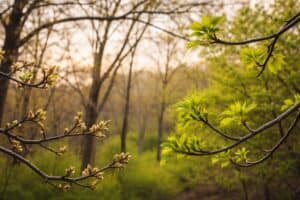
Why Trees Drop Leaves in May in the Dallas-Fort Worth Area If you’ve noticed leaves scattered across your lawn in …
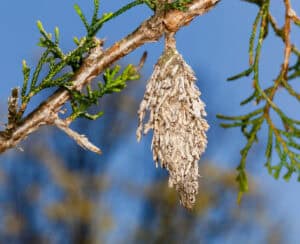
Identify and control bagworms before they damage your North Texas trees and shrubs this season.