

Texas landscapes are known for their extremely challenging clay-heavy soils. While clay holds nutrients well, its dense structure also traps water, creating ideal conditions for fungal pathogens that attack tree roots. Left unchecked, root rot can silently kill even the healthiest oaks, maples, and ornamental trees.
Effective tree root rot prevention in Texas requires understanding your soil, spotting early warning signs, and working with certified arborists to keep your landscape thriving. Below, we’ll break down everything you need to know to defend your trees against this hidden but deeply destructive disease.
Why Root Rot Thrives in Clay Soils
Clay soils are both a blessing and a curse for Texas property owners. On one hand, clay is rich in nutrients and holds water better than sandy soils. On the other hand, this same water-holding quality is the reason trees are at higher risk of developing root rot. When water lingers around root zones, oxygen is displaced, suffocating the roots. Weak roots can no longer absorb the nutrients trees need to thrive, making them susceptible to opportunistic fungal pathogens.
Key risks of clay soil:
- Poor drainage: Clay particles are tightly packed, slowing water movement and causing puddles to form around the tree’s base. Prolonged saturation weakens root tissues.
- Compaction: Frequent foot traffic, mowing equipment, or construction compacts clay further, eliminating vital air pockets. This worsens root stress and reduces soil oxygen.
- Humidity & heat: Texas weather creates cycles of high humidity and heat, which fungi thrive in. Warm, moist conditions allow pathogens like Phytophthora to spread quickly underground.
The combination of clay soil and extreme Texas weather creates a perfect storm for root rot if preventive steps aren’t taken.
Warning Signs of Root Rot
Early detection is crucial because root rot often goes unnoticed until the disease is advanced. By the time a tree shows severe canopy dieback, its root system is usually significantly compromised. Being proactive and inspecting trees regularly can save thousands in removal or replacement costs.
Look for these warning signs:
- Wilting or yellowing leaves: Trees may look thirsty despite being in wet soil. This happens because roots are too damaged to absorb water.
- Stunted growth or sparse foliage: Slow growth, small leaves, or thinning canopy coverage are red flags that the tree’s energy supply is compromised.
- Branch dieback: Fungal pathogens cut off nutrient transport, starting with the outermost branches and working inward.
- Mushrooms or fungal mats: The presence of fungal growth near the base of a tree often indicates underground rot.
- Mushy, discolored roots: If roots are exposed or inspected, they may appear black, brown, or slimy instead of firm and white.
If any of these symptoms appear, don’t wait, schedule a tree disease identification inspection with a certified arborist immediately.
Proven Strategies for Tree Root Rot Prevention
Preventing root rot in clay soils requires a mix of smart landscaping practices, ongoing monitoring, and, when needed, professional treatment. Here’s a breakdown of the most effective strategies:
1. Improve Soil Drainage
Good drainage is the number one defense against root rot.
- French drains redirect water away from tree bases, preventing pooling.
- Surface grading ensures rain flows away from root zones instead of collecting in low spots.
- Raised beds or berms elevate the root system above heavy clay, allowing for better airflow and drainage.
- Organic matter additions like compost and shredded bark break up dense clay and improve soil structure over time.
2. Adjust Watering Practices
Clay soils don’t need as much water as sandy soils, yet overwatering is one of the most common mistakes homeowners make.
- Water deeply and infrequently to encourage deeper root growth.
- Use drip irrigation instead of overhead sprinklers to control how much water goes directly to roots.
- Skip watering after rain or during high humidity periods. Moisture must have time to evaporate from clay soils.
3. Apply Mulch Correctly
Mulch is a tree’s best friend, when applied properly.
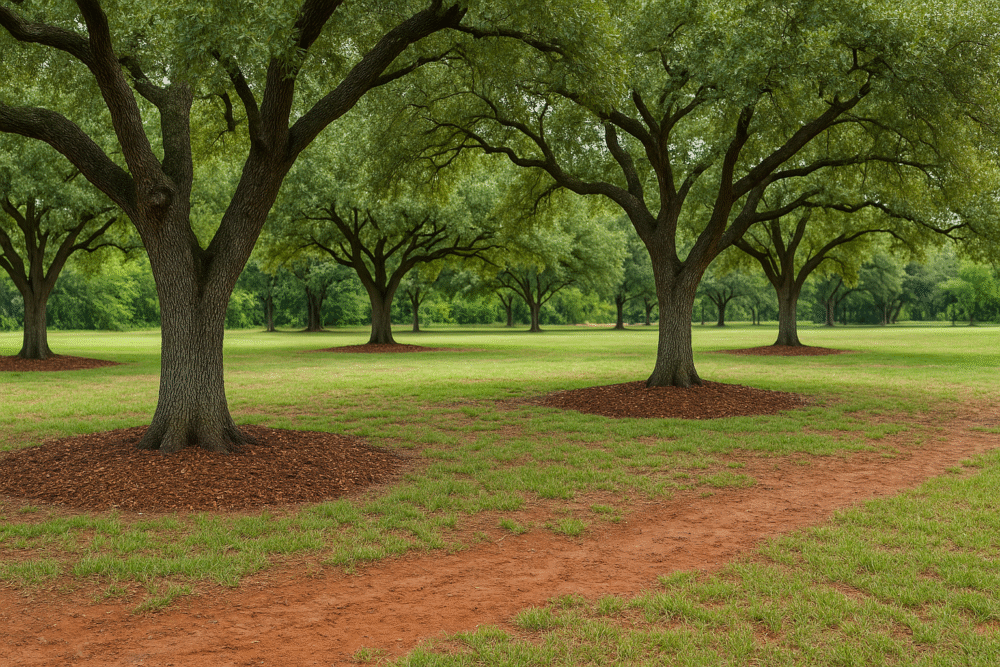
- Add 2–4 inches of mulch to conserve soil moisture and regulate temperature.
- Keep mulch 3–6 inches away from the trunk to prevent fungal growth against bark.
- Choose organic mulch like shredded hardwood or pine bark that slowly improves soil structure as it breaks down.
4. Consider Targeted Tree Injections
Sometimes prevention requires proactive treatments. Arborists may recommend:
- Fungicide injections to directly protect roots from common pathogens.
- Nutrient injections to strengthen root systems and improve resistance.
Our tree and shrub care services include tailored injection programs that address your property’s specific soil and disease conditions.
5. Choose the Right Trees
Not all trees are created equal when it comes to clay soils.
- Select species with higher tolerance for compacted or slow-draining soils.
- Check your USDA Hardiness Zone Map to ensure trees are suited for your exact location.
- Consult Texas A&M AgriLife plant lists for locally proven species resistant to root rot.
Tree Root Rot Prevention for Commercial Properties
Commercial landscapes such as schools, apartment complexes, HOAs, hospitals, and retail centers often feature large, mature trees that provide significant shade and aesthetic appeal. However, if these trees develop root rot, the risks go beyond lost beauty.
Why prevention is critical for businesses:
- Safety: Diseased trees are more likely to fall, creating hazards for tenants, customers, and visitors.
- Liability: Property managers may face lawsuits if failing trees injure people or damage property.
- Cost: Mature tree removals and replacements are far more expensive than preventive treatments.
- Reputation: A declining landscape reflects poorly on businesses, reducing curb appeal and perceived value.
A proactive commercial tree care program includes seasonal inspections, soil management, and preventive treatments to protect both your investment and your community.
Why Work with ISA-Certified Arborists
While homeowners can take basic steps like improving drainage or mulching, advanced root rot prevention requires professional expertise. ISA-certified arborists bring the knowledge and tools needed to make precise diagnoses and apply treatments effectively.
Arborist advantages:
- Accurate diagnostics: Soil sampling and lab analysis identify specific pathogens.
- Custom treatment plans: Solutions tailored to the species, soil type, and environmental conditions of your property.
- Specialized tools: Arborists can deliver targeted injections and advanced soil aeration techniques not available to the average homeowner.
- Long-term monitoring: Ongoing inspections ensure issues are caught early, saving money in the long run.
At Trees Hurt Too, our ISA-certified arborists combine years of hands-on experience with cutting-edge techniques to deliver the highest level of protection for your trees.
Take Action Before It’s Too Late
Root rot is a silent killer. By the time it becomes obvious, your trees may already be beyond saving. Prevention is the most reliable way to protect your landscape, especially in North Texas, where clay soils and weather patterns create high-risk conditions.
Steps to take now:
Schedule regular inspections to catch early signs of disease.
Improve drainage with professional soil management solutions.
Use proper watering and mulching techniques consistently.
Partner with arborists for advanced treatments and monitoring.
For year-round protection, trust Trees Hurt Too’s complete tree disease and lawn care solutions. Contact us today to schedule an inspection and safeguard your property’s most valuable natural assets.