

What Is the Emerald Ash Borer?
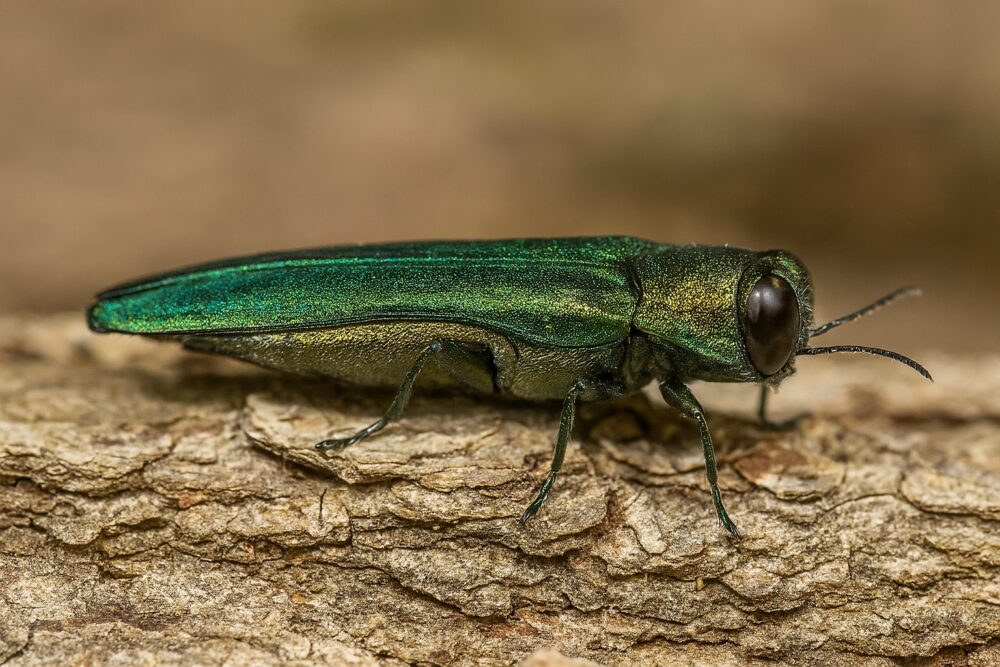
The Emerald Ash Borer (Agrilus planipennis) is an invasive beetle native to Asia that has become one of the most destructive tree pests in North America. First detected in the United States in 2002, this small metallic-green beetle targets ash trees, causing devastating losses to both urban and rural landscapes. Adults are about half an inch long, but their impact far outweighs their size; once established, they can wipe out entire populations of ash trees in just a few years.
The insect primarily affects trees in the Fraxinus genus, including green, white, black, and Texas ash species. Because of its rapid spread and lack of natural predators in the U.S., the Emerald Ash Borer (EAB) poses a severe threat to shade trees, street trees, and natural forests across Texas.
What Does the Emerald Ash Borer Do to Trees?
EAB larvae are the true culprits behind the destruction. After adult beetles lay eggs on the bark, the larvae hatch and burrow beneath the surface, feeding on the tree’s inner bark, or phloem. This feeding disrupts the tree’s ability to transport water and nutrients between roots and canopy.
Over time, the damage leads to:
- Thinning canopies and premature leaf drop
- Vertical bark splits exposing S-shaped larval galleries
- Increased woodpecker activity as they feed on larvae
- Epicormic shoots (new sprouts) growing from the base or trunk
Within three to five years of infestation, most untreated ash trees die. The destruction can spread rapidly across neighborhoods, parks, and business properties if not addressed early.
Where Is the Emerald Ash Borer Found?
Emerald Ash Borer has now been confirmed in multiple North Texas counties, including Tarrant County, Dallas, Denton, and Parker Counties. The pest tends to thrive in both urban environments and wooded areas, spreading through infested firewood, nursery stock, or untreated timber. Once introduced, it quickly colonizes any nearby ash trees, regardless of setting.
In Tarrant County, ash trees are commonly found across a wide variety of landscapes and property types, including:
- Residential landscapes and neighborhood parks, where species such as Green Ash (Fraxinus pennsylvanica) and Texas Ash (Fraxinus texensis) have been used for decades as shade trees.
- School and university campuses, where White Ash (Fraxinus americana) and Arizona Ash (Fraxinus velutina) often serve as decorative or canopy trees.
- Commercial properties and office parks, where fast-growing ash varieties are prized for their uniform shape and quick establishment.
- Creekside corridors, forested greenbelts, and rural pastures, where Black Ash (Fraxinus nigra) and native hybrids contribute to river stability and wildlife habitat.
Because the beetle can fly several miles and hitchhike on transported wood, containment is difficult without coordinated pest management efforts. This mobility allows infestations to move from property to property, even across city lines, making regional awareness and early detection critical to prevention.
Why Is the Emerald Ash Borer a Problem for Tarrant County, TX?
The EAB poses an especially serious risk for Tarrant County because ash trees make up a significant portion of the local canopy; especially in older neighborhoods, parks, and community landscapes. Losing these trees can lead to:
- Widespread Tree Mortality: The loss of shade and mature trees increases urban heat and energy costs.
- Economic Costs: Removing and replacing dead ash trees can cost property owners thousands of dollars per tree.
- Ecosystem Damage: The sudden decline of ash trees disrupts wildlife habitats, soil stabilization, and local air quality.
- Public Safety Risks: Dead or dying trees become unstable, posing hazards during storms or high winds.
Once infested, there is no natural recovery without professional intervention. This makes early detection and proactive tree care crucial for communities across North Texas.
How to Identify an Emerald Ash Borer Infestation
Knowing the warning signs early can save your trees and your budget. Key symptoms include:
- D-shaped exit holes (about 1/8 inch wide) on bark where adults emerge
- S-shaped larval tunnels under bark layers
- Canopy dieback starting at the top and moving downward
- Splitting or peeling bark revealing tunnels underneath
- Increased woodpecker feeding activity on trunks and branches
If your ash trees are showing any of these signs, it’s vital to schedule a professional tree health inspection immediately.
What Can You Do to Get Rid of Emerald Ash Borer?
While total eradication of EAB from the environment isn’t currently possible, effective management and prevention can protect individual trees and limit spread.
1. Professional Tree Assessment
Certified arborists can determine the extent of damage, identify at-risk trees, and recommend the right course of action. Early detection greatly increases the success of treatment.
2. Preventative Tree Injections
Systemic insecticide injections directly into the tree’s vascular system can protect healthy or lightly infested ash trees. These treatments target EAB larvae beneath the bark and provide protection for up to two years.
3. Soil Treatments
Soil-applied insecticides can provide an additional layer of protection for younger or smaller ash trees, helping deliver active ingredients through the root system.
4. Remove and Replace Severely Infested Trees
If a tree is already more than 50% defoliated or structurally compromised, removal may be necessary to prevent spread to nearby trees. Replacement with non-ash native species, such as cedar elm or bur oak, is recommended for long-term sustainability.
5. Avoid Moving Firewood
Never transport firewood from infested areas. Even dry logs can harbor EAB larvae and continue the cycle of infestation across the region.
For maximum protection, professional pest management should combine multiple strategies; including tree injections, deep root feeding, and regular inspections, to maintain overall tree health.
Trees Hurt Too: Your Partner in Tree Pest Management and Health
At Trees Hurt Too, we understand how devastating an Emerald Ash Borer infestation can be for homeowners, HOAs, and commercial properties across Tarrant County. Our licensed arborists and pest control specialists use science-based methods to protect trees from invasive insects, strengthen root systems, and restore soil health.
Our comprehensive programs include:
- Tree and shrub pest control
- Deep root fertilization and nutrient programs
- Tree health inspections and monitoring
- Targeted injection treatments for EAB and other borers
We are proud to help North Texas property owners preserve their landscape investment and protect local ecosystems from invasive threats. If you suspect an Emerald Ash Borer infestation, contact Trees Hurt Too today for an expert evaluation and a customized pest management plan tailored to your property’s needs.