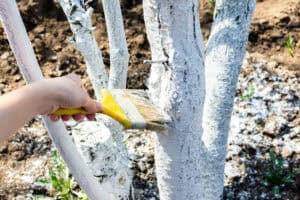
Sunscald and Bark Damage Trees DFW
Protect Your Trees from Sunscald and Bark Damage As May arrives in the Dallas-Fort Worth area, homeowners begin to enjoy …


Locally owned and family operated, proudly serving North Texas. Get your free, no-obligation quote. Or call (972) 521-1552.
Free QuoteBagworms are one of the most underestimated tree pest threats in North Texas, in part because their camouflaged silk bags blend so perfectly with the foliage of host plants that infestations often go undetected until they become severe. By the time homeowners notice the spindle-shaped bags hanging from their junipers, arborvitae, or shade trees, the caterpillars inside have typically been feeding for weeks and the population has grown large enough to resist the most effective treatment window. Trees Hurt Too, Inc. provides ISA Certified Arborist evaluation and professionally timed bagworm treatment throughout North Texas, with particular attention to the critical late May through mid-June treatment window when control is most effective and most cost-efficient.
"Timing is everything with bagworms. The difference between a treatment applied in early June when the larvae are small and one applied in late July when they are fully developed is the difference between excellent control and very poor control. Young bagworm larvae are highly susceptible to Bt and most contact insecticides. By mid-summer those larvae have grown much larger, constructed heavier bags, and become significantly more resistant. I see infestations every year that would have been easily controlled in June but required much more aggressive treatment two months later because the window was missed." Ken, ISA Certified Arborist Tx-3265-A | Owner, Trees Hurt Too, Inc.
We provide free on-site evaluations throughout North Texas. Call (972) 521-1552 if you see small hanging bags on your trees or shrubs, or visit our Tree Health Care and Arborist Services page.
Understanding the bagworm life cycle is essential to understanding why treatment timing is so critical. In North Texas:
Deciduous trees lose all their leaves every winter and produce a new flush each spring, giving them a biological reset that allows recovery after bagworm defoliation. Evergreen species including junipers, arborvitae, Leyland cypresses, and pines cannot regenerate foliage from bare wood. When bagworms strip the needles from an evergreen, the affected branches die and do not recover. A single severe bagworm infestation on an Eastern red cedar or arborvitae in North Texas can kill the entire plant.
Oakley says...
No charge. No obligation. An ISA Certified Arborist visits your property and gives you honest answers before recommending anything.
For a complete visual guide to bagworms and other North Texas tree pests visit our shrub and tree pest control page.
The most important factor in bagworm control is application timing. Young larvae that have just hatched and begun feeding are the most vulnerable to all treatment methods. Applications made during the late May through mid-June window achieve dramatically better control than later applications against large, well-protected larvae. Our certified arborist monitors bagworm hatch timing across the DFW area and schedules treatment at the optimal point in the infestation cycle.
Bacillus thuringiensis kurstaki (Btk) is a naturally occurring soil bacterium that produces proteins toxic to caterpillars when ingested during feeding. It provides effective control of young bagworm larvae with minimal impact on beneficial insects, birds, and mammals. Btk must be applied during the early larval feeding period for best results and is most appropriate for lower-level infestations with good spray coverage access.
For larger infestations or late-season applications against more developed larvae, our certified arborist selects appropriate systemic or contact insecticide products that provide greater knockdown power against well-developed bagworm larvae. Product selection accounts for the host plant species, the infestation level, and the surrounding landscape to minimize impact on pollinators and beneficial insects.
Removing and destroying bagworm bags in fall and winter physically eliminates next year's egg supply from heavily infested plants. While labor-intensive for large plants, this approach is highly effective for smaller ornamentals and eliminates the overwintering population without chemical application.
Plants weakened by drought stress, clay soil nutrient limitations, or other stressors are less able to tolerate bagworm feeding and recover from infestations. Our deep root feeding program supports the overall plant health that improves tolerance and recovery from pest pressure.
Your Tree Cannot Wait
Early diagnosis is the difference between saving and losing a tree. Call our ISA Certified Arborist directly for same-week evaluations throughout the DFW area.
(972) 521-1552Free on-site evaluation • No obligation • Honest answers
We diagnose and treat bagworm infestations throughout the DFW metroplex. Bagworms on junipers, cedars, and arborvitae are extremely common throughout all communities in Tarrant County and Dallas County. Communities where Eastern red cedar bagworm infestations are particularly prevalent include Keller, Southlake, Colleyville, Mansfield, and Burleson. Call (972) 521-1552 to schedule your free evaluation anywhere in our service area.
Bagworms are caterpillars that live inside silk bags camouflaged with host plant foliage and feed voraciously on needles and leaves throughout summer. Severe infestations on evergreens like junipers and arborvitae can strip and kill the host plant within a single season since these species cannot regenerate foliage from bare wood.
Spindle-shaped structures up to 2 inches long constructed from silk camouflaged with bits of host plant foliage. On juniper they resemble small hanging cones of juniper foliage. They hang from branches and are easily overlooked until infestations become severe. For a visual guide visit our shrub and tree pest control page.
Late May through mid-June when newly hatched larvae are actively feeding but still small and highly susceptible to treatment. This is the most effective and most cost-efficient treatment window by a significant margin. Treatment against fully developed larvae in July and August is possible but requires more aggressive approaches and achieves less complete control.
Yes, particularly evergreens like junipers, arborvitae, and Leyland cypresses that cannot regenerate from bare wood after defoliation. A single severe infestation can kill these plants entirely. Deciduous trees recover from defoliation by producing a second leaf flush but are significantly weakened by severe or repeated infestations.
Eastern red cedar and other juniper species, arborvitae, Leyland cypress, and pines are most severely affected. Deciduous trees including oaks, sycamores, maples, and black locusts are also commonly infested. In North Texas, juniper plantings and Eastern red cedars face particularly high bagworm pressure.
The bags hanging in fall and winter contain overwintering eggs for next year's infestation, not live larvae. A single bag may contain 500 to 1,000 eggs. Removing and destroying bags in fall and winter physically eliminates next year's egg supply and significantly reduces the following season's infestation pressure.
Yes. Trees Hurt Too provides completely free on-site tree evaluations throughout the DFW area with no obligation. Call (972) 521-1552 or request your evaluation through our contact page.
Trees Hurt Too provides ISA Certified Arborist bagworm diagnosis and treatment throughout North Texas. View our complete service area or call (972) 521-1552. For additional information on bagworm research visit the Texas A&M AgriLife Extension.
Protect Your Trees Year-Round
Our certified arborist-supervised annual programs include:
On-site evaluation and custom program quote
Get My Custom Program QuoteNo contracts • Cancel anytime
Stay informed about lawn care, tree care and pest related issues in your area!
Protect Your Trees from Sunscald and Bark Damage As May arrives in the Dallas-Fort Worth area, homeowners begin to enjoy …
Why Trees Drop Leaves in May in the Dallas-Fort Worth Area If you’ve noticed leaves scattered across your lawn in …
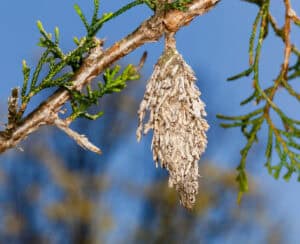
Identify and control bagworms before they damage your North Texas trees and shrubs this season.