

Crape myrtle bark scale has become one of the most damaging insect pests affecting ornamental trees across North Texas. Since it first appeared in McKinney, Texas in 2005, this invasive sap-feeding insect spread across the entire Dallas-Fort Worth area by 2010. Homeowners in Fort Worth, Arlington, Mansfield, and surrounding Tarrant County communities now deal with it every growing season.
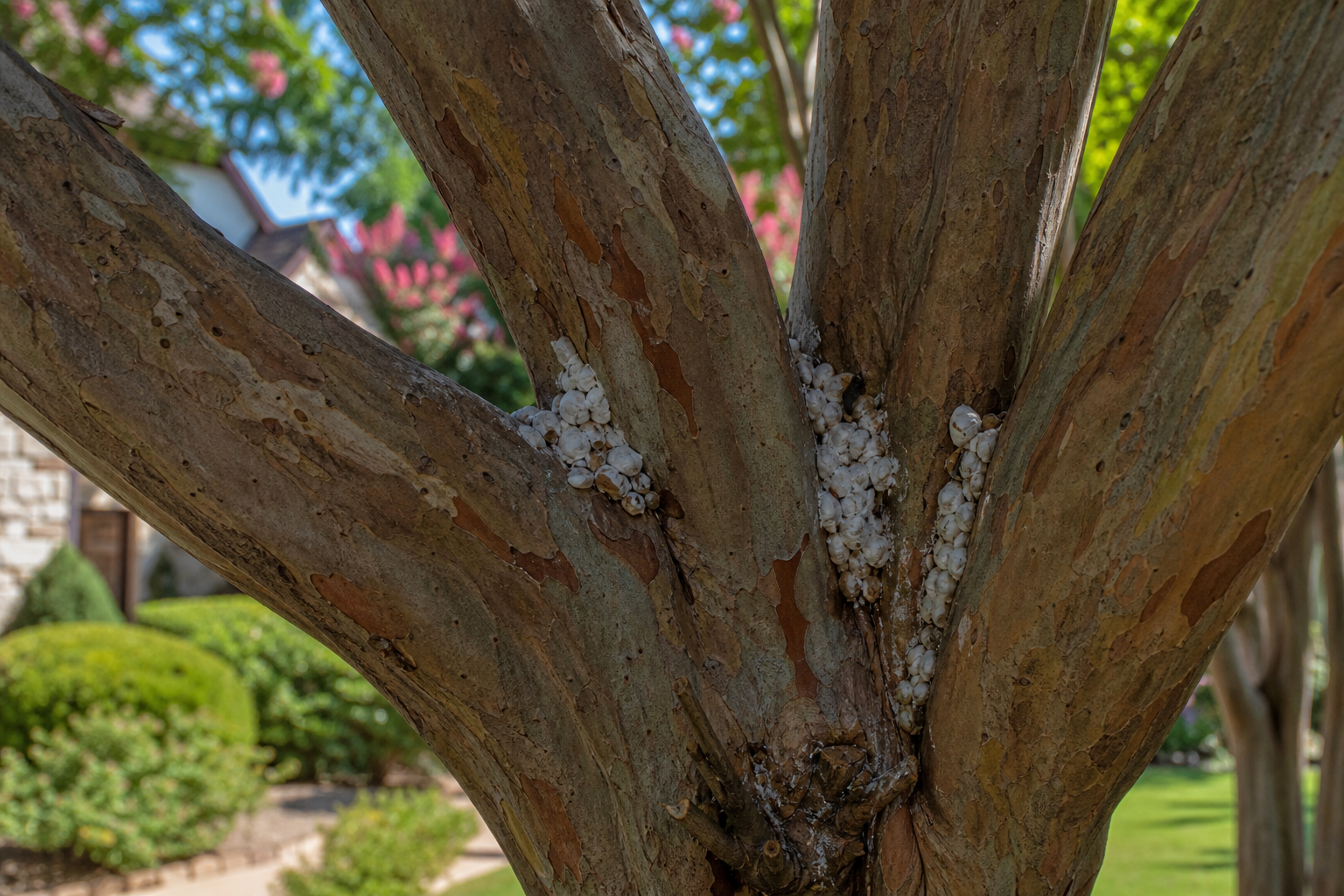
Crape myrtle bark scale (Eriococcus lagerstroemiae) appears as white or gray felt-like waxy clusters on branches and bark. Left untreated, it produces black sooty mold that coats the entire tree, blocks sunlight, and steadily weakens the plant. Early detection and targeted treatment protect your crape myrtles before damage becomes severe.
This post covers how to identify crape myrtle bark scale, understand its life cycle, treat an active infestation, and prevent it from returning.
What Is Crape Myrtle Bark Scale?
Crape myrtle bark scale is an invasive sap-feeding insect native to Asia. It feeds directly on the vascular tissue of its host plant, removing nutrients and water the tree needs to grow. Crape myrtles are the primary host, but the insect also attacks boxwood, privet, and persimmon.
Female scale insects are stationary. They have no legs or wings and spend their lives attached to bark, producing egg capsules containing 60 to 250 eggs each. Males have wings and fly short distances to find mates. The insect overwinters as eggs tucked under loose bark, then hatches in spring when temperatures rise.
At least two generations develop each year in North Texas. The first generation of crawlers (mobile juveniles) emerges in April and May. A second generation follows in summer. This two-cycle pattern means a single undetected infestation can grow rapidly through one growing season.
How Did Crape Myrtle Bark Scale Reach Tarrant County?
The insect arrived in the United States on imported ornamental plant material. It was first identified in McKinney, Texas in 2005 and spread throughout the DFW metroplex by 2010. Movement between properties happens on infested nursery stock, on tools, and through the natural flight of male insects. Scale crawlers also travel on wind and on birds and insects moving between host plants.
How to Identify Crape Myrtle Bark Scale
Crape myrtle bark scale is visible without magnification. Look for white or gray waxy, felt-like masses coating the bark and branch crotches. Each individual scale measures approximately 2mm in length. The clusters often appear as patches of white fuzz pressed against the bark surface.
Close inspection reveals pink eggs or small pink crawlers visible beneath the white waxy covers. This pink coloration under white scale is one of the key identification features that separates crape myrtle bark scale from other scale insects. Crushing a scale with a fingernail reveals the pink interior.
Check these locations first when scouting for scale:
- Branch crotches and forks, where scale clusters concentrate
- The lower trunk, especially near soil level
- Rough or peeling bark sections, which scale insects prefer
- New growth tips on heavily infested trees
What Does the Sooty Mold Look Like?
Sooty mold is a secondary symptom, not a disease in itself. Scale insects secrete a sticky liquid called honeydew as they feed. Black sooty mold grows on that honeydew, coating bark, branches, and eventually foliage. On a badly infested crape myrtle, the entire trunk and canopy can appear blackened.
The mold itself does not directly damage tissue, but heavy coating on leaves blocks sunlight and reduces photosynthesis. Trees covered in sooty mold also face active feeding pressure from the scale insects below it.
Signs Your Crape Myrtle Has Bark Scale
Visual symptoms progress in a predictable pattern. Catching them at any stage allows treatment before permanent damage occurs. The most common signs include:
- White or gray waxy clusters on bark, especially in branch crotches
- Black sooty mold coating trunk, branches, or foliage
- Leaf discoloration and wilting as feeding depletes plant nutrients
- Reduced foliage growth and smaller-than-normal leaves
- Branch dieback starting at the tips on heavily infested trees
- Premature leaf drop in summer on stressed trees
A tree showing multiple symptoms from this list needs prompt attention. Branch dieback and significant foliage loss indicate the infestation has been active for at least one full season.
The Life Cycle of Crape Myrtle Bark Scale
Understanding the life cycle helps time treatment for maximum effectiveness. The insect completes at least two full generations each year in Tarrant County's warm climate.
Winter (November through February): Eggs overwinter under loose bark and in bark crevices. This stage is protected and unreachable by contact insecticides.
Spring (March through May): Eggs hatch as temperatures rise. First-generation crawlers emerge in April and May. Crawlers are the most mobile and most vulnerable life stage. Systemic treatments applied as soil drenches in March reach peak concentration in plant tissue by the time crawlers emerge.
Summer (June through August): First-generation females mature and produce egg capsules. Second-generation crawlers emerge. Both generations overlap during July, creating peak population pressure. Active feeding during this period drives the most visible sooty mold growth.
Fall (September through November): Second-generation females mature and lay eggs that will overwinter. Population slows but does not stop before winter arrives.
How to Treat Crape Myrtle Bark Scale
Systemic insecticides produce the most reliable control for crape myrtle bark scale. The active ingredients imidacloprid and dinotefuran, both neonicotinoids, are the most widely used and documented treatments. A soil drench application in March allows the plant to absorb the product through its root system. By April and May, when first-generation crawlers emerge, the insecticide is already distributed through the plant's vascular tissue.
The best active treatment window runs from May through July, when crawlers are mobile and feeding. Crawlers feed on treated plant tissue and are eliminated before they mature and reproduce. For detailed guidance on treatment timing and active ingredients, Mississippi State University Extension has published authoritative research at extension.msstate.edu.
What About Mechanical Removal?
Mechanical removal with a soft brush and a mild soap-and-water solution can reduce scale populations on accessible branches and trunks. This approach works best as a supplement to systemic treatment, not as a standalone method. Mechanical removal cannot reach scale hidden in bark crevices or deep in branch crotches, and it does not address the egg population that will hatch the following spring.
Natural predators including ladybugs and green lacewings feed on scale crawlers. Maintaining healthy plant diversity in the landscape supports these beneficial insect populations. Avoiding broad-spectrum pesticide applications that harm natural predators helps keep biological pressure on scale populations, but biological control alone rarely resolves an established infestation.
Tree Injection as a Treatment Option
For trees with significant infestations, or in situations where soil drenching is difficult, direct tree injections deliver systemic insecticide into the vascular tissue. This method bypasses soil uptake entirely and provides faster distribution of the treatment through the plant. Injection works well for large-caliper crape myrtles or trees on hard-paved surfaces where soil drench application is impractical.
A Licensed Plant Health Care Professional can assess which delivery method fits specific trees and site conditions.
Prevention and Long-Term Management
Prevention focuses on two areas: limiting new introductions and keeping trees healthy enough to resist severe infestation. Stressed, weak trees sustain heavier scale populations and recover more slowly after treatment.
Steps that reduce risk and support recovery:
- Annual assessment by an ISA Certified Arborist. Early detection in March or April allows treatment before the first crawler generation matures.
- Proper fertilization. Nutrient-deficient trees show more severe symptoms. Targeted fertilization supports the vascular health that makes systemic treatments effective.
- Mulching around the root zone. Two to three inches of organic mulch moderates soil temperature and retains moisture, reducing overall stress on the tree.
- Deep watering during summer drought. Scale-infested trees under drought stress face compounding pressure. Consistent soil moisture helps trees tolerate feeding while treatment takes effect.
- Plant crape myrtles in full sun. Shaded or crowded planting conditions produce weaker growth and favor scale establishment.
- Inspect newly purchased plants before introducing them. Infested nursery stock is a primary vector for bringing bark scale onto previously clean properties.
For a broader view of insect threats affecting North Texas ornamental trees and shrubs, this resource covers common pest species and how each one is managed. A complete ornamental care program addresses the full range of health threats crape myrtles face through each growing season.
Crape Myrtle Bark Scale Across Tarrant County
Crape myrtles grow throughout the Tarrant County landscape, from established neighborhoods in Fort Worth and Arlington to newer developments in Mansfield, Burleson, and Keller. Grapevine, Southlake, North Richland Hills, and Colleyville properties face the same regional pressure from this pest every season.
The insect does not distinguish between residential and commercial plantings. HOA common areas, commercial parking islands, and municipal plantings carry the same risk as backyard specimens. Early seasonal inspection before crawler emergence in April gives property owners the clearest treatment advantage.
Frequently Asked Questions About Crape Myrtle Bark Scale
Can crape myrtle bark scale kill a tree?
Severe, multi-season infestations can cause significant dieback and gradual decline. A tree already stressed by drought or disease faces greater risk. Most crape myrtles recover fully with prompt, properly timed systemic treatment. Trees with extensive dieback need evaluation by an ISA Certified Arborist to assess recovery potential and remaining structural health.
When is the best time to treat bark scale in North Texas?
The most effective window is March for soil drench application, allowing the systemic insecticide to distribute through the plant before April and May crawler emergence. Active treatment from May through July targets crawlers directly. Treating in fall or winter provides little benefit because the insect overwinters as protected eggs under bark.
Does the black sooty mold wash off crape myrtles?
Sooty mold on bark and branches can be scrubbed away with water and mild soap. Mold on foliage typically weathers off once the scale infestation is controlled and honeydew production stops. The mold causes no permanent tissue damage, but the active scale feeding beneath it does. Removing mold without treating the scale provides only cosmetic improvement.
Schedule a Scale Inspection for Your Crape Myrtles
Trees Hurt Too Inc. has served Fort Worth and surrounding Tarrant County for over 28 years. Call or text to schedule a consultation.
Call: (972) 521-1552 | Text: (972) 521-1552 | treeshurttoo.com