
Exterior Perimeter Pest Treatment in North Texas

The smartest way to protect your trees, lawn, and Home
Locally owned and family operated, proudly serving North Texas. Get your free, no-obligation quote. Or call (972) 521-1552.
Free Quote
Perimeter Pest Treatment, Explained
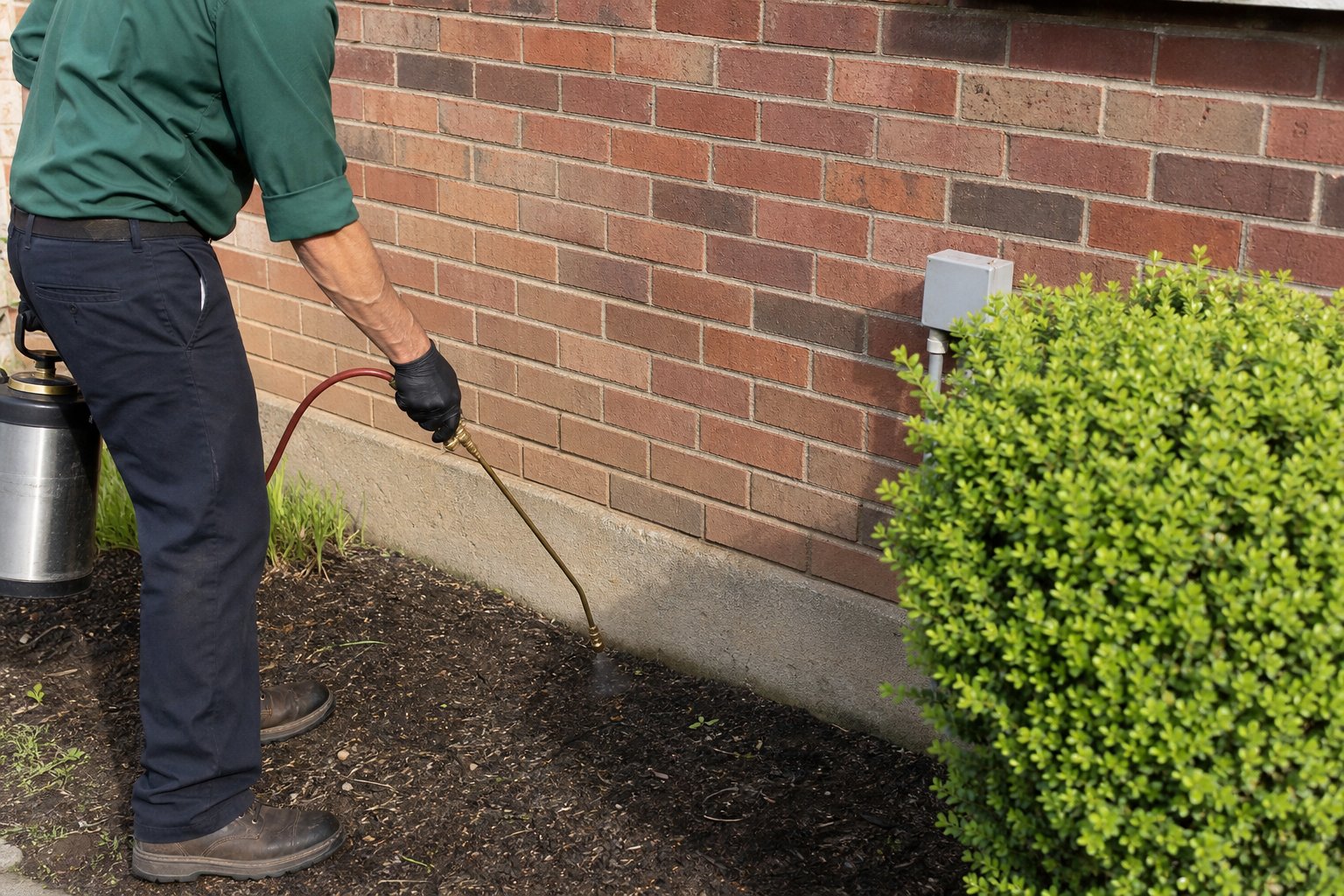
An exterior perimeter pest treatment is a professional application of pest control products around the outside of your home: the foundation line, the soil and mulch beds that touch it, and the entry points pests use to slip indoors. The application forms a continuous protective zone around the structure, so common household pests are controlled outside before they ever reach your kitchen, pantry, or bedrooms. It is the first bullet in every home protection membership plan from Trees Hurt Too Inc. because it does more preventive work than any other single service we provide.
North Texas gives pests nearly year-round working conditions. Mild winters, long summers, and the warm brick and slab construction common across Fort Worth, Arlington, Mansfield, and Keller mean spiders, roaches, crickets, and ants stay active outdoors for most of the calendar. Almost every pest that turns up inside a Tarrant County home started its journey outside. Treat the outside consistently and the inside largely takes care of itself. That is the whole idea behind the barrier approach, and it is why our quarterly service model is built around it.
What Gets Treated During a Perimeter Service
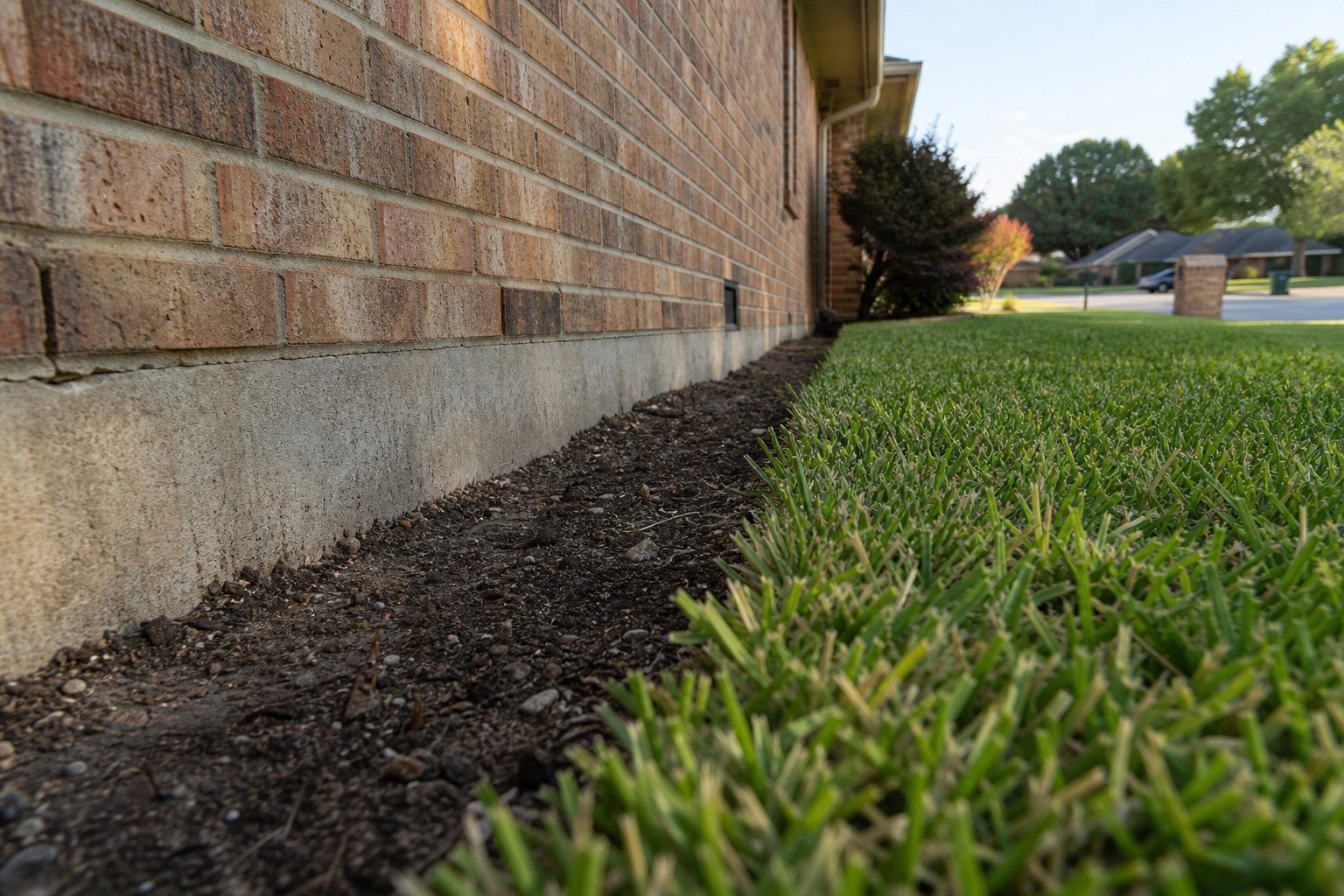
A thorough perimeter service follows the structure itself, not just the yard around it. Your technician works the full circumference of the home and focuses product where pests actually travel and harbor:
- The foundation line: a treated band along the slab where the structure meets the soil, the main highway for ants, roaches, and crickets.
- Entry points: door thresholds, garage door edges, utility and plumbing penetrations, and gaps where cables or AC lines enter the wall.
- Weep holes and brick gaps: the small ventilation openings in brick veneer that pests use as ready-made doorways.
- Window frames and trim: the seams and sills where spiders and earwigs like to settle.
- Eaves, soffits, and porch ceilings: the sheltered overhead spots where wasps start nests and spiders build webs.
- Adjacent harborage: mulch beds, stacked materials, and dense vegetation touching the structure that give pests cover right at the wall.
The exact plan varies from home to home. A brick ranch in Burleson with heavy mulch beds needs a different emphasis than a two-story in Grapevine with a shaded north wall. Your technician adjusts placement to your property, and every product is applied according to its label.
Why the Barrier Approach Prevents Interior Problems
Pests do not spontaneously appear inside a house. They forage in from outdoors, following moisture, food odors, and warmth through gaps that every home has. A maintained perimeter treatment intercepts that traffic at the wall, which is exactly where you want the problem handled. Controlling pests outside means fewer products applied inside your living space, fewer surprises in the bathtub at 6 a.m., and far fewer situations that require a reactive interior visit.
Local soil makes this maintenance rhythm matter even more. Tarrant County clay swells with spring rain and shrinks hard in summer drought, and that seasonal movement opens hairline gaps along slabs, brick lines, and thresholds. A barrier applied once and forgotten fades right as new openings appear. A barrier refreshed on a quarterly schedule keeps protection continuous through every swing of the North Texas weather.
Prevention is also simply the more comfortable way to live. Rather than waiting for a trail of ants across the counter, the perimeter approach stops most problems before you ever see them. When something does make it indoors, interior service on request is part of every plan, so the inside of your home gets targeted attention exactly when it needs it and not when it does not.
Part of Every Membership Plan
Exterior perimeter treatment is the foundation of all three Oakley's Pest Solutions plans from Trees Hurt Too Inc. Membership starts at $47 per month with quarterly service, and every tier includes the perimeter treatment, basic pest control service for spiders, roaches, crickets, silverfish, earwigs, ants, and wasps, interior service on request, free callbacks between visits, and a quarterly inspection. You can compare the year-round home protection plans and enroll by phone or text.
On each quarterly service visit, your technician renews the perimeter application, inspects for new activity and new entry points, and adjusts the treatment as the seasons change. Spring service leans into ant and wasp pressure, summer focuses on crickets and spiders seeking shade and moisture, and fall service hardens the barrier before pests push toward warm structures. The schedule is deliberate: it matches how pest pressure actually moves through the year here, and it pairs with our broader pest control services across Tarrant County.
Pests a Perimeter Treatment Helps Control
The basic service included in every membership covers the everyday pests North Texas homeowners deal with most:
- Spiders: web-building and hunting spiders that settle around eaves, weep holes, and window frames.
- Roaches: the large outdoor roaches that wander in from mulch, drains, and landscaping.
- Crickets: field and house crickets that swarm walls in late summer and chirp from garages all night.
- Silverfish: moisture-loving insects that slip in around foundations and thrive in bathrooms and storage boxes.
- Earwigs: mulch and leaf-litter dwellers that follow moisture lines to the slab.
- Ants: foraging trails that start at the foundation and end at your pantry.
- Wasps: nest-building activity on eaves, porch ceilings, and play structures.
Some pests need more than a barrier. German roaches and carpenter ants require their own targeted programs, and yard-wide problems like fire ants, fleas, and mosquitoes are handled through higher plan tiers and add-ons. Your technician will tell you plainly which category your situation falls into.
Local Conditions Shape the Work
Trees Hurt Too Inc. is locally owned and family operated, serving the community since 1998, and that local experience shows up in how we treat a perimeter. We know August heat drives crickets and spiders toward irrigated foundations. We know the first cool October front sends outdoor pests looking for gaps in brick veneer. We know how quickly a wet spring turns mulch beds into earwig habitat. Our technicians are Certified Applicators in Texas, and the approach is science-based and eco-friendly: product where it belongs, in the amount the label directs, and nowhere else.
Simple Habits That Help Your Barrier Work Harder
A perimeter treatment performs best on a property that is not working against it. A few easy habits between visits keep the barrier at full strength:
- Keep mulch pulled back a few inches from the slab so there is a dry, treatable band at the foundation.
- Store firewood, lumber, and stacked pots away from exterior walls rather than against them.
- Trim shrubs and ground cover so they do not touch brick or siding, removing the bridges pests use to bypass treated soil.
- Fix dripping hose bibs and adjust sprinkler heads that soak the foundation line, since constant moisture draws pests to the exact zone the barrier defends.
- Report anything unusual between visits; a quick text with a photo lets us fold the fix into a callback or your next service.
None of this replaces professional treatment, but each habit removes a reason for pests to concentrate at your walls, and that makes every application last longer and work better.
Frequently Asked Questions: Perimeter Pest Treatment
1. What is an exterior perimeter pest treatment?
It is a professional application of pest control products around the outside of a home, concentrated on the foundation line, entry points, and adjacent harborage areas. The treatment creates a protective zone that controls pests outdoors before they can move inside.
2. How often should the perimeter be treated?
Quarterly service keeps the barrier effective through North Texas weather. Sun, rain, irrigation, and soil movement all wear on an application over time, so our membership plans renew the perimeter every quarter and back it with free callbacks between visits.
3. Do I need to be home for a perimeter service?
Exterior work generally does not require access to the inside of your home, so many members have their perimeter service completed while they are out. Your technician will confirm scheduling details and gate or pet considerations when you enroll.
4. Will a perimeter treatment control pests already inside my house?
The barrier is designed to prevent new pests from entering, and cutting off that traffic often resolves light interior activity on its own. For pests already established indoors, every plan includes interior service on request, a targeted treatment inside the home at no charge beyond your membership.
5. Which pests does the perimeter service cover?
The basic service in every plan covers spiders, roaches, crickets, silverfish, earwigs, ants, and wasps. German roaches and carpenter ants are handled through separate targeted programs, and yard pests such as fire ants and mosquitoes are covered by higher tiers and add-ons.
6. What happens if pests show up between quarterly visits?
Members receive free callbacks for covered pests between scheduled visits. Call or text (972) 521-1552, and we will return to re-treat the problem area at no extra charge.
7. Does rain wash away the treatment?
Weather always works against any exterior application over time, which is one reason quarterly renewal matters. Your technician schedules and places applications with conditions in mind and follows label guidance so the treatment performs as designed between visits.
Helpful Links:
- Interior Pest Service on Request
- What to Expect on Your Quarterly Visit
- Pest Control Services
- North Texas Pest Library
Put a Barrier Between Pests and Your Home
Trees Hurt Too Inc. has served Fort Worth and surrounding Tarrant County for over 28 years. A maintained perimeter is the simplest, most effective step you can take toward a pest-free home, and it comes standard in every membership. Call or text to enroll or to get a free, no-obligation quote.
Call: (972) 521-1552 | Text: (972) 521-1552