
How Often Should You Get Pest Control Service?

The smartest way to protect your trees, lawn, and Home
Locally owned and family operated, proudly serving North Texas. Get your free, no-obligation quote. Or call (972) 521-1552.
Free Quote
Quarterly Service Is the Right Answer for Most North Texas Homes
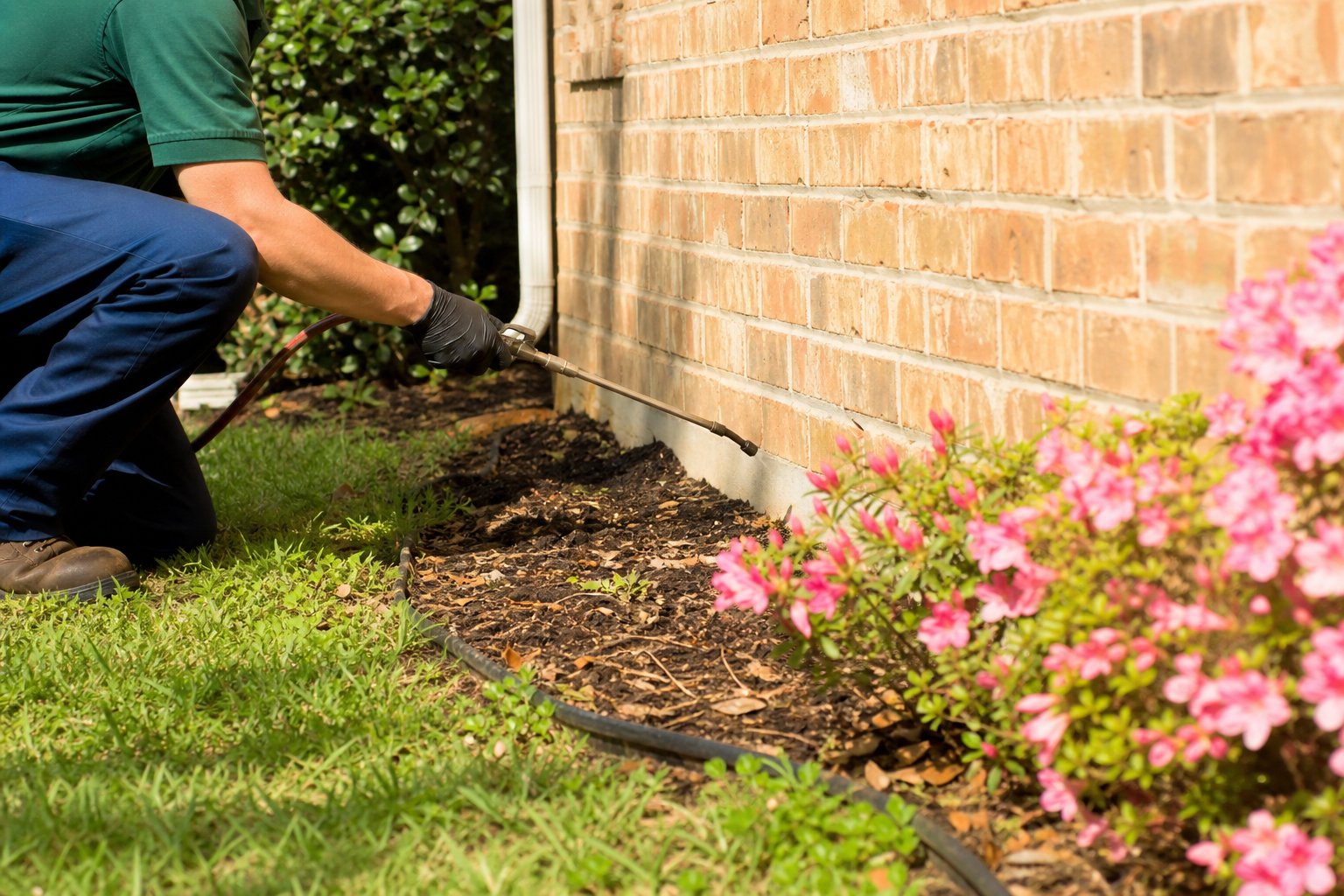
Most homes in Fort Worth, Arlington, and across Tarrant County need professional pest control service four times a year, once per season. That quarterly cadence matches how long exterior treatments hold up under Texas sun and rain, how quickly common pest life cycles turn over, and how our seasons hand pest pressure from one species to the next. It is the schedule our quarterly membership plans are built on, and the baseline that nearly every reputable provider in North Texas has converged on for good reason.
Frequency is not one-size-fits-all, though. Some situations call for more frequent attention, a few call for less, and specific infestations follow their own timelines entirely. The sections below give you the honest nuance behind the quarterly answer, so you can match a schedule to your actual home instead of a rule of thumb.
The Reasons Quarterly Fits This Region
Three local facts make four visits a year the natural rhythm here.
Treatments Are Designed to Fade
Modern exterior products are formulated to do their work and then break down rather than persist indefinitely, and North Texas heat, sun, and thunderstorms accelerate that clock. A barrier applied in March is well spent by summer's peak. Quarterly service renews protection just as the previous application winds down, so coverage never lapses.
Pest Life Cycles Turn Over in Weeks
Ants, roaches, crickets, spiders, and wasps reproduce on cycles short enough that a single year holds multiple generations. Eggs sheltered during one treatment hatch on their own schedule afterward. Visits spaced roughly ninety days apart mean each new generation meets a fresh barrier instead of an unprotected foundation.
Every Season Sends a Different Pest
Mild winters keep pests alive here year-round; they simply rotate. Spring wakes ant colonies and wasp queens, summer drives insects toward irrigated lawns and cooled homes, fall pushes rodents and spiders indoors, and winter concentrates activity inside walls and garages. A quarterly schedule gives each of those seasons its own dedicated visit, a rhythm we map out fully on our year-round pest control plan page.
When More Frequent Service Makes Sense
Certain properties and problems justify tightening the schedule beyond quarterly.
- Active infestations: established German roach populations and bed bug problems require targeted programs with follow-up visits weeks apart, not months, until the infestation is resolved.
- Mosquito season: effective mosquito programs run on their own in-season cadence. Our mosquito control service, included in the Premium tier and available as an add-on, follows that seasonal rhythm.
- High-pressure properties: homes against greenbelts, creeks, or open pasture in cities like Burleson, Trophy Club, and Midlothian face constant reintroduction and sometimes warrant extra attention during peak months.
- Commercial and food-service settings: restaurants, medical facilities, and multi-family properties typically run monthly or bimonthly schedules for regulatory and reputational reasons.
Membership handles the residential version of this need elegantly: free callbacks mean that when pressure spikes between quarterly visits, covered pests are treated at no extra charge, so the schedule flexes without your bill flexing with it.
When Less Frequent Service Can Work
A smaller set of homes can stretch the interval. A newer, tightly sealed home on a low-pressure lot, far from water and greenbelt, with no pet doors and disciplined exterior maintenance, may see little activity between semiannual treatments. The honest trade-off is that longer gaps mean longer stretches with a degraded barrier and no professional eyes on the property. Problems like rodent entry or a growing wasp presence do their early work invisibly, and catching them at month two costs far less than discovering them at month eight. Skipping scheduled service entirely and calling only when pests appear is the most expensive rhythm of all over time, as our one-time vs. ongoing comparison lays out.
What the Right Schedule Includes at Each Visit
Frequency only matters if each visit carries real substance. Every quarterly visit under a Trees Hurt Too Inc. membership includes exterior perimeter treatment, interior service on request, coverage for spiders, roaches, crickets, silverfish, earwigs, ants, and wasps, and a quarterly inspection by a Certified Applicator in Texas. Plus and Premium tiers extend the same visit to yard treatment, fire ants, mice and rats, and at the Premium level, mosquitoes, fleas and ticks, and carpenter ants.
Between visits, the membership keeps working: free callbacks for covered pests, priority scheduling, discounts on add-ons and specialty services, and an agreement that transfers with you anywhere in our service area. Plans start at $47 per month, and you can enroll in a pest control plan with a single call or text. The details of every tier live in our guide to what a pest control plan includes.
Frequency by Pest, at a Glance
Different pests run on different clocks, which is why one schedule question hides several answers. The quarterly baseline covers the everyday household pests, and the outliers below follow their own rhythms.
- Spiders, roaches, crickets, silverfish, earwigs, ants, and wasps: quarterly service with a maintained perimeter barrier manages all seven, which is exactly the basic service list on every membership tier.
- Fire ants: seasonal yard treatment keeps mounds from re-establishing through the warm months; covered on Plus and Premium, available as an add-on for Package members.
- Mice and rats: pressure concentrates in fall and winter, but exclusion-minded inspection matters year-round; covered on Plus and Premium, with rodent monitoring stations available as a Package add-on.
- Mosquitoes, fleas, and ticks: warm-season programs with their own in-season service intervals, included at the Premium tier and available as add-ons below it.
- German roaches and bed bugs: infestation programs with tightly spaced follow-ups until resolution, then a return to normal maintenance.
- Termites: prevention is a proactive program on its own schedule, available as an add-on on any plan.
The pattern across every row is the same: routine pests need routine renewal, and specialty pests need dedicated programs layered on top of it. A plan built the other way around, occasional general visits with no specialty coverage, leaves both jobs half done. When your current schedule is not holding, the signs are usually plain: the same pest returning between visits, activity in more than one season, or sightings moving from the yard to the interior. Each of those is a frequency problem before it is a product problem.

Frequently Asked Questions: Pest Control Frequency
1. How often should pest control be done in Texas?
Quarterly service, four visits a year, is the standard for Texas homes. The state's long warm seasons and mild winters keep pests active in every month, so protection needs renewal each season rather than once a year.
2. Is quarterly pest control really enough?
For most homes, yes, provided callbacks are available between visits. Quarterly renewal matches product breakdown and pest life cycles, and free member callbacks absorb the occasional between-visit surprise at no extra charge.
3. How often should pest control be done for apartments or rentals?
The same quarterly baseline applies, though shared walls can raise pressure since activity travels between units. Responsibility often sits with the property owner, so check your lease before scheduling service yourself.
4. How long does a pest control treatment last?
Exterior treatments hold up for roughly a season, with sun, heat, and rain gradually breaking them down. The quarterly interval exists precisely so a fresh application arrives before the previous one is spent.
5. Do I need pest control in the winter?
Yes. North Texas winters move pest activity indoors rather than stopping it. Rodents, roaches, and silverfish stay active in heated spaces, and the winter visit addresses exactly that indoor season.
6. How often should I treat for mosquitoes?
Mosquito programs run seasonally with their own service intervals during the warm months. Quarterly general service does not cover mosquitoes on its own, which is why mosquito control is a Premium inclusion and an available add-on for other tiers.
7. What if pests show up two weeks after my visit?
Members call or text and receive a free callback for covered pests, with priority scheduling. Activity soon after a treatment is common while a barrier settles, and callbacks exist so it never becomes a new bill.
8. How do I find the right frequency for my specific home?
A free inspection settles it. We look at your property's pressure points, structure, and history, then recommend a schedule honestly, quarterly for most, adjusted where your home genuinely needs it.
Helpful Links:
- Enroll in a Pest Control Plan
- Quarterly Pest Control Explained
- Year-Round Pest Control Plans
- One-Time vs. Ongoing Pest Control
- Pest Control Services
- Pest Library
Put Your Home on the Right Schedule
Trees Hurt Too Inc. has served Fort Worth and surrounding Tarrant County for over 28 years, and our recommendation always starts with your property rather than a sales script. A free inspection tells us what your home is actually facing, and the quarterly membership keeps that protection renewed season after season. Call or text to schedule a consultation and get a service schedule matched to your home, not a template.
Call: (972) 521-1552 | Text: (972) 521-1552 | treeshurttoo.com