

Hypoxylon canker is a devastating fungal disease that preys on stressed and weakened trees, thriving in the hot, drought-prone environment of North Texas. Unlike some pathogens that attack healthy trees, hypoxylon canker is considered an opportunistic fungus. It usually appears after a tree’s natural defenses have already been compromised by drought, construction injury, root compaction, or other environmental pressures.
While hypoxylon canker can affect many hardwood species, oaks are particularly vulnerable, with live oaks, red oaks, post oaks, and blackjack oaks among the most frequently impacted. Once symptoms appear, decline is often rapid, and in many cases, tree death is inevitable. This is why early detection and prevention, before the fungus has a chance to colonize stressed trees, are absolutely vital for homeowners. Proactive tree disease identification allows specialists to spot the warning signs early and recommend science-based strategies to protect at-risk trees.
Our North Texas Tree Disease Identification Guide provides a complete overview of regional tree health problems, but this post dives deeper into hypoxylon canker, one of the most destructive secondary pathogens in the area. In certain cases, targeted tree injections may be recommended as part of a broader management plan, helping to strengthen trees against opportunistic fungi and minimize the risk of further decline
What is Hypoxylon Canker?
Hypoxylon canker is caused by the fungus Hypoxylon atropunctatum (also known as Biscogniauxia atropunctata). Unlike oak wilt or root rot, which actively spread among trees, hypoxylon canker usually colonizes trees that are already stressed or weakened.
Here’s how it works:
- Latent Presence: The fungus lives quietly in many trees without causing visible harm, waiting for an opportunity when the tree’s defenses are lowered.
- Triggered by Stress: Extended drought, root damage, soil compaction, or construction injury weaken the tree, allowing the fungus to shift from dormant to aggressive.
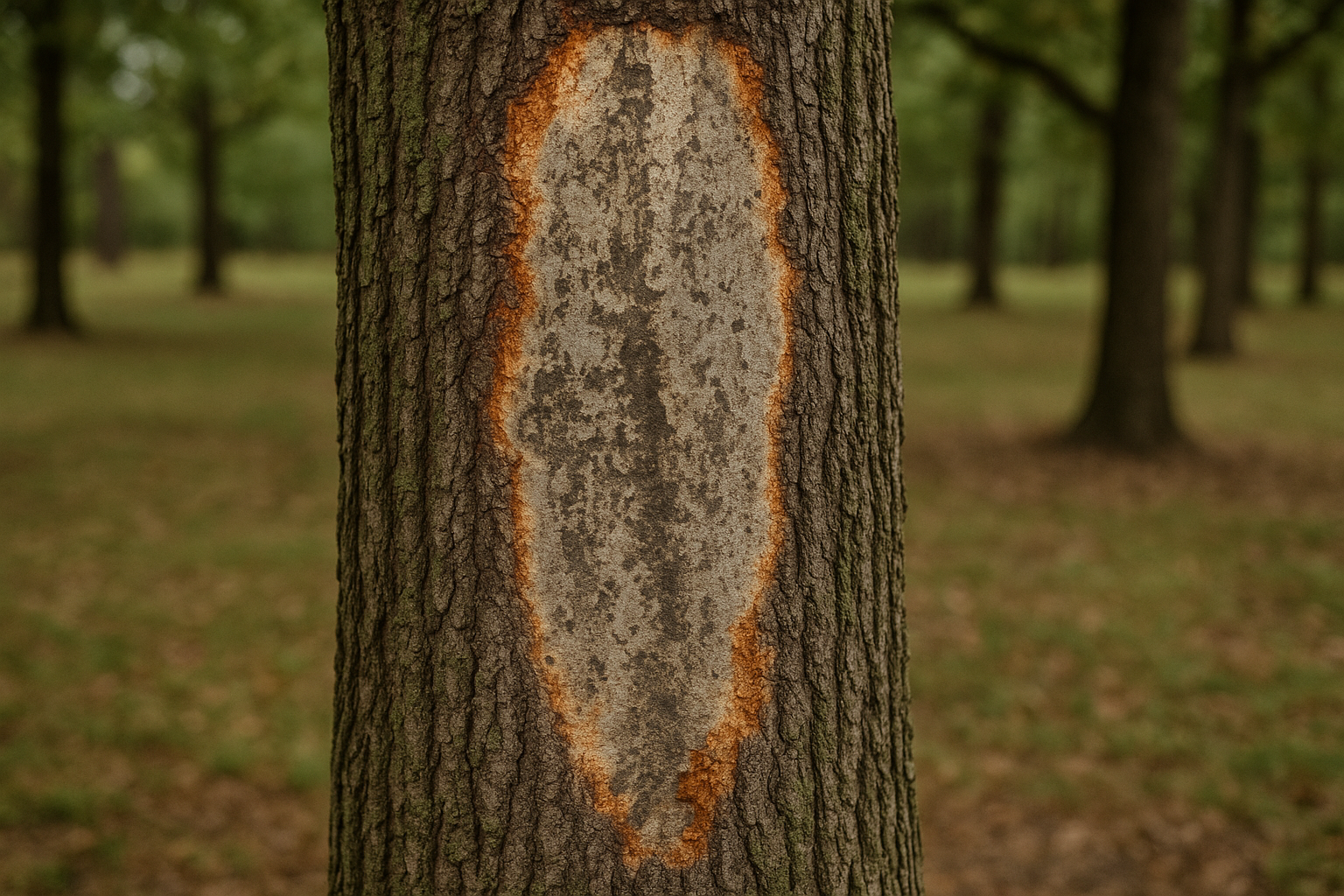
- Rapid Progression: Once active, hypoxylon canker grows beneath the bark, killing tissue and cutting off the tree’s ability to move water and nutrients. Large sections of bark begin to peel away, revealing fungal mats beneath.
- Tree Death: In advanced cases, trees can die within a single season, leaving behind brittle, unstable wood that poses safety risks.
Because hypoxylon canker typically strikes trees that are already struggling, it’s often called a “secondary invader.” This makes prevention, through proper irrigation, soil care, and stress reduction, the best defense.
Early Signs of Hypoxylon Canker
Catching hypoxylon canker in its earliest stages is critical, since once the disease is well established, treatment options are limited. Unfortunately, early signs often go unnoticed because they mimic other problems like storm damage, drought stress, or even insect infestations.
Bark Peeling and Shedding
One of the most distinctive early indicators is bark sloughing off in irregular patches. As bark falls away, it exposes underlying fungal mats, which appear gray, tan, or black depending on the stage of development. Healthy trees may shed bark naturally as they grow, but hypoxylon canker causes unusually large sections to peel at once, leaving the wood underneath vulnerable.
Stag-Head Dieback
The disease often begins at the top of the tree. Upper branches thin out and die back first, creating a “stag-head” appearance where leafless, skeletal branches stand above the rest of the canopy. Over time, this dieback progresses downward, leaving the tree visibly patchy and weakened.
Discoloration Under Bark
Peeling back infected bark reveals discolored, streaked, or mottled wood. Infected areas expand quickly, girdling branches or entire sections of the trunk. Unlike oak wilt, which primarily shows up in leaves, hypoxylon canker leaves its most telling signs beneath the bark.
Because these symptoms can overlap with those of Oak Wilt or Root Rot, professional arborist diagnosis is essential. Misidentifying the disease could mean wasted time and money on ineffective treatments.
Advanced Symptoms of Hypoxylon Canker
As hypoxylon canker advances, its effects become more dramatic, and often irreversible. At this point, the fungus has colonized large portions of the tree, cutting off circulation and accelerating decline.
Rapid Tree Decline
Unlike some slower-moving diseases, hypoxylon canker can cause large sections of the canopy to die within weeks or months. In many cases, entire trees succumb in a single growing season. For homeowners, this often feels sudden, even though the fungus was present long before symptoms appeared.
Powdery Spore Masses
In later stages, the fungus produces powdery, black or brown stroma (fungal fruiting structures) on the surface of exposed wood. These mats release spores into the air, which can settle on nearby trees. While spores typically only infect already stressed hosts, their spread increases risk for other vulnerable trees in the area.
Structural Hazards
By the time advanced symptoms appear, the wood of infected trees is often brittle and unstable. This creates fall hazards during storms, especially with large oaks or sycamores located near homes, driveways, or power lines. In these cases, removal is often the only safe option.
Why North Texas Trees Are at Risk
North Texas provides a perfect storm of conditions that make trees vulnerable to hypoxylon canker. Unlike regions with milder climates or well-drained soils, the stress factors here weaken trees and open the door for opportunistic fungi.
- Drought Stress: Long, hot summers deplete tree reserves, forcing them to use stored carbohydrates just to survive. Stressed trees have fewer resources to resist fungal invasion.
- Clay Soil Compaction: Much of North Texas is dominated by dense clay soils. These soils restrict oxygen flow and trap water after rainfall, stressing root systems and encouraging fungal activity.
- Urban Development: Construction projects, soil disturbance, and root injury from grading or trenching create wounds that lower a tree’s defenses. Even healthy trees can fall victim to hypoxylon canker after heavy equipment compacts soil or damages roots.
Homeowners in rapidly growing communities should be especially cautious. Preventive care such as Moisture Management helps offset these stressors by improving soil conditions and reducing tree vulnerability.
Prevention and Management
Because there is no cure once hypoxylon canker becomes established, the best strategy is prevention and proactive care.
Stress Reduction
- Deep Watering: Provide supplemental irrigation during extended droughts. A slow soak encourages roots to grow deeper and stay healthier.
- Proper Mulching: Apply 2–4 inches of organic mulch around the base (but not against the trunk) to regulate soil temperature and moisture. Mulch also reduces soil compaction.
- Nutrient Support: Use Deep Root Feeding to strengthen tree resilience.
Professional Monitoring
- Arborist Inspections: Early changes in bark texture, peeling, or canopy thinning can be subtle but detectable with a trained eye.
- Preventive Fungicide Treatments: While no treatment reverses advanced hypoxylon, fungicides may help reduce fungal activity in at-risk trees, especially when combined with stress-reduction measures.
Removal of Infected Trees
- Severe Infections: Once fungal mats are widespread, the tree cannot recover and becomes hazardous. Removal is necessary.
- Proper Disposal: Infected wood should be removed and destroyed properly to reduce spore spread. Leaving cut logs or firewood from infected trees on site allows spores to persist.
When to Call an Arborist
Because hypoxylon canker progresses quickly and can be mistaken for other bark diseases like oak wilt or root rot, professional diagnosis is essential. Arborists can determine whether stress management may extend a tree’s life or if removal is the safest option.
Early arborist intervention often:
- Prevents unnecessary tree loss through proper care.
- Protects neighboring oaks, sycamores, and elms from infection.
- Reduces risks of falling branches or entire tree failures.
Reach out via our Contact Us page to schedule inspection and treatment options.
FAQs About Hypoxylon Canker
Can hypoxylon canker be cured?
No. Once infection is advanced, trees cannot be saved. The only effective approach is prevention and stress reduction before symptoms appear.
Which trees are most susceptible?
Live oaks, red oaks, elms, sycamores, and pecans are commonly affected in North Texas landscapes.
How fast does it kill trees?
Trees can decline within months, especially during prolonged drought. Large sections of the canopy may die back in a single season.
How is hypoxylon canker different from oak wilt?
- Oak wilt starts with leaf vein discoloration and sudden leaf drop, while hypoxylon canker begins with bark peeling and fungal mats.
- Oak wilt spreads through insects and root grafts; hypoxylon spreads when trees are stressed and weakened.
Protecting Your Trees from Hypoxylon Canker
Although Hypoxylon canker is often fatal once visible symptoms appear, homeowners can take proactive steps to reduce the risk of infection before it starts. This fungal disease primarily targets trees already under stress; whether from drought, compacted soils, or mechanical injury. That’s why consistent tree and shrub care, combined with effective soil moisture solutions, plays such a vital role in prevention.
Healthy trees are more resilient to opportunistic fungi like Hypoxylon. Homeowners should focus on reducing environmental stress through proper watering, deep-root feeding, and regular pruning. Because North Texas soils tend to be dense and poorly drained, improving soil moisture management can make a major difference. Techniques such as deep watering, mulching, and the installation of moisture-monitoring systems help keep the root zone balanced, neither too dry nor oversaturated.
Trees Hurt Too Inc. provides comprehensive care with full service lawn and ornamental packages to help local property owners maintain healthy landscapes and prevent fungal outbreaks:
- Expert Diagnosis: Our ISA-certified arborists can accurately confirm whether your tree is suffering from Hypoxylon canker or another stress-related condition.
- Preventive Care: We implement customized tree and shrub care programs that include deep root feeding and advanced soil moisture solutions designed to strengthen root systems and reduce stress.
- With ongoing vigilance and professional support, you can significantly reduce the risks of Hypoxylon canker and safeguard the long-term health of your property’s landscape.
Visit our Tree Care Services page to learn how Trees Hurt Too Inc. protects against fungal diseases. You can also explore our North Texas Tree Disease Identification Guide for comparisons with other major threats to regional tree health