

Clay-heavy soils are common across North Texas. While they’re rich in nutrients, they also trap and hold water for long periods. After heavy rains followed by warm, humid weather, these soils can stay saturated, creating the perfect environment for fungal pathogens. This is why root rot has become one of the most damaging yet often overlooked tree problems in the region.
Unlike surface-level diseases that reveal themselves quickly in leaves, root rot begins underground, silently attacking a tree’s root system. By the time canopy thinning, yellowing foliage, or premature leaf drop appear, the disease is often advanced. That’s why early tree disease identification is so critical, catching the issue before symptoms become severe can be the difference between saving a tree and losing it altogether.
Treatment options for root rot and other fungal infections often include soil management, improved drainage, and in some cases, targeted tree injections that deliver fungicides or nutrients directly into the vascular system of the tree. These professional treatments can halt disease progression and give trees the support they need to recover.
What is Root Rot?
Root rot is a soil-borne fungal disease caused primarily by pathogens such as Phytophthora, Armillaria, and Pythium. These fungi thrive in waterlogged, oxygen-deprived soils, conditions that are common in the clay-heavy soils of North Texas.
Once established, these pathogens colonize the fine feeder roots that trees rely on for water and nutrient absorption. As the infection spreads:
- The roots begin to decay and turn black or mushy, often accompanied by a sour odor.
- The tree loses its ability to absorb enough water, leading to wilting despite adequate irrigation.
- In advanced cases, the fungus spreads upward, causing cankers at the root collar and weakening structural stability.
Because the disease operates below ground, it is often mistaken for drought stress, overwatering, or nutrient deficiencies. Accurate diagnosis requires professional inspection and sometimes laboratory analysis of root samples.
USDA Forest Service Root Disease Resources provides extensive research on fungal pathogens impacting trees across the U.S.
Early Signs of Root Rot
Root rot is deceptive because its first signs mimic other common problems like drought stress or nutrient deficiencies. Homeowners often continue watering or fertilizing, not realizing the real issue is underground. Recognizing the subtle early warnings can prevent costly tree loss.
Wilting Despite Watering
Trees with root rot often appear drought-stressed even when the soil is moist. The roots, damaged by fungal pathogens, can no longer absorb water efficiently. This symptom is particularly frustrating for homeowners because added irrigation seems to have no effect. If wilting persists after regular watering, root rot should be suspected.
Yellowing or Thinning Foliage
Leaves gradually lose their deep green color, turning pale, yellow, or even scorched at the edges. As the disease progresses, the canopy begins to thin, especially in the upper branches where water demand is greatest. While this can resemble heat stress, the persistence of yellowing despite watering is a warning sign of fungal root decline.
Stunted Growth
Infected trees may continue producing new leaves and shoots, but they are smaller, weaker, and fewer than normal. Flowering and seed production are often reduced, signaling that the tree’s energy reserves are being consumed by disease rather than growth.
These overlapping symptoms can also resemble those of Oak Wilt or Hypoxylon Canker, which is why accurate diagnosis by an arborist is critical.
Advanced Symptoms of Root Rot
As root rot progresses, the signs become more obvious and dangerous. At this stage, trees are often structurally compromised and may pose safety risks.
Foul Smell and Soft Roots
Digging near the root zone often reveals blackened, mushy roots with a sour, rotten odor. Healthy roots are firm and white inside, while infected roots collapse when pressed. This is a clear indicator that the fungus has extensively colonized the underground system.
Fungal Growth Near the Base
Mushrooms, conks, or other fungal mats often emerge around the root collar or at the soil line. These fruiting bodies signal that the disease is well established and actively spreading. Once visible mushrooms appear, root damage is usually extensive.
Leaning or Unstable Trees
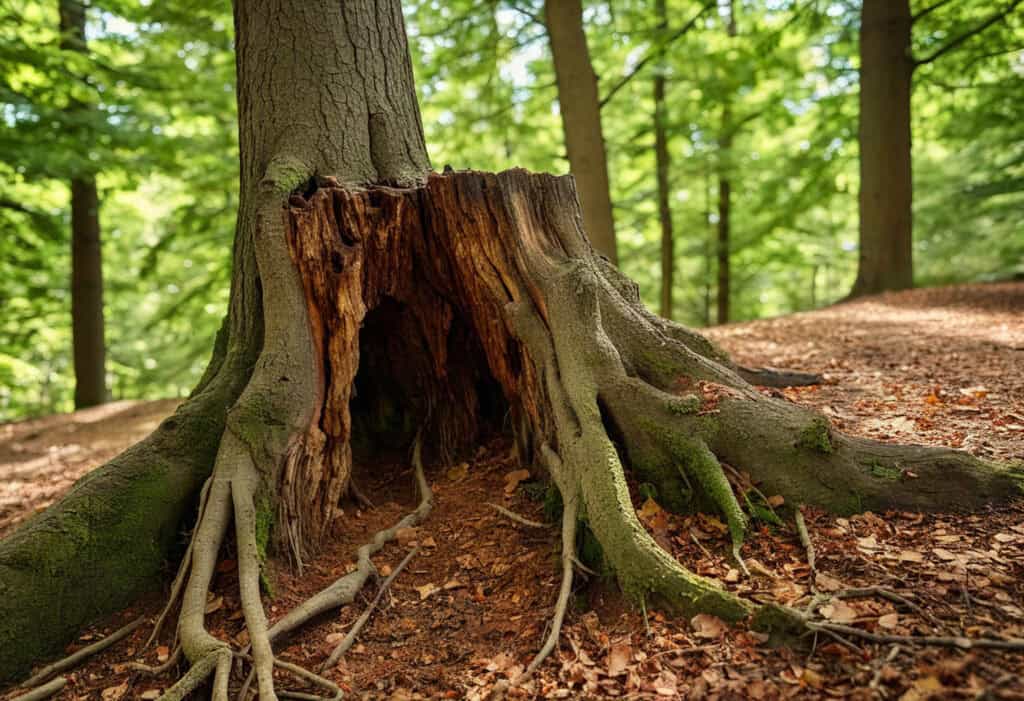
Severely rotted roots lose their anchoring strength, making large trees unstable. In stormy or windy conditions, such trees may lean or topple, posing serious hazards to property and people. At this stage, removal may be the only safe option.
Why Clay Soil Makes Root Rot Worse
Clay-heavy soils, which dominate much of North Texas, are both a blessing and a curse for trees. While they hold onto nutrients well, their physical structure creates conditions that invite fungal pathogens to thrive.
- Poor Drainage: Clay particles are tiny and tightly packed, leaving little space for water to escape. After rainfall or irrigation, water often pools at the root zone, suffocating roots and creating the damp conditions fungi love.
- Compaction: Over time, heavy clay becomes compacted under foot traffic, construction equipment, or even mowing. Compaction reduces oxygen exchange and forces roots to grow near the surface, making them more vulnerable to stress and infection.
- Temperature Swings: Clay heats up and cools down more slowly than sandy soils. This causes roots to experience extended stress during summer heat waves and cold snaps, weakening their defenses against opportunistic fungi.
These factors make clay-rich yards in North Texas especially prone to root rot when combined with overwatering or prolonged wet seasons. Professional Moisture Management solutions can significantly reduce these risks by improving drainage and regulating soil moisture levels year-round.
Preventing Root Rot in North Texas
Since root rot is difficult to reverse once advanced, prevention and early soil care are essential. Homeowners can take several proactive steps to keep trees healthy in clay-heavy soils:
Improve Drainage
- Install French drains, sump pumps, or grading adjustments to redirect standing water away from tree roots.
- Aerate compacted soil to improve oxygen flow and allow water to drain more freely.
- Incorporate organic matter like compost to break up dense clay and improve soil structure over time.
Deep Root Feeding
- Provides trees with targeted nutrients delivered directly to the root zone, bypassing compacted soil layers.
- Builds stronger root systems that are more resilient against fungal invasion.
- Learn more in our guide to Deep Root Feeding.
Water Smart
- Avoid frequent shallow watering, which keeps roots near the surface and encourages fungal growth.
- Water deeply but infrequently, allowing the soil to dry slightly between irrigation sessions.
- Use soaker hoses or drip irrigation to deliver water directly to the root zone without saturating the surface.
By combining better drainage, proper nutrition, and smart watering, North Texas homeowners can greatly reduce the risk of root rot and keep their trees strong, even in clay-heavy soils.
Professional Diagnosis and Treatment
One of the most challenging aspects of root rot is that it mimics other problems. Symptoms like wilting, yellowing, and thinning can easily be mistaken for drought stress, nutrient deficiencies, or even insect damage. This often delays proper treatment, giving the fungus more time to spread.
An accurate diagnosis requires:
- Arborist Inspection: Certified arborists examine above- and below-ground symptoms, including bark health, root collar condition, and canopy structure.
- Soil & Root Testing: In some cases, lab analysis of soil or root tissue is needed to confirm fungal pathogens like Phytophthora or Armillaria.
- Treatment Options: Depending on severity, treatment may include:
- Targeted Fungicides to suppress active fungal colonies.
- Soil Amendments such as compost or gypsum to improve drainage and reduce compaction.
- Structural Support like cabling, bracing, or selective pruning for weakened but salvageable trees.
- Removal if a tree is severely compromised and poses a safety risk.
If you suspect root rot, don’t wait until the tree leans or mushrooms appear at the base, by then, damage is often advanced. Schedule an expert inspection through our Tree Care Services to protect your landscape.
FAQs About Root Rot in Texas
Can root rot be cured?
Not always. Once roots are extensively decayed, there is no way to regenerate them. However, early intervention with soil aeration, fungicides, and improved irrigation practices can slow or even halt disease progression in many cases.
Which trees are most at risk?
- Live oaks: Their widespread root systems make them especially vulnerable.
- Maples and Elms: Susceptible to fungal pathogens in wet, compacted soils.
- Ornamental Species: Japanese maples, dogwoods, and fruit trees often struggle in poorly drained clay-heavy soils.
Can mulch help prevent root rot?
Yes, but only when applied correctly. A 2–4 inch layer of organic mulch helps regulate soil moisture and temperature. However, mulch should never touch the trunk, piling it against the base traps moisture, encouraging fungal growth and bark decay.
How can I tell root rot from drought stress?
Root rot trees may appear wilted even after heavy rain or irrigation. With drought stress, trees typically recover after consistent watering. When in doubt, consult a professional to distinguish between the two.
Protecting Your Trees from Root Rot
Root rot is a common but manageable problem in North Texas landscapes. By maintaining healthy soil conditions, improving drainage, and monitoring trees for early symptoms, homeowners can dramatically reduce risk. At Trees Hurt Too, our certified specialists take a proactive approach through full service lawn and ornamental packages that address the root causes of disease, not just the symptoms. With expert soil analysis, targeted treatments, and consistent monitoring, we help protect your trees, turf, and ornamentals so your landscape stays healthy and thriving all year long.
Key steps include:
- Practicing Soil Moisture Solutions to keep soil evenly balanced.
- Investing in Deep Root Feeding to strengthen root systems.
- Following smart irrigation habits to avoid overwatering in clay-heavy soils.
- Scheduling regular professional tree and shrub care checkups for ongoing protection.
With vigilance and timely intervention, your trees can remain strong, healthy, and resilient for years to come, despite the challenges of North Texas clay soils.
Visit our Contact Us page to schedule a consultation and protect your trees from root disease. For additional comparisons with other fungal diseases, explore our North Texas Tree Disease Identification Guide.