
Mice vs. Rats in North Texas: Which Do You Have?

The smartest way to protect your trees, lawn, and Home
Locally owned and family operated, proudly serving North Texas. Get your free, no-obligation quote. Or call (972) 521-1552.
Free Quote
Mice vs. Rats: Identification for North Texas Homes
Something is moving in the attic, the pantry has been raided, and the first question is the right one: mouse or rat? The answer changes everything that follows. Mice and rats behave differently, travel differently, and require different trap sizes, bait placements, and exclusion work. Treating a rat problem with mouse-scale tactics wastes weeks while the population grows, and misreading a mouse problem as rats leads to equipment the mice will simply ignore.
The evidence tells you which rodent you have long before you see one. Droppings, sounds, gnaw marks, and travel patterns each point clearly one direction. This guide walks through the differences the way our technicians read them in homes across Fort Worth, Arlington, and the surrounding Tarrant County communities. Rodent coverage for mice and rats is included in the Plus and Premium plans of our pest membership plans, so identification, treatment, and monitoring are handled as one ongoing service.
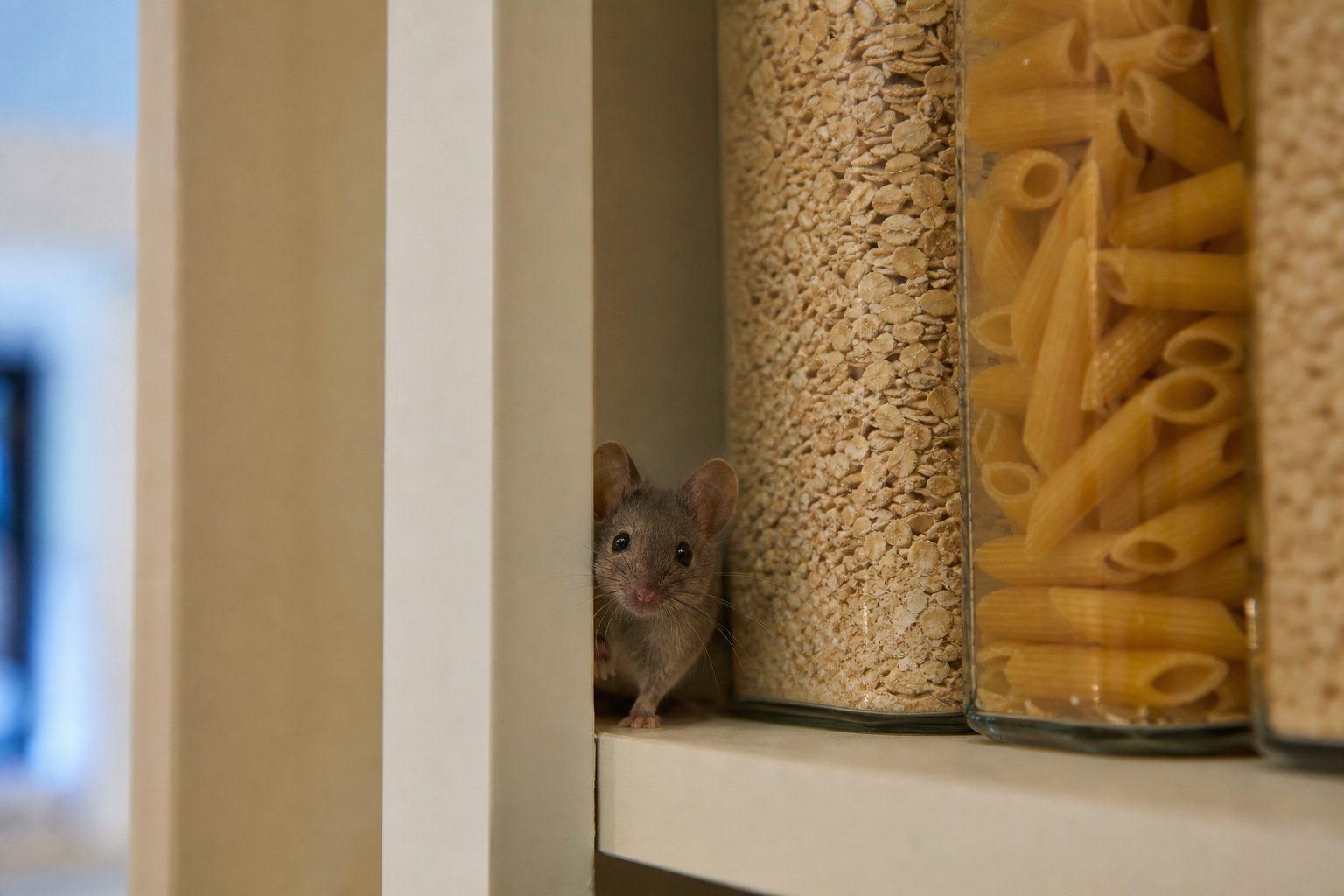
The North Texas Lineup
Three rodents cause nearly all home infestations in Tarrant County:
- House mouse. Small and gray-brown, with a body a few inches long, large ears, and a thin tail about as long as the body. Curious, quick, and comfortable living entirely indoors.
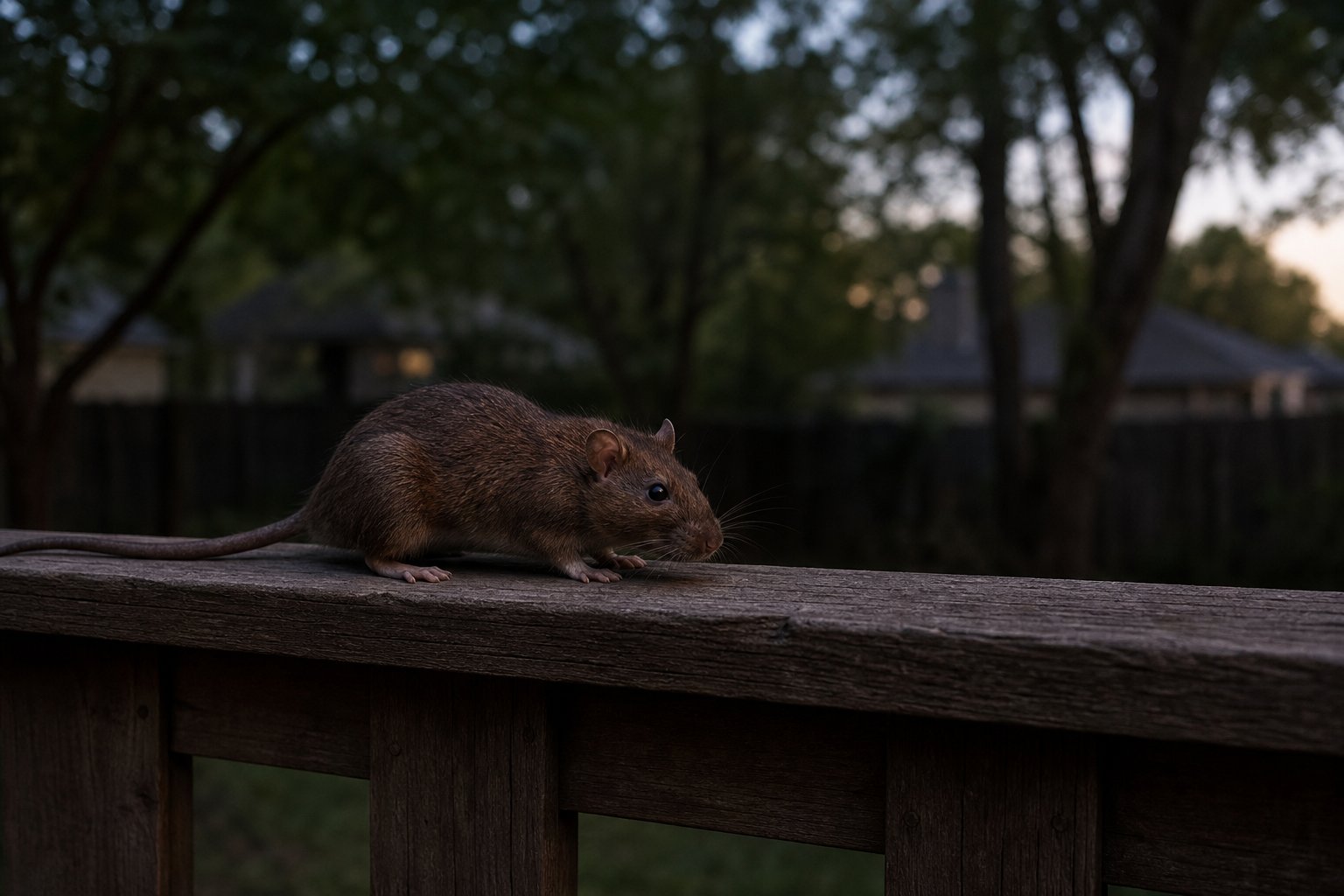
- Roof rat. The dominant rat of North Texas neighborhoods. Sleek and dark, with a body around seven or eight inches and a tail longer than the body. An expert climber that travels fence tops, tree limbs, and power lines into attics.
- Norway rat. Heavier and blunter, with a shaggy brown coat and a tail shorter than the body. A burrower found at ground level, more common near creeks, dumpsters, and older infrastructure than in attics.
Roof rats deserve special mention because mature trees and dense fence lines across neighborhoods in Colleyville, Southlake, Grapevine, and Keller are exactly the highway system they prefer. Our rodent identification page covers each species in more depth.
Read the Evidence
Droppings
Mouse droppings are rice-grain sized, dark, and pointed at the ends, scattered in large numbers along cabinet edges and drawers. Rat droppings are several times larger, blunt or spindle-shaped, and appear in smaller numbers along established runways. Size is the single most reliable indicator you can check yourself.
Sounds
Mice produce light scratching and skittering, often in walls near the kitchen. Rats are heavier: distinct thumps, gnawing, and running sounds in the attic, usually within an hour or two after sunset when roof rats leave to forage and again before dawn when they return.
Gnaw Marks
Mice leave fine, shallow gnawing on food packaging and small openings the size of a dime. Rats leave coarse, deep gnawing on wood, plastic, and even soft metals, with openings closer to a quarter or larger. Rat gnawing on wiring is a genuine fire hazard, and on plumbing lines it can cause hidden leaks.
Runways and Rub Marks
Rats follow fixed routes and leave greasy rub marks along baseboards, rafters, and entry holes. Mice roam less predictably and rarely leave visible grease trails. Dark smudges around a hole in the eaves are a roof rat signature.
Location
Attic activity in North Texas is roof rats until proven otherwise. Kitchen and pantry activity at floor level leans mouse. Ground burrows along foundations, sheds, and compost areas point to Norway rats.
Why the Difference Changes the Treatment
Mice are curious and investigate new objects, so fresh trap placements produce fast results. Rats are deeply cautious, avoiding new objects for days, which is why DIY rat trapping so often catches nothing and convinces homeowners the rats have left. Equipment scale matters too: mouse traps cannot hold rats, and rat-scale exclusion gaps differ from the dime-sized openings mice use. Roof rats also demand attention at the roofline, tree limbs, and utility lines, not just the foundation, which is where a company with real tree expertise reads the property differently than a truck with a ladder.
Both rodents contaminate food and surfaces, carry parasites, and gnaw constantly. Neither problem resolves on its own, and a pair of mice or rats becomes a population within weeks.
What Both Rodents Cost a Home
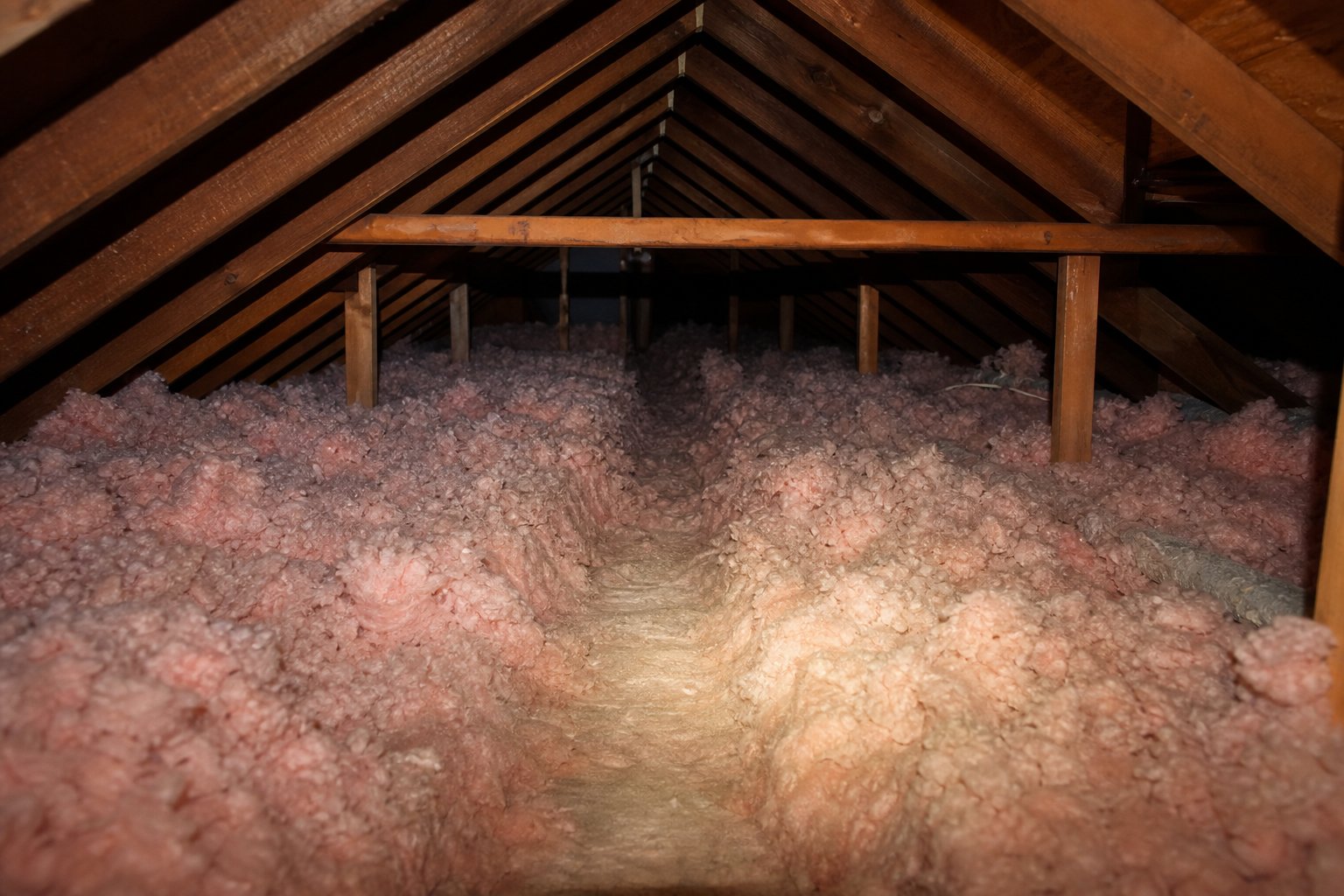
The risks overlap even where the animals differ. Both species contaminate far more food than they eat, leaving droppings and urine along every route they travel, and both carry parasites such as fleas and mites into the structure. Both gnaw constantly to wear down ever-growing teeth, and attic wiring is a favorite target; chewed insulation on electrical lines is one of the quiet fire risks of an untreated infestation. Rats add scale to every problem: bigger openings gnawed into the building, damage to ductwork and stored belongings, and gnawing on plastic plumbing lines that can produce slow, hidden leaks. Nesting material pulled from attic insulation degrades its performance, which shows up on summer cooling bills long after the rodents are gone.
Timing matters because of reproduction. Both species breed quickly enough in the protected environment of an attic or wall void that a two-rodent problem in October is a colony by January. The first cool front of fall is the traditional starting gun for rodent entry across North Texas, which makes late summer the ideal moment to get sealing and monitoring in place.
How Trees Hurt Too Handles Rodents
Our rodent service starts with identification, then matches the response: placement and equipment sized to the species, entry-point sealing, and monitoring to confirm the structure stays clear. The full program, including exclusion work, is described on our rodent monitoring and exclusion page.
Mice and rats are included in the Pest Package Plus and Pest Package Premium plans, which start at $67 and $77 per month. Every plan includes quarterly service, a quarterly inspection, and free callbacks between visits, and members on the base Pest Package plan can add rodent monitoring or full mice and rat treatment coverage as add-ons. Details are on the quarterly service membership page.
Frequently Asked Questions: Mice vs. Rats
Can mice and rats live in the same house?
Rarely at the same time. Rats prey on mice and outcompete them for food and territory, so an established rat population usually pushes mice out. Finding both kinds of droppings more often means old evidence from one species and fresh evidence from the other.
What is running in my attic at night?
In North Texas, attic noise after dusk is most often roof rats. Squirrels are the daytime equivalent; they are active at dawn and daylight, while roof rats move in the first hours after sunset. Squirrels are wildlife, which we do not handle, so correct identification also tells you whether we are the right call. Heavy thumps, gnawing, and rolling sounds around the same times each night point strongly to rats.
How small a gap can rodents use to get in?
Mice can pass through openings roughly the size of a dime, and rats through a hole about the size of a quarter. Both can enlarge smaller gaps by gnawing. Weep holes, roofline gaps, garage door corners, and utility penetrations are the usual doors into Tarrant County homes.
Why does my clean house have rodents?
Shelter drives infestations as much as food. Attics, wall voids, and garages offer warm nesting space regardless of housekeeping, and bird feeders, pet food, fruit trees, and outdoor grills supply calories. Mild winters here keep rodent populations active and breeding nearly year-round.
Are roof rats really that common in nice neighborhoods?
Yes, and mature landscaping is exactly why. Roof rats travel tree limbs, fence tops, and utility lines, and established neighborhoods across Tarrant County provide continuous elevated highways. A limb touching the roof is a bridge, which is why our inspections look up as carefully as down.
How many rodents do I have if I saw one?
One sighting rarely means one animal. Rodents are secretive and mostly nocturnal, so the individual bold or crowded enough to be seen in daylight usually represents an established population behind the walls. Droppings tell the real story: quantity, freshness, and locations map the size and spread of the problem better than sightings ever will.
Do I need a professional for a rodent problem?
DIY trapping can catch individuals, but lasting control means finding every entry point, sealing them correctly, and confirming the structure is clear afterward. Rats in particular defeat casual trapping through sheer caution. Professional monitoring closes the loop that store-bought equipment leaves open, and correct species identification at the start keeps the whole effort from being sized wrong.
Helpful Links:
Identify First, Then Protect
Trees Hurt Too Inc. handles rodent problems throughout Tarrant County and nearby communities, including Fort Worth, Arlington, Colleyville, Southlake, Grapevine, Keller, North Richland Hills, Hurst, Euless, Bedford, and Grand Prairie. Locally owned and family operated, we have served this area for over 28 years, and the mature-tree neighborhoods we know best are exactly the ones roof rats favor. Describe what you are hearing and finding, or send photos of the droppings, and we will tell you exactly what you are dealing with and what the right response looks like for your home. Call or text (972) 521-1552 or request your free, no-obligation quote today.