Sunscald and Bark Damage Trees DFW
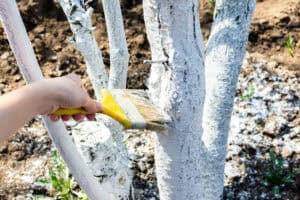
Protect Your Trees from Sunscald and Bark Damage As May arrives in the Dallas-Fort Worth area, homeowners begin to enjoy …


Locally owned and family operated, proudly serving North Texas. Get your free, no-obligation quote. Or call (972) 521-1552.
Free QuoteSoil compaction is one of the most pervasive and most under-addressed tree health challenges in North Texas. When decades of residential use, construction, and clay soil chemistry converge to eliminate the pore space that tree root systems depend on for oxygen, water, and nutrient access, the damage accumulates invisibly below the surface while trees continue to look acceptable above ground. Root zone aeration addresses this accumulated compaction problem by restoring oxygen, improving drainage, and rebuilding the soil structure that healthy tree root systems require. Trees Hurt Too, Inc. provides ISA Certified Arborist-supervised root zone aeration services for trees and shrubs throughout North Texas, using methods that address soil compaction at the depth relevant to tree roots rather than just the surface.
"Soil compaction in North Texas is one of those problems that does not announce itself until it is well advanced. The tree looks fine, maybe a little thin, maybe the leaves are a bit smaller than they used to be. But when I probe the root zone in a lot of residential properties around Tarrant County and Dallas County I find soil that is completely compressed, no meaningful pore space, no oxygen exchange. That tree has been running on a fraction of its potential root function for years without anyone knowing. Addressing that compaction gives the root system something it has not had access to in a long time." Ken, ISA Certified Arborist Tx-3265-A | Owner, Trees Hurt Too, Inc.
We provide free on-site evaluations throughout North Texas. Call (972) 521-1552 to schedule your evaluation or visit our Tree Health Care and Arborist Services page.
North Texas Blackland Prairie clay has an unusually fine particle size that packs tightly under mechanical pressure. Unlike sandy soils that maintain structure under load, clay compresses and eliminates the air-filled pore space that root systems require for oxygen exchange and water movement. Once clay is compacted, it does not rebound when pressure is removed. The compaction that accumulates over decades of residential activity is effectively permanent without deliberate professional intervention.
Tree roots require oxygen just as the above-ground portions of the tree do. When compacted clay eliminates root zone pore space, root systems become oxygen-deprived regardless of how much water is present. Anaerobic root zone conditions slow root metabolism, limit nutrient uptake, and promote the anaerobic fungal pathogens including Phytophthora that cause root rot. Trees in severe oxygen-deprived root zones are simultaneously starved of nutrition, susceptible to root pathogens, and unable to absorb water efficiently even when soil moisture is adequate.
Oakley says...
No charge. No obligation. An ISA Certified Arborist visits your property and gives you honest answers before recommending anything.
Air spading uses compressed air to excavate compacted soil from around tree roots without the mechanical damage that metal tools cause to root tissue. The high-pressure air stream fractures and displaces compacted soil while leaving roots intact. This allows visual inspection of the root system, identification of problems including girdling roots and root rot, and replacement of excavated compacted soil with amended, aerated backfill that restores healthy root zone structure. Air spading is the most comprehensive root zone aeration method available and is particularly valuable for high-value trees or trees showing significant stress.
Vertical mulching involves drilling or boring holes throughout the root zone and backfilling them with porous organic material. This creates aeration channels that allow oxygen and water movement through the otherwise compacted clay profile, improving root zone conditions without full excavation. Vertical mulching is appropriate for established trees where full air spading is not practical.
Our deep root feeding program delivers not just nutrients but also biological stimulants including mycorrhizal fungi and beneficial microorganism inoculants that help restore soil biology. A biologically active soil is less prone to the anaerobic conditions that compaction promotes because active soil life maintains the biological processes that cycle oxygen through the soil profile. This approach addresses compaction consequences while the soil biology simultaneously works on longer-term structural improvement. Learn more at our Deep Root Feeding page.
Managing the wet-dry cycling that accelerates clay compaction over time is an important component of long-term aeration maintenance. Our moisture management program using Hydretain helps stabilize soil moisture levels, reducing the extreme shrink-swell cycling that progressively closes clay soil pore space between rain events.
For information on how aeration combines with our fertilization program visit our Tree Fertilization page.
Your Tree Cannot Wait
Early diagnosis is the difference between saving and losing a tree. Call our ISA Certified Arborist directly for same-week evaluations throughout the DFW area.
(972) 521-1552Free on-site evaluation • No obligation • Honest answers
We provide professional tree and shrub root zone aeration throughout the DFW metroplex. Root zone aeration is especially valuable for established trees in mature residential neighborhoods throughout Tarrant County and Dallas County where decades of residential compaction have accumulated. Key communities include Fort Worth, Bedford, Hurst, Euless, and North Richland Hills.
Root zone aeration involves improving soil structure and oxygen levels in the area where tree roots function, through air spading, vertical mulching, or deep injection of aeration solutions. The goal is to relieve soil compaction, increase root zone oxygen, and improve drainage in North Texas's chronically compacted clay soils.
Tarrant County and Dallas County Blackland Prairie clay compacts under residential use to the point of eliminating root zone pore space, cutting off oxygen to root systems regardless of irrigation or surface fertilization. Decades of accumulated compaction create a chronic oxygen and drainage deficit that progressively limits tree health.
Compacted clay eliminates the pore space roots need for oxygen exchange and water infiltration. Anaerobic root zones promote root rot pathogens and prevent normal nutrient uptake. Trees in compacted soil are simultaneously nutrient-limited, disease-vulnerable, and unable to efficiently absorb water even when moisture is present.
Air spading uses compressed air to excavate compacted soil from around tree roots without mechanical root damage. This allows root inspection, problem identification, and replacement of compacted soil with aerated amended backfill that restores healthy root zone conditions. It is the most comprehensive root zone aeration method available.
Lawn aeration works at shallow depths appropriate for turf roots. Tree root zone aeration must address compaction at the depths relevant to tree roots using air spading, vertical mulching, or deep injection that penetrate well below the surface layer.
Trees declining primarily from compaction stress can show significant improvement following root zone aeration combined with deep root fertilization, provided adequate live root tissue remains. Early intervention provides much better outcomes than waiting until decline is advanced.
Yes. Trees Hurt Too provides completely free on-site tree evaluations throughout the DFW area with no obligation. Call (972) 521-1552 or request your evaluation through our contact page.
Trees Hurt Too provides ISA Certified Arborist tree and shrub root zone aeration throughout North Texas. View our complete service area or call (972) 521-1552. For additional information on soil compaction and tree health visit the Texas A&M AgriLife Extension.
Protect Your Trees Year-Round
Our certified arborist-supervised annual programs include:
On-site evaluation and custom program quote
Get My Custom Program QuoteNo contracts • Cancel anytime
Stay informed about lawn care, tree care and pest related issues in your area!
Protect Your Trees from Sunscald and Bark Damage As May arrives in the Dallas-Fort Worth area, homeowners begin to enjoy …
Why Trees Drop Leaves in May in the Dallas-Fort Worth Area If you’ve noticed leaves scattered across your lawn in …
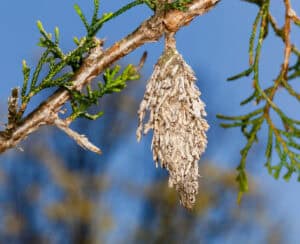
Identify and control bagworms before they damage your North Texas trees and shrubs this season.