
Wasp Control in Fort Worth & Tarrant County, TX

The smartest way to protect your trees, lawn, and Home
Locally owned and family operated, proudly serving North Texas. Get your free, no-obligation quote. Or call (972) 521-1552.
Free Quote
Wasp Control for Fort Worth and Tarrant County Homes
Wasps are one of the most common warm-season pest problems in Fort Worth, Arlington, and the surrounding Tarrant County communities. Our long, hot summers and mild winters give paper wasps, yellow jackets, and mud daubers an extended season to build nests under eaves, inside grill covers, behind shutters, and in the quiet corners of patios and play sets. A nest that starts as a few cells in April can hold a full, defensive colony by July, right where your family spends the most time outdoors.
Trees Hurt Too Inc. provides professional wasp control throughout Tarrant County and nearby Dallas County communities. We treat active nests safely, remove them where accessible, and then focus on what matters most: preventing the next colony from settling in. As a locally owned and family operated company, we approach wasp problems the same way we approach every service, with prevention first and a plan built around your specific property.
Wasp coverage is built into the basic service on every plan in our Oakley's Pest Solutions VIP Membership, so your quarterly visits keep nesting pressure down all season instead of reacting after someone gets stung.
Why Wasps Thrive in North Texas
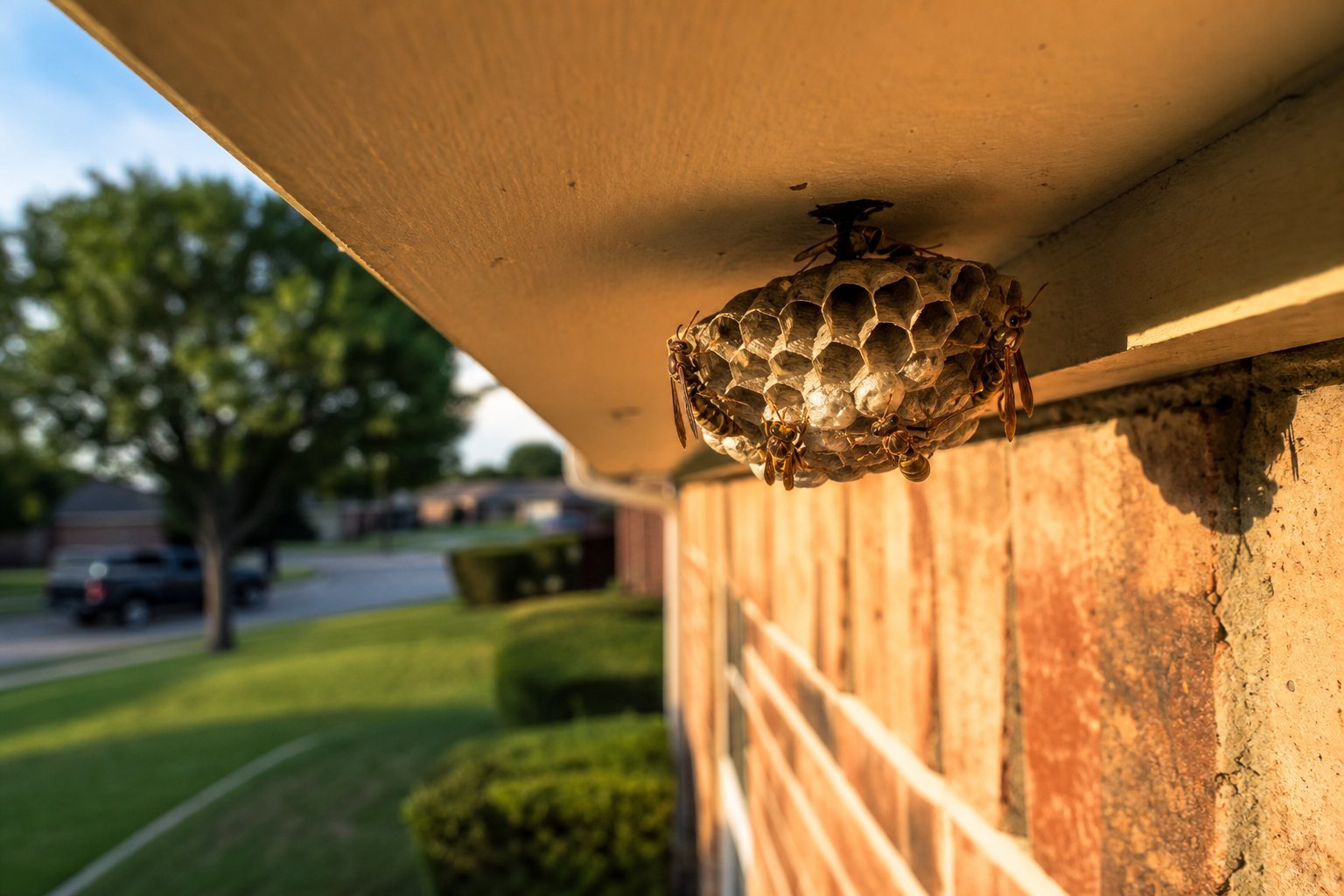
North Texas gives wasps nearly everything they need. Warm temperatures arrive early in spring, when overwintered queens emerge and begin scouting protected nesting sites. Brick homes with deep eaves, covered patios, sheds, and fence lines offer hundreds of sheltered spots. Summer heat pushes wasps to seek out water sources such as pools, birdbaths, and irrigation heads, which brings them into closer contact with people. Because Tarrant County winters are mild, more queens survive to start new colonies each spring than in colder regions.
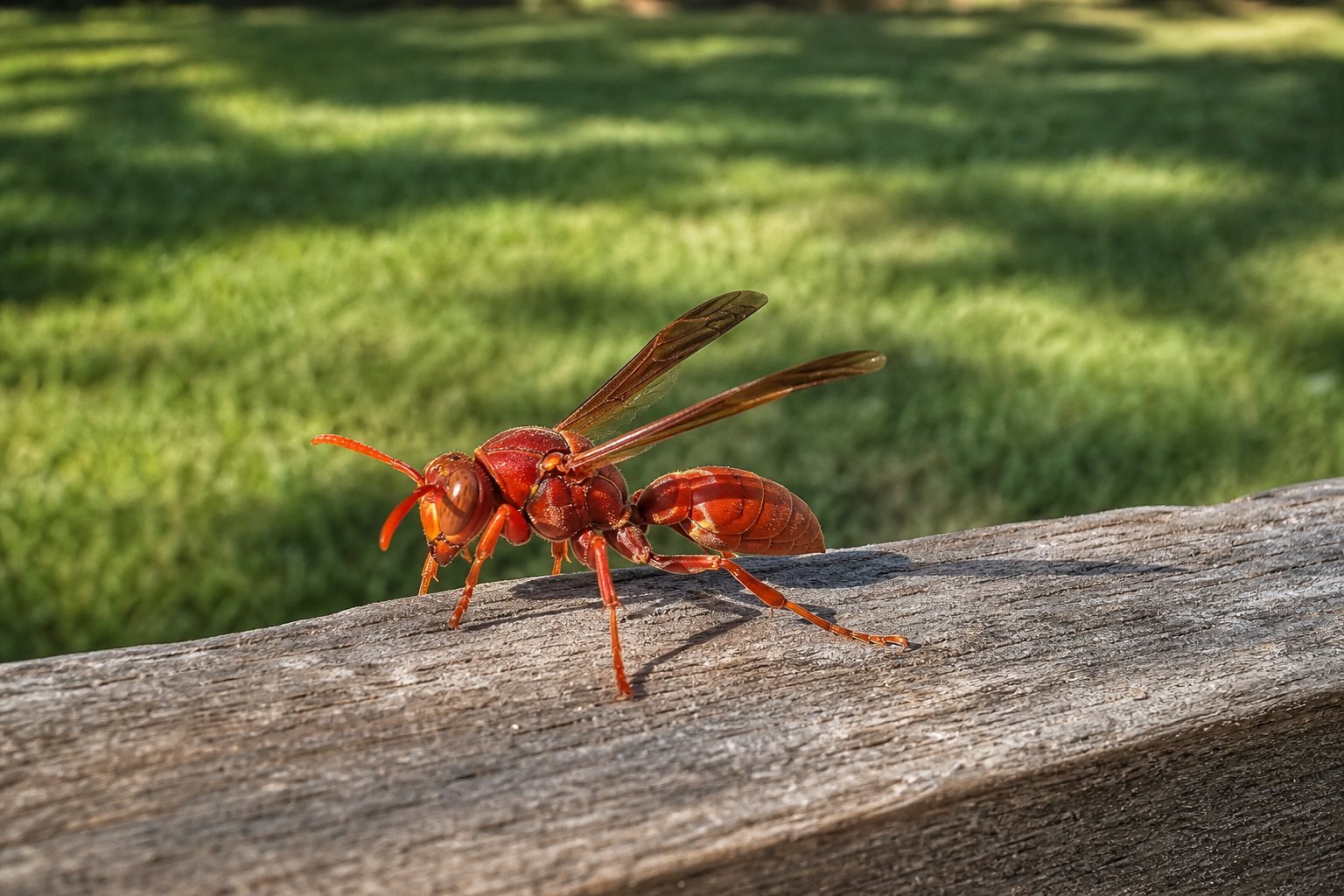
Paper wasps are the most common nest builders around local homes, hanging open, umbrella-shaped combs under eaves and porch ceilings. Yellow jackets often nest in the ground, in wall voids, or in dense shrubs, and they defend those nests aggressively. Mud daubers build tube-shaped mud nests on brick and siding; they rarely sting but their nests signal a healthy spider population, since spiders are their primary prey. You can compare these species in more detail in our North Texas wasp and hornet identification guide.
Signs of a Wasp Problem
Most homeowners notice wasp activity before they find the nest. Watch for these patterns around your home:
- Steady wasp traffic to one point under an eave, soffit, or shutter
- Visible paper combs on porch ceilings, play sets, or grill lids
- Wasps entering a hole in the ground, a weep hole, or a gap in siding
- Scraping sounds or activity around wall voids and attic vents
- Increased wasps around pools, pet water bowls, and trash areas in late summer
Late summer is when stinging incidents peak in Tarrant County. Colonies reach their largest size, food sources shift, and workers become more defensive. Addressing nests early in the season is far easier and safer than confronting a mature colony in August.
Why DIY Wasp Sprays Fall Short
Store-bought wasp sprays can knock down a small, exposed nest, but they leave the bigger problem untouched. Sprays rarely reach yellow jacket colonies hidden in the ground or inside wall voids, and a partially treated nest often turns defensive. Homeowners on ladders, reacting to agitated wasps, are a common recipe for falls and stings. DIY treatment also does nothing about the conditions that attracted the colony, so a new queen often rebuilds in the same protected spot the following spring.
Professional wasp control works differently. The goal is not one nest; it is a property where nests do not get established in the first place.
How Trees Hurt Too Controls Wasps
Our approach to wasp control follows the same prevention-first process we use across our pest control services:
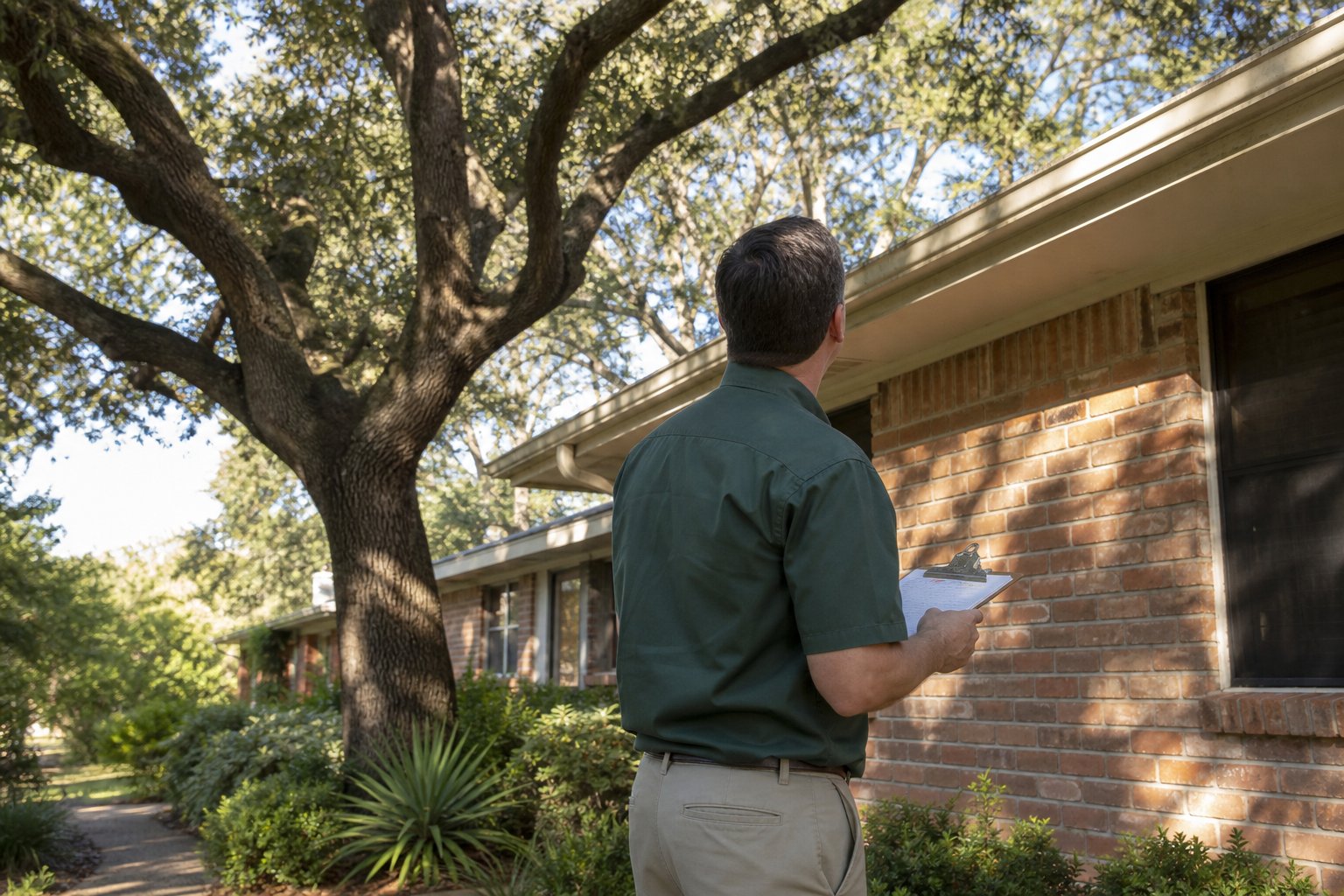
- Inspection. We walk the full property, checking eaves, soffits, shutters, fence lines, sheds, and ground-level nesting sites, and we identify the species involved.
- Targeted treatment. Active nests are treated with products and methods matched to the species and location, then removed where safely accessible.
- Prevention. We treat known nesting zones and harborage points around the structure so returning queens do not resettle.
- Ongoing protection. Quarterly service keeps nesting pressure low through the entire March-to-October wasp season, and we return between visits if activity comes back.
Every treatment is applied by licensed professionals using science-based, eco-friendly methods, with your family, pets, and pollinators in mind. We target wasp nesting sites specifically rather than blanketing the yard.
Wasp Coverage in the Membership
Wasps are included in the basic service on all three plans of our year-round pest control membership: Pest Package, Pest Package Plus, and Pest Package Premium. Plans start at $47, $67, and $77 per month, with quarterly service visits and free callbacks between visits. That means wasp prevention is not an extra charge or a one-off trip; it is part of every scheduled visit, along with coverage for spiders, roaches, crickets, silverfish, earwigs, and ants.
Members also receive a quarterly inspection with every visit, so new nests get spotted and treated while they are still small.
A Wasp Season Timeline for Tarrant County
Early spring, March and April. Overwintered queens emerge from attics, wall voids, and bark crevices to scout nesting sites. Each future colony is a single queen and a comb the size of a quarter at this stage, which makes early spring the cheapest, safest moment of the entire year to prevent wasps. A treated perimeter now means most queens never settle.
Late spring, May and June. The first workers hatch and take over foraging while queens stay on the nest laying. Combs under eaves become visible, traffic patterns get established, and small nests start appearing on play sets, grills, and fence caps. Nests treated in this window are still small and low-risk.
Summer peak, July and August. Colonies reach full size and full defensiveness. Heat pushes wasps to pools, pet bowls, and irrigation for water, which is when most sting incidents happen. Yellow jacket ground nests, hidden all spring, are now large enough to react to mower vibration.
Fall, September through November. Colonies raise next season's queens and workers shift toward sweets, showing up around drinks, fruit, and trash. Activity fades with sustained cold, but mild North Texas winters let plenty of queens overwinter successfully, often on the same properties they came from. The cycle then repeats, which is exactly why quarterly prevention outperforms one-off nest removal.
Where We Provide Wasp Control
Trees Hurt Too Inc. provides wasp control across Tarrant County and nearby communities, including Fort Worth, Arlington, Mansfield, Keller, Southlake, Grapevine, Colleyville, North Richland Hills, Hurst, Euless, Bedford, Burleson, Grand Prairie, and Irving. Our home base in Forest Hill keeps response times short throughout the county.
Frequently Asked Questions: Wasp Control in Fort Worth
When is wasp season in Tarrant County?
Wasp activity in North Texas typically runs from early spring through late fall. Queens begin building nests in March and April, colonies peak in July and August, and activity tapers once consistent cool weather arrives. Mild winters mean some activity can continue into November.
Are wasps dangerous to my family?
Most wasps sting only when their nest is threatened, but stings are painful and can trigger serious allergic reactions in some people. Yellow jackets are the most defensive species in our area and can sting repeatedly. Nests near doors, patios, and play areas should be treated promptly.
Should I spray a wasp nest myself?
Small, exposed paper wasp nests can sometimes be handled by a careful homeowner, but ground nests, wall-void nests, and anything requiring a ladder are best left to professionals. A partially treated colony becomes defensive, and yellow jacket nests in particular can contain far more wasps than the entrance suggests.
Do you remove the nest or just treat it?
We treat the colony first, then remove the nest wherever it is safely accessible. Removing old combs matters because abandoned nests can attract secondary pests, and some species will reuse or build beside old nest material.
Will quarterly service really keep wasps away?
Quarterly visits interrupt the nesting cycle. Treating eaves, soffits, and known nesting zones each season discourages queens from settling, and our inspections catch new nests while they are still the size of a golf ball. Free callbacks cover any flare-up between visits.
Do wasps come back to the same nest every year?
Old nests are generally not reused, but nest sites absolutely are. Queens overwinter close to where they were raised, and a protected eave that hosted a colony last summer is a strong candidate again this spring. Treating and removing old combs, then keeping the site treated, breaks the pattern.
Do wasps do anything good for my yard?
Wasps are predators of caterpillars, flies, and other yard pests, and they contribute to pollination. Our goal is not to remove every wasp from your neighborhood; it is to keep nests off your home and out of the areas where your family lives and plays.
Helpful Links:
- Wasps, Hornets & Yellow Jackets: North Texas ID Guide
- Pest Control Services
- Pest Library
- Membership Plans & Pricing
Protect Your Home Before the Next Nest Appears
Trees Hurt Too Inc. has served Fort Worth and surrounding Tarrant County for over 28 years. Wasp control works best when it starts before the colony does, and a quarterly plan keeps it that way all season. Call or text (972) 521-1552 or request your free, no-obligation quote today.