
Wasps, Hornets & Yellow Jackets: A North Texas Identification Guide

The smartest way to protect your trees, lawn, and Home
Locally owned and family operated, proudly serving North Texas. Get your free, no-obligation quote. Or call (972) 521-1552.
Free Quote
Types of Wasps in North Texas
North Texas is home to several stinging insects that homeowners lump together as "wasps," but the differences between them matter. A paper wasp under the eave, a yellow jacket colony in the ground, and a mud dauber tube on the brick call for completely different responses. Some are highly defensive; others almost never sting. Knowing which one you are looking at tells you how urgent the problem is and whether professional treatment makes sense.
This guide covers the wasps and hornets most often found around homes in Fort Worth, Arlington, and the surrounding Tarrant County communities. Trees Hurt Too Inc. has served this area for over 28 years, and identification is always the first step in our treatment process. Wasp coverage is part of the basic service on every plan in our pest control membership, so identification and prevention happen automatically at every quarterly visit.
Paper Wasps
Paper wasps are the wasps most Tarrant County homeowners see. They are slender, about three-quarters of an inch to an inch long, with long dangling legs in flight. Local species range from reddish brown to dark brown with yellow markings.
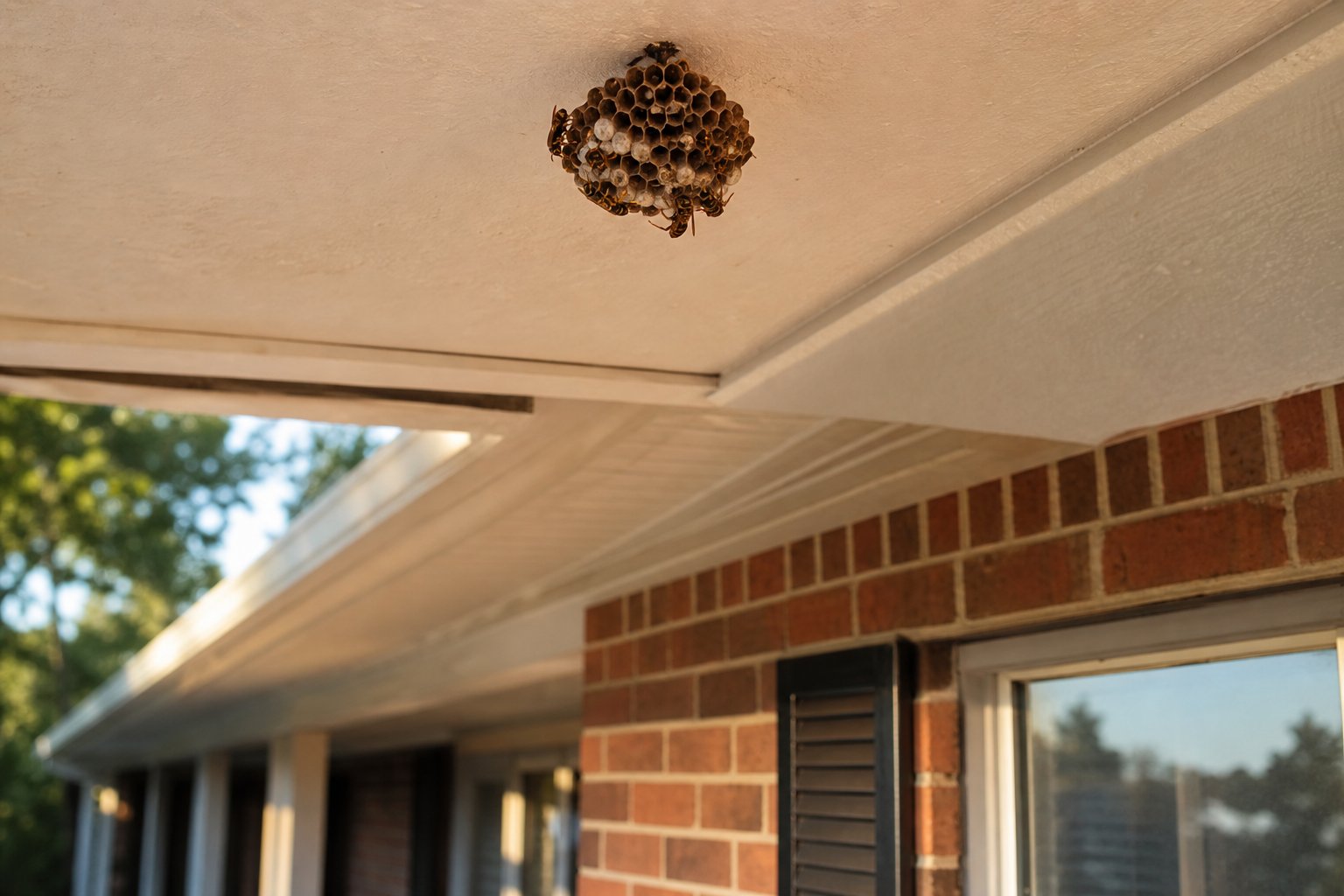
Nest: An open, umbrella-shaped paper comb hanging from a single stalk, with visible hexagonal cells. Common sites include eaves, porch ceilings, shutters, grill lids, mailboxes, and play sets.
Behavior: Paper wasps defend their nest but are not aggressive away from it. They hunt caterpillars and other soft-bodied insects, which makes them mildly beneficial in gardens. The problem is location; a comb over your front door or patio is a sting waiting to happen.
Risk level: Moderate. Stings are painful and colonies grow more defensive as they enlarge in late summer.
Yellow Jackets
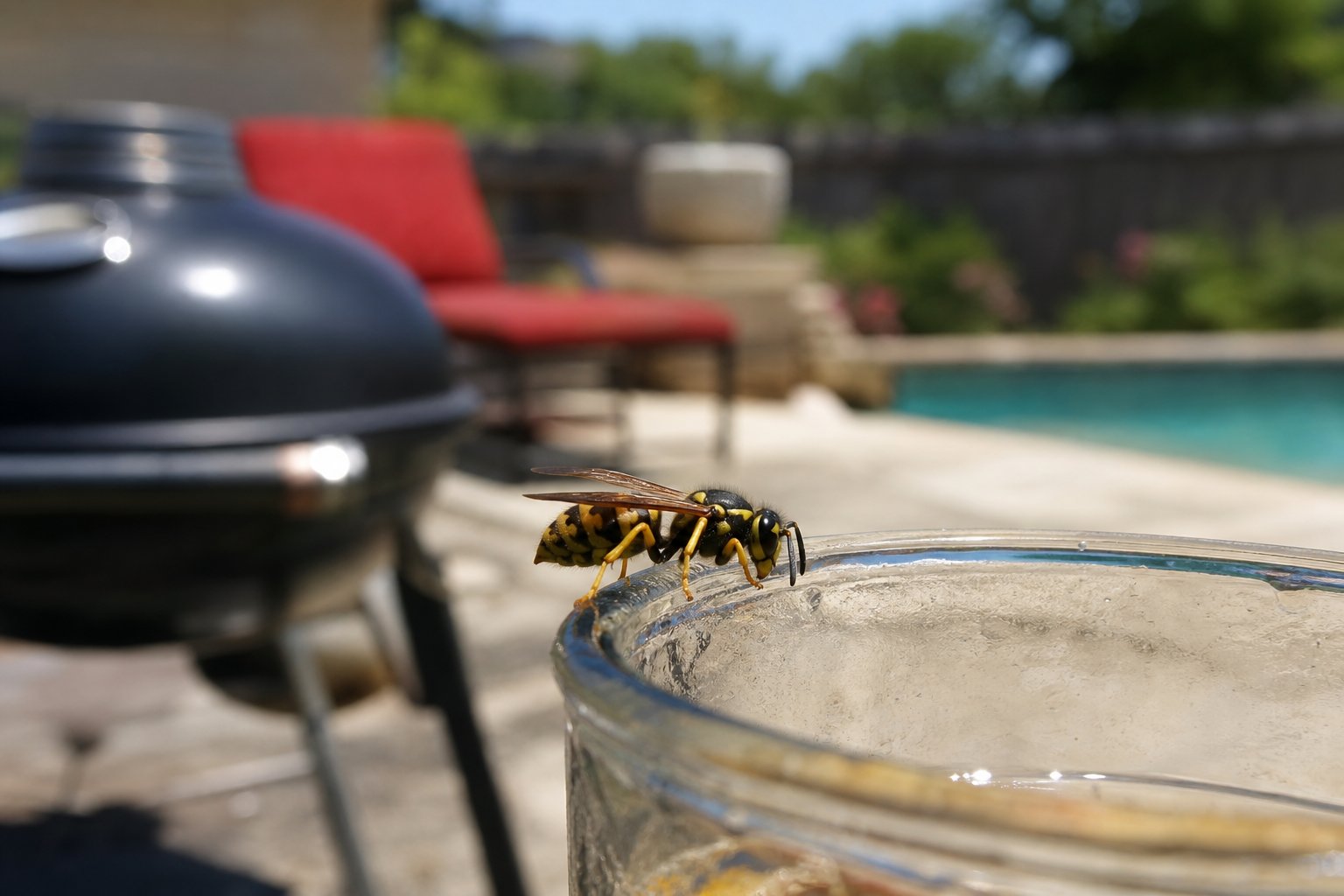
Yellow jackets are shorter, stockier, and brighter than paper wasps, with bold black and yellow banding and a quick, darting flight pattern. They are the most defensive stinging insects in North Texas.
Nest: Usually hidden. Yellow jackets nest in abandoned rodent burrows, ground cavities, wall voids, and dense shrubs. The nest itself is enclosed in a papery envelope and can hold thousands of workers by late summer, far more than the small entrance hole suggests.
Behavior: Yellow jackets scavenge as well as hunt, which draws them to trash cans, pet food, sweet drinks, and cookouts. They defend their nest in numbers and can each sting repeatedly. Lawn mowing over a hidden ground nest is one of the most common ways Tarrant County homeowners get stung.
Risk level: High. Ground and wall-void nests should be treated professionally.
Mud Daubers
Mud daubers are long, slender wasps, often metallic blue-black or black with yellow markings, with a distinctive thread-thin waist.
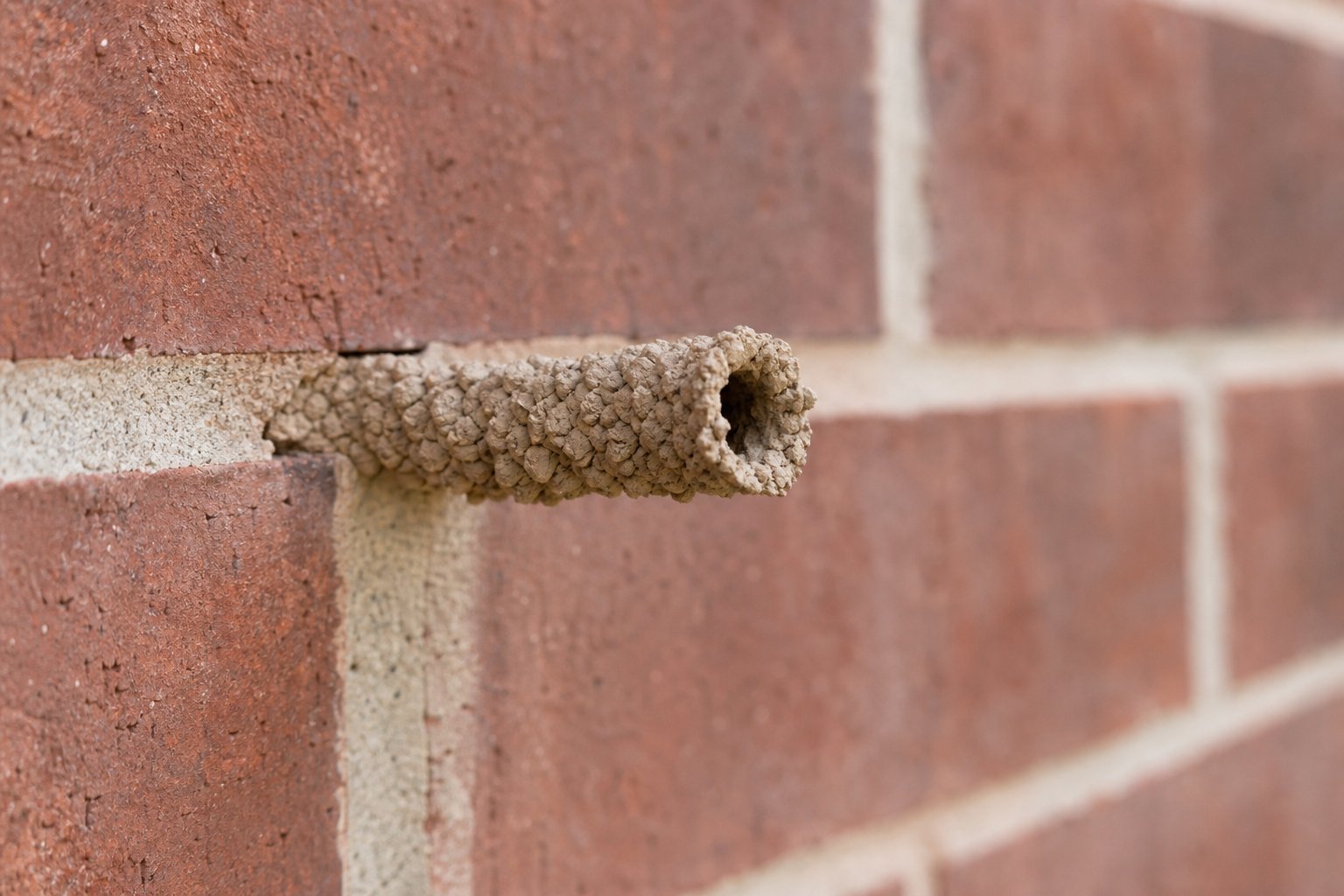
Nest: Tubes or clumps of dried mud attached to brick, siding, porch ceilings, garages, and attic walls. Each tube is packed with paralyzed spiders that feed the developing larva.
Behavior: Mud daubers are solitary and rarely sting, even when their nest is disturbed. Their presence usually signals a healthy spider population nearby, since spiders are their prey. Old mud nests can also be reused by other insects.
Risk level: Low. Nests are mostly a cosmetic issue, though heavy mud dauber activity is a good reason to look at spider control.
Cicada Hawks
Cicada hawks, the large ground-digging cicada wasps of Texas summers, are the giants of the group, up to an inch and a half long, with rusty heads, amber wings, and black abdomens banded in yellow. They appear in mid to late summer when cicadas are calling.
Nest: Burrows in bare, well-drained soil, often in lawns, flower beds, and along sidewalk edges, marked by a U-shaped mound of excavated dirt.
Behavior: Females hunt cicadas to provision their burrows. Males patrol territories and may hover at people aggressively, but they cannot sting. Females can sting but almost never do.
Risk level: Low for people, though burrowing can disturb lawns and beds when populations build.
What About True Hornets?
The bald-faced hornet, a large black and white relative of the yellow jacket, builds gray football-shaped paper nests in trees and on structures. It is less common in North Texas than paper wasps or yellow jackets but does occur here, and its colonies are highly defensive. The European hornet is rare in our area. Large enclosed paper nests of any kind deserve professional attention rather than a DIY attempt.
Quick Identification Checklist
- Open comb under an eave: paper wasps
- Traffic in and out of a hole in the ground or wall: yellow jackets
- Mud tubes on brick or ceilings: mud daubers
- Very large wasp digging in the lawn: cicada hawk
- Gray, enclosed, football-shaped nest: bald-faced hornets
When Identification Should Lead to Treatment
Location and species drive the decision. A mud dauber tube on the garage is harmless. A paper wasp comb over a doorway, a yellow jacket nest in a wall void, or any nest near a play area is a genuine safety issue, especially for family members with sting allergies. Colonies also grow all season, so a nest found in May is far easier to treat than the same nest in August.
Our wasp control service covers inspection, species identification, nest treatment and removal, and season-long prevention. For homeowners who want stinging insects handled before nests form at all, wasps are included in the basic service on all three plans of our quarterly protection plan, which starts at $47 per month and also covers spiders, roaches, crickets, silverfish, earwigs, and ants.
Making Your Home Less Attractive to Wasps
Prevention starts with what draws wasps in the first place. Open trash cans, uncovered pet food, sweet drinks left on patios, and ripe or fallen fruit all feed late-season colonies. Standing water in birdbaths and plant saucers supplies drinking sites during summer heat. Structurally, unsealed soffit gaps, torn vent screens, and deep, sheltered eaves offer nest real estate; sealing gaps and keeping shutters and trim tight removes options. During the September and October sweet-seeking phase, keeping outdoor eating areas cleaned up matters more than any other single habit. A quarterly treated perimeter completes the picture by making the structure itself an unfriendly place for a queen to settle in spring.
The identification step still comes first. Knowing whether the traffic at your fence line is harmless mud daubers or a yellow jacket colony determines whether you need to act at all.
Frequently Asked Questions: Wasps in North Texas
What is the most common wasp in Tarrant County?
Paper wasps are the most common wasps around North Texas homes. Their open umbrella-shaped combs under eaves, porch ceilings, and shutters are a familiar sight from spring through fall in Fort Worth, Arlington, Keller, and across the county.
How can I tell a wasp from a bee?
Wasps have smooth, shiny bodies with a narrow waist, while bees are rounder and fuzzy. Wasps can sting repeatedly; honey bees sting once. Bees visit flowers for pollen, while wasps are more often seen hunting insects, scavenging food, or building nests on structures.
Are yellow jackets wasps or hornets?
Yellow jackets are true wasps, though many Texans call them hornets. The bald-faced hornet, despite its name, is actually a type of yellow jacket. Naming aside, both build enclosed colonies that defend themselves aggressively, which is what matters for safety.
Do mud daubers sting?
Mud daubers almost never sting, even when handled roughly or when their nests are removed. They are solitary and have no colony to defend. Their mud tubes are unsightly but harmless, and they actively reduce spider populations around your home.
Why do I have so many wasps but no visible nest?
Hidden nests are common. Yellow jackets nest underground and inside wall voids, and paper wasps sometimes build behind shutters, inside attic vents, or in shed corners. Steady traffic to one spot is the giveaway. A professional inspection can trace the flight line to the nest.
When do wasps go away in North Texas?
Most colonies decline after the first real cold snaps, typically late November into December here. Mated queens overwinter in protected spots, including attics and wall voids, then start new nests in spring. Prevention treatments in early spring stop those queens from settling on your home.
What should I do if I get stung?
Move away from the nest area first, because alarmed colonies recruit defenders. Wash the site, apply a cold compress, and monitor for spreading swelling, hives, dizziness, or trouble breathing, which are signs of an allergic reaction that needs immediate medical care. Anyone with a known sting allergy should follow their doctor's emergency plan without waiting on symptoms.
Who should I call for a wasp nest in Fort Worth?
Trees Hurt Too Inc. treats and removes wasp nests throughout Fort Worth and Tarrant County. Call or text (972) 521-1552 for a free quote, or ask about membership coverage that keeps nests from forming in the first place.
Helpful Links:
Identify It, Then Prevent It
Trees Hurt Too Inc. has served Fort Worth and surrounding Tarrant County for over 28 years. Send us a photo of the nest or the insect and we will tell you what you are dealing with. Call or text (972) 521-1552 or request a free, no-obligation quote.