

Texas landscapes face intense weather extremes: scorching heat, prolonged drought, sudden freezes, and dense clay soils that compact year after year. While most homeowners focus on spring preparations, the quiet winter months offer the perfect opportunity to rebuild and reset your soil.
A year-end soil reset sets the stage for healthier trees, stronger root systems, and better moisture retention long before spring growth begins. For Texas clay soils especially, winter is the season when the most meaningful improvements can happen.
During winter, biological activity slows above the surface, but underground, roots remain active and responsive to improved soil conditions. This makes winter the ideal time to address long-standing soil issues that are harder to correct during the growing season. Cooler temperatures reduce evaporation, allowing amendments to integrate more deeply into the soil profile without drying out or becoming locked into hardened clay.
Additionally, winter moisture softens dense clay soils, conditions that make it far easier to incorporate organic matter, gypsum, or soil conditioners. Instead of battling rock-hard soil in summer, winter provides the natural environment needed for amendments to break through compaction, improve aeration, and strengthen the soil’s structure.
A strategic year-end soil reset not only corrects seasonal nutrient imbalances but also prepares trees and shrubs to handle Texas’s unpredictable spring temperature swings. By enhancing soil health now, you’re building resilience that lasts throughout the demanding growing season ahead.
Why Winter Is the Ideal Season for Soil Amendments
Winter might seem like a dormant period for your landscape, but beneath the surface, roots continue functioning. Cooler temperatures, slower evaporation, and reduced plant stress create prime conditions for soil conditioning. In fact, many of the improvements you make now will carry your landscape through spring growth, summer heat, and periods of drought.
1. Reduced Plant Stress
During the growing season, plants are constantly allocating energy toward producing new leaves, flowers, and shoots. In winter, the demands on the plant dramatically decrease, allowing them to focus on root recovery and nutrient absorption. This means soil amendments applied during winter can be absorbed more effectively, strengthening the root zone and supporting long-term health.
Winter is also a time when root systems expand more slowly but more steadily. Without competing demands from foliage production, the roots can integrate nutrients and organic matter more deeply into the soil, making every amendment more impactful.
2. Better Moisture Retention
Winter weather typically brings more consistent moisture levels, which is essential for activating soil amendments like organic matter, humates, and microbial inoculants. Cooler temperatures slow evaporation, allowing soil to retain water longer and giving amendments time to break down and integrate.
This moisture consistency also reduces stress on soils that are prone to cracking or shrinking in the summer. By improving soil structure now, you set the stage for better water retention and more efficient irrigation when temperatures rise.
This makes winter the perfect time to implement Soil Moisture Solutions designed specifically for Texas landscapes.
3. Clay Soil Is Most Workable in Winter
Texas clay soils are notorious for their density and compaction, especially during the summer months when heat bakes them into a hardened, impenetrable layer. Winter moisture softens the clay, creating a rare window when amendments can actually move into the soil profile rather than sitting unused on the surface.
When clay is more pliable, soil amendments can:
- penetrate deeper into the root zone
- break apart compaction layers
- create better pore space for air and water movement
- reduce the risk of standing water and poor drainage
- boost microbial activity essential for soil health
Winter also minimizes the risk of surface runoff, meaning your investment in soil conditioning stays exactly where it’s needed.
If you're improving clay soil in winter, you’re choosing the most effective season for long-term results and healthier spring growth.
What Soil Amendments Work Best During Winter?
Whether your soil is compacted, depleted, or struggling with moisture retention, winter is the ideal time to incorporate targeted amendments that work with the cooler temperatures and increased moisture levels. Because plants are less active and soil conditions are more stable, amendments applied now can integrate more deeply and effectively than during any other season.
Organic Matter: The Foundation of Soil Health
Organic matter is one of the most powerful tools for transforming Texas clay. Winter is the perfect time to add compost, shredded leaves, pine fines, or aged wood chips because they decompose slowly and steadily in cool weather. As they break down, they:
- increase microbial diversity
- improve soil texture
- boost nutrient availability
- enhance moisture retention
In dense clay soils, organic matter works like a long-term structural rebuild, loosening heavy soils and creating pathways for air, roots, and water.
Soil Conditioners and Humates
Winter is the strongest season for applying soil conditioners that thrive in stable, cool environments. These include:
- humic acid
- fulvic acid
- liquid compost extracts
- biochar
These conditioners improve soil chemistry, support microbial health, and help bind nutrients so they remain available for spring growth. Humates, in particular, improve cation exchange capacity, meaning your soil can hold and release nutrients more efficiently.
Biochar is especially valuable in Texas because it increases pore space in clay soil and helps retain moisture during summer droughts. When applied in winter, it becomes fully charged with nutrients before spring.
Gypsum for Clay Improvement
Gypsum is a powerful amendment for breaking apart compacted clay. When winter moisture softens the soil, gypsum can travel deeper into the profile and work more efficiently.
Gypsum applications in winter help:
- reduce soil compaction
- improve drainage in heavy clay
- increase root penetration
- minimize surface crusting
This is particularly helpful in areas with standing water or poorly draining beds, very common problems in North Texas landscapes.
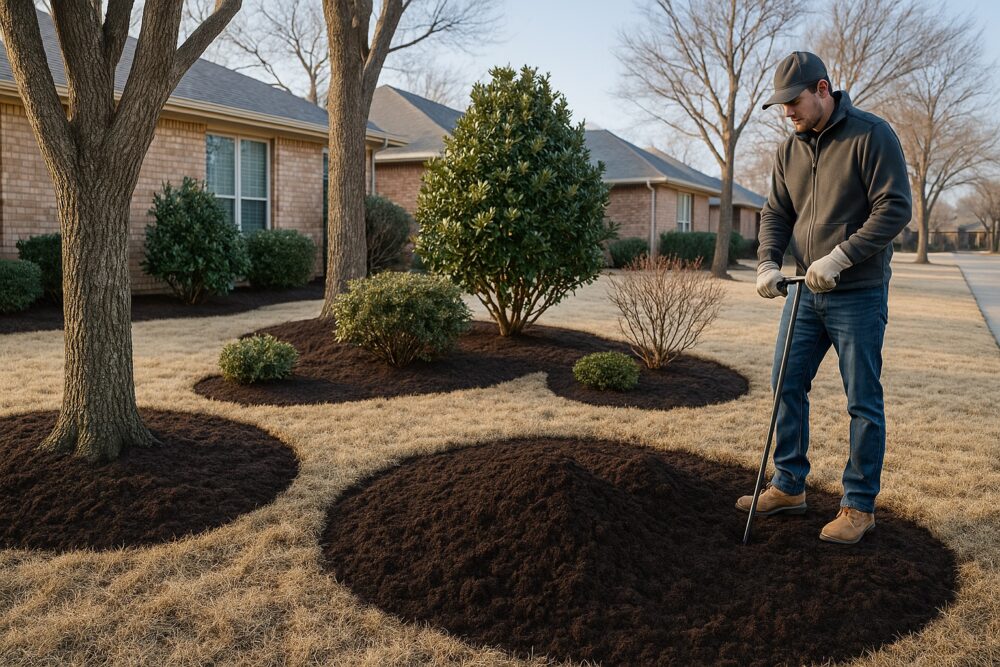
Mulch for Insulation and Moisture Balance
Mulch is more than a finishing touch, it is a protective winter shield for your soil. During winter, mulch helps:
- insulate root zones from temperature swings
- retain soil moisture during windy cold spells
- prevent soil compaction from winter rains
- reduce freeze-thaw heaving around young trees and shrubs
A 2–3 inch layer of high-quality mulch also helps organic matter break down naturally, feeding the soil throughout winter and early spring.
By applying mulch in winter, you create a stable microenvironment that strengthens young roots and protects long-term soil structure.
How Soil Moisture Solutions Enhance Winter Soil Health
Our Soil Moisture Solutions program is designed to combat the unique soil challenges found across Texas, especially severe clay compaction, inconsistent moisture levels, and the rapid drying that occurs as temperatures rise. Winter creates the perfect environment for these treatments to work at their highest efficiency.
During winter, soil maintains steadier moisture levels, allowing conditioners and organic amendments to penetrate deeper and activate properly. This creates long-term improvements that continue well into spring and summer.
How Winter Soil Moisture Solutions Strengthen Your Landscape
Improve long-term moisture retention
Many Texas soils struggle to hold water due to dense clay structures. Our moisture-management treatments modify soil composition, increasing pore space and helping water move more evenly through the root zone. When applied in winter, the soil has more time to absorb, stabilize, and retain these improvements.
Promote microbial development
Healthy soil is alive with beneficial microbes that break down organic material, cycle nutrients, and stabilize soil structure. Winter moisture and cooler temperatures help these microbes rebuild their populations. Soil Moisture Solutions introduce essential components that support microbial activity, giving plants a stronger foundation before spring growth begins.
Reduce drought stress heading into spring
By restoring soil hydration and improving structure during winter, landscapes enter spring with reduced water stress. Plants are less vulnerable to sudden warmups, windy days, and early-season droughts, common in North Texas. This early resilience leads to healthier growth throughout the entire year.
Enhance nutrient uptake before active growth resumes
Soil amendments that increase moisture availability also improve a plant’s ability to access nutrients. With deeper water penetration and better soil texture, roots can reach more nutrients stored in the soil. This creates stronger, more vigorous spring growth and reduces the need for emergency fertilization.
Why Winter Moisture Care Matters for Texas Climates
As temperatures rise, Texas landscapes face rapid moisture loss, compacting clay soils, and high evaporation rates. By enhancing soil moisture retention in winter, homeowners create a buffer that protects their plants through the region’s harshest seasons.
These benefits make a major difference as your landscape enters spring, its most demanding growth period, and prepares for the intense heat of summer.
The Benefits of Deep Root Feeding During Winter
One of the most impactful winter soil treatments is Deep Root Feeding. Because trees are dormant and not actively producing new foliage, they can devote more energy to rebuilding their root systems. Applying Deep Root Feeding during the winter ensures nutrients are in place exactly when the roots are most receptive.
Winter applications allow nutrients, organic matter, and soil conditioners to move deeper into the soil profile without competing with rapid spring growth. This creates a stable, nutrient-rich environment long before trees begin pushing out new leaves.
Winter Deep Root Feeding Helps:
Strengthen weakened root systems
Many Texas trees experience stress from drought, heat, and compacted clay soils. Winter feeding provides essential nutrients that support recovery and root regeneration.
Reduce spring dieback
By fortifying the root zone early, trees are less likely to suffer from tip dieback, delayed leaf-out, or weak new growth in spring.
Improve drought tolerance
Stronger, deeper roots are better equipped to access water during the dry periods that frequently arrive in late spring and summer.
Support nutrient uptake during early growth
Deep Root Feeding ensures nutrients are already available when spring growth begins, reducing the shock of sudden temperature changes.
Enhance overall tree health and stability
A healthier root zone increases resistance to pests, disease, and environmental stressors while improving long-term canopy strength.
Additional Benefits
Deep Root Feeding also helps loosen compacted soils around the root zone, improving oxygen exchange and water absorption. In Texas clay soils, where compaction and moisture imbalance are constant issues: this benefit alone can dramatically improve tree longevity.
Enhanced soil structure also encourages microbial activity, which further supports nutrient cycling and overall soil health.
How Winter Amendments Prepare Your Landscape for Spring
A winter soil reset builds resilience into your landscape long before new growth begins. Benefits include:
1. Reduced Spring Stress
Roots that receive winter nutrition are more prepared for rapid spring development.
2. Improved Soil Structure
Better structure means improved drainage which is critical for preventing fungal diseases and root suffocation.
3. Easier Summer Water Management
Soil enriched in winter retains moisture far better through the scorching Texas summer.
4. Stronger, Healthier Trees and Shrubs
With improved soil foundation, your landscape becomes more resistant to heat, drought, insects, and disease.
When to Bring in a Professional
Even with the best DIY efforts, soil conditions in Texas can be challenging to diagnose and correct alone. If you’re unsure which amendments your soil needs, or if your landscape struggles with compaction, thinning canopies, stunted growth, or persistent drought stress, it may be time to consult certified experts who understand the complexities of North Texas soil.
Clay-heavy landscapes often hide deeper problems beneath the surface, and professional evaluations ensure you’re addressing the root of the issue, not just treating the symptoms.
Professional soil evaluations can:
Identify nutrient deficiencies
Comprehensive soil tests reveal imbalances in nitrogen, phosphorus, potassium, micronutrients, and organic matter levels. This helps ensure amendments are tailored to your landscape’s exact needs.
Pinpoint drainage issues
Drainage problems are extremely common in Texas clay soils. Experts can identify slow-draining zones, compacted layers, or improperly graded areas that may be contributing to plant decline.
Reveal compaction problems
Compaction is one of the most damaging and overlooked soil issues. Professionals use specialized tools to measure compaction depth and determine the best methods to correct it, whether through aeration, Deep Root Feeding, or soil conditioners.
Recommend targeted treatments
Rather than guessing which products to apply, arborists and soil specialists prescribe amendments based on soil science. This prevents wasted time and resources and ensures long-term improvement.
Support long-term health with custom care plans
A one-time fix is rarely enough for Texas clay soils. Professionals can design ongoing programs that include seasonal amendments, hydration support, Deep Root Feeding, and moisturemanagement strategies.
Trees Hurt Too offers fullservice soil testing, winter soil programs, and seasonal root support tailored to the specific challenges of North Texas clay. With expert insight and targeted care, you can build healthier soil, stronger root systems, and a more resilient landscape yearround.
Final Thoughts
Winter is the most strategic, and often overlooked season for rebuilding and revitalizing your soil. While many homeowners wait until spring to focus on lawn and tree care, the truth is that the groundwork for a healthy landscape begins during the dormant months. Whether you're improving clay soil in winter, enhancing moisture retention, correcting nutrient imbalances, or setting trees up for strong spring growth, a year-end soil reset delivers long-lasting benefits that simply cannot be replicated during the hot Texas growing season.
By investing in winter soil amendments, you're protecting your landscape, strengthening root systems, and ensuring your lawn, trees, and shrubs thrive through every Texas season. Improved soil structure, healthier microbial activity, and better moisture retention all translate into stronger spring growth, reduced summer stress, and more resilient plants year-round.
In a climate as unpredictable as North Texas: with scorching summers, rapid weather swings, and drought-prone soils, taking advantage of winter’s natural conditions is one of the smartest ways to future-proof your landscape. Your soil is the foundation of everything that grows, and winter is your onceayear opportunity to rebuild it from the ground up.
Give your landscape the strongest start possible by investing in winter soil care today. Whether your goal is to break up stubborn clay, improve moisture retention, or support healthier root systems, our team of ISA-certified experts is ready to help. Schedule your winter soil evaluation, Deep Root Feeding, or Soil Moisture Solutions service with Trees Hurt Too and set your property up for a thriving spring and a resilient year ahead.
Your soil is working all winter long, make sure it has what it needs.