

Arlington’s unique climate makes weed control a year-round responsibility rather than just a seasonal chore. With mild winters, hot summers, and unpredictable transitional seasons, weeds have the opportunity to germinate and spread almost any time of the year. This constant pressure makes weed identification and control a critical first step in protecting the health of your turf. By correctly identifying invasive species early, homeowners and property managers can stop weeds before they establish deep root systems and choke out healthy grass.
Timing also plays an essential role. Understanding when to treat for weeds helps break their growth cycles, prevent seed dispersal, and preserve the strength of your turfgrass. Without a proactive approach, opportunistic weeds can quickly dominate, leaving your lawn thin, patchy, and more vulnerable to pests and diseases.
That’s where professionally designed lawn care programs make the difference. Rather than relying on one-time treatments, a structured program delivers seasonal fertilization, pre-emergent and post-emergent applications, and ongoing monitoring tailored to Arlington’s soil conditions and weather patterns. These comprehensive solutions not only tackle existing weeds but also build resilience into your lawn, creating a thick, healthy turf that naturally crowds out unwanted growth.
Understanding Weed Growth Cycles in Arlington
Weeds in our area fall into two main categories:
- Cool-season weeds germinate in the fall, grow through winter, and produce seeds in spring. Common examples include annual bluegrass (Poa annua), henbit, and chickweed.
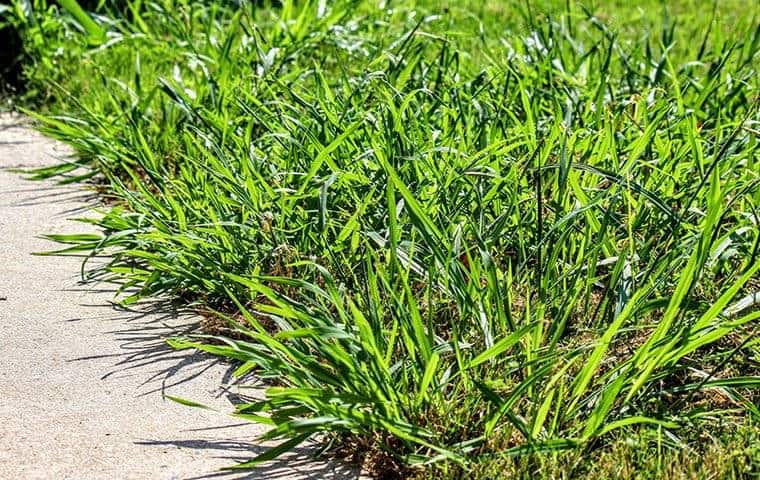
- Warm-season weeds germinate in spring, flourish in summer heat, and seed in fall. Common examples include crabgrass, spurge, dallisgrass, and goosegrass.
By identifying the type of weed and its life cycle, you can time your treatments for maximum effectiveness.
Pre-Emergent Treatments for Stopping Weeds Before They Sprout
Pre-emergent herbicides form a chemical barrier in the soil that prevents seeds from germinating.
In Arlington, timing is everything:
- Early Spring (February–March): Apply before soil temperatures reach 55°F for several consecutive days to block warm-season weeds like crabgrass.
- Early Fall (September–October): Apply before cool-season weeds like annual bluegrass begin to germinate.
If you miss these windows, many weeds will have already germinated, making pre-emergents ineffective for that cycle.
Learn more about the benefits of pre-emergent weed control
Post-Emergent Treatments for Tackling Existing Weeds
When weeds are already visible, post-emergent herbicides can be applied to kill actively growing plants.
Best practices:
- Target weeds when they are young and actively growing for quicker results.
- Apply during mild weather (50–85°F) for best absorption.
- Use selective herbicides to protect turfgrass.
- Avoid mowing immediately before or after application to allow full uptake.
Spot treatments can be done year-round as needed.
Seasonal Weed Control Calendar for Arlington
January–February:
- Inspect lawn for winter weeds.
- Plan early spring pre-emergent application.
March–April:
- Apply pre-emergent for warm-season weeds.
- Spot treat cool-season weeds before temperatures rise.
May–August:
- Maintain healthy turf to crowd out weeds.
- Use post-emergent control on invasive summer species.
September–October:
- Apply pre-emergent for cool-season weeds.
- Consider overseeding to improve lawn density.
November–December:
- Continue mowing to reduce seed spread.
- Monitor for late-season weed growth.
See our full Lawn Care Program for Arlington homeowners
Why Professional Timing Matters
Professionals bring several advantages:
- Expertise in identifying weed species and growth stages.
- Access to commercial-grade products.
- Precision timing based on soil temperatures and seasonal patterns.
- Even application to ensure no untreated patches remain.
Contact us for expert weed control in Arlington
Frequently Asked Questions
Can I apply pre-emergent and post-emergent together?
Yes, but ensure products are compatible and safe for your turf type.
How often should I treat for weeds in Arlington?
At least twice a year for pre-emergent, with post-emergent spot treatments as needed.
Will weed control harm my lawn?
When applied correctly, pre- and post-emergents target weeds without harming healthy grass.
Do I still need weed control if my lawn is thick and healthy?
Yes, even healthy lawns can harbor weed seeds that will sprout without preventive measures.
Timing weed control properly is key to keeping your Arlington yard lush and weed-free. Trees Hurt Too Inc. provides seasonally timed, customized applications as part of our comprehensive lawn care packages to protect your lawn year-round.