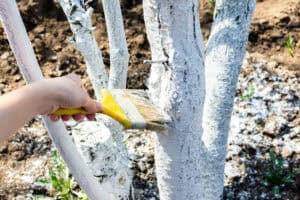
Sunscald and Bark Damage Trees DFW
Protect Your Trees from Sunscald and Bark Damage As May arrives in the Dallas-Fort Worth area, homeowners begin to enjoy …


Locally owned and family operated, proudly serving North Texas. Get your free, no-obligation quote. Or call (972) 521-1552.
Free QuoteBacterial tree diseases are among the most commonly misdiagnosed and most commonly mistreated conditions in the North Texas tree health environment, in part because their surface symptoms frequently overlap with fungal diseases that require entirely different management approaches. Applying a fungicide program to a tree with bacterial leaf scorch addresses nothing. Using a copper bactericide on a tree with leaf spot fungus is similarly ineffective. The distinction between bacterial and fungal pathogen identification is not a technical detail. It is the foundation of whether a treatment program actually works. Trees Hurt Too, Inc. provides ISA Certified Arborist diagnosis that accurately identifies the specific organism causing tree decline before recommending any treatment, with particular expertise in the bacterial diseases that affect the DFW urban forest including fire blight, bacterial leaf scorch, bacterial wetwood, and bacterial crown gall.
"The hardest calls I get are from homeowners who have been treating a tree for months with the wrong product because the initial diagnosis was wrong. Bacterial leaf scorch that has been treated with fungicide programs for two seasons while the Xylella bacteria continue to colonize the vascular system. Fire blight that has been treated with insecticide while the bacterial cankers overwinter for another season. The diagnosis has to be right first. Everything else follows from that." Ken, ISA Certified Arborist Tx-3265-A | Owner, Trees Hurt Too, Inc.
We provide free on-site evaluations throughout North Texas. Call (972) 521-1552 if you suspect bacterial disease in any of your trees, or visit our Tree Health Care and Arborist Services page and our tree health diagnosis page.
Caused by Erwinia amylovora, fire blight is the most common and most rapidly damaging bacterial disease affecting ornamental trees in North Texas. It infects primarily through flowers during the spring bloom period and spreads rapidly through shoot tissue, causing the characteristic shepherd's crook wilting and browning of new growth. Bradford pears, ornamental crabapples, hawthorns, and loquats throughout DFW neighborhoods are highly susceptible. Treatment requires copper bactericide applications timed to the bloom period and strict tool sanitation. For complete detail visit our Fire Blight Treatment page.
Caused by Xylella fastidiosa, bacterial leaf scorch is one of the most widespread and most chronically underdiagnosed bacterial diseases in the North Texas urban forest. The bacterium colonizes the xylem vessels of oaks, elms, sycamores, and other host trees, causing progressive leaf margin browning that worsens through the growing season and returns worse each year. Treatment with oxytetracycline antibiotic injections can suppress the bacteria and slow progression but cannot eliminate the infection. For complete detail visit our Bacterial Leaf Scorch page.
Caused by a complex of anaerobic bacteria including Enterobacter and related species, bacterial wetwood produces the foul-smelling slimy liquid seepage from bark openings that is characteristic of slime flux. The bacteria colonize the heartwood of elms, oaks, maples, mulberries, and other species, producing gases that force fermented sap outward through wounds and natural bark openings. The seeping liquid kills bark tissue it contacts. There is no cure for established bacterial wetwood but the condition is manageable in most established trees. For complete detail visit our Slime Flux page.
Caused by Agrobacterium tumefaciens, bacterial crown gall produces rough, corky, tumor-like growths at the soil line, on roots, and occasionally on stems of susceptible plants. It affects roses, fruit trees, ornamental shrubs, and some landscape trees throughout DFW. The bacteria infect through wounds during planting, root disturbance, or insect feeding. Crown gall cannot be eliminated from infected plant tissue but can be prevented in new plantings through resistant rootstocks and careful wound management during installation.
Oakley says...
No charge. No obligation. An ISA Certified Arborist visits your property and gives you honest answers before recommending anything.
Accurately distinguishing bacterial from fungal tree diseases is the single most important diagnostic step for tree conditions in North Texas, and it requires professional evaluation rather than visual assessment alone.
The treatments for bacterial and fungal diseases do not overlap. A tree with bacterial leaf scorch treated with fungicides receives no benefit while the Xylella bacteria continue colonizing vascular tissue. A tree with fire blight managed without bactericide applications and strict tool sanitation will continue spreading the infection each season. Professional diagnosis by our ISA Certified Arborist before any treatment begins is the foundation of effective disease management in North Texas. Visit our tree health diagnosis page for detail on our evaluation process.
Copper-based bactericide products are the primary treatment for surface-active bacterial diseases including fire blight. Applied preventively before infection or during active infection to slow spread, copper products are most effective when combined with strict tool sanitation and removal of infected tissue. Learn more at our fire blight treatment page.
Oxytetracycline antibiotic injection through our microinjection technology delivers treatment directly into the tree's vascular system where xylem-inhabiting bacteria like Xylella fastidiosa are active. This approach suppresses bacterial populations and can slow the progressive vascular colonization characteristic of bacterial leaf scorch. Learn more at our tree injections page and our bacterial leaf scorch page.
Strict tool sanitation between plants and between cuts is critical for limiting the mechanical spread of bacterial pathogens including fire blight and bacterial leaf scorch. Proper wound management that minimizes entry points for bacterial infection is an important ongoing prevention practice for all trees.
Trees with robust nutritional status and root zone health show better tolerance to bacterial disease progression. Our deep root feeding program and moisture management program support the overall tree health that helps trees resist and manage bacterial conditions more effectively.
Your Tree Cannot Wait
Early diagnosis is the difference between saving and losing a tree. Call our ISA Certified Arborist directly for same-week evaluations throughout the DFW area.
(972) 521-1552Free on-site evaluation • No obligation • Honest answers
We evaluate and treat bacterial tree diseases throughout the DFW metroplex. Fire blight is widespread throughout all communities in Tarrant County and Dallas County wherever Bradford pears, crabapples, and hawthorns are planted. Bacterial leaf scorch is common in mature urban oak and elm populations throughout the DFW area. Call (972) 521-1552 to schedule your free evaluation anywhere in our service area.
The most common bacterial tree diseases in North Texas include fire blight on rose family ornamentals, bacterial leaf scorch on oaks and elms, bacterial wetwood on elms and oaks, and bacterial crown gall on roses, fruit trees, and ornamental shrubs. Each requires different diagnosis and management from a certified arborist.
Bacterial diseases require bactericide treatments, antibiotic injections, or wound management protocols. Fungal diseases require fungicide treatments. These approaches do not overlap. Applying a fungicide to a bacterial disease does nothing to address the pathogen. Accurate diagnosis before treatment is essential.
Bacterial leaf scorch produces progressive leaf margin browning that worsens each season and returns worse regardless of irrigation. Drought stress typically improves when water stress is relieved and does not worsen progressively each year. For complete detail visit our Bacterial Leaf Scorch page.
Curability varies by disease. Fire blight can be effectively managed if caught early. Bacterial leaf scorch cannot be eliminated but can be suppressed through antibiotic injection. Bacterial wetwood has no cure but is manageable. Crown gall cannot be removed from infected tissue but can be prevented through wound management and resistant rootstocks.
Different bacterial diseases spread through different pathways. Fire blight through pollinating insects and rain splash. Bacterial leaf scorch through leafhoppers and contaminated tools. Bacterial wetwood through wounds and soil contact. Crown gall through soil and root wounds during planting or disturbance.
Because bacterial and fungal treatments do not overlap. The wrong diagnosis leads to the wrong treatment which allows the actual disease to continue advancing unchecked. Our ISA Certified Arborist diagnoses the specific organism before recommending any treatment. Visit our tree health diagnosis page for detail on our process.
Yes. Trees Hurt Too provides completely free on-site tree evaluations throughout the DFW area with no obligation. Call (972) 521-1552 or request your evaluation through our contact page.
Trees Hurt Too provides ISA Certified Arborist bacterial tree disease diagnosis and treatment throughout North Texas. For complete information on specific bacterial diseases visit our Fire Blight Treatment page, our Bacterial Leaf Scorch page, and our Slime Flux page. For the complete overview of all tree diseases we treat visit our tree disease treatment page. View our complete service area or call (972) 521-1552. For additional information on tree disease research visit the Texas A&M AgriLife Extension.
Protect Your Trees Year-Round
Our certified arborist-supervised annual programs include:
On-site evaluation and custom program quote
Get My Custom Program QuoteNo contracts • Cancel anytime
Stay informed about lawn care, tree care and pest related issues in your area!
Protect Your Trees from Sunscald and Bark Damage As May arrives in the Dallas-Fort Worth area, homeowners begin to enjoy …
Why Trees Drop Leaves in May in the Dallas-Fort Worth Area If you’ve noticed leaves scattered across your lawn in …
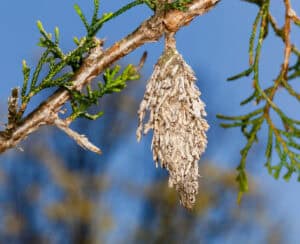
Identify and control bagworms before they damage your North Texas trees and shrubs this season.