Sunscald and Bark Damage Trees DFW
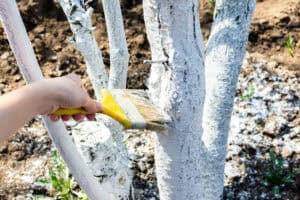
Protect Your Trees from Sunscald and Bark Damage As May arrives in the Dallas-Fort Worth area, homeowners begin to enjoy …


Locally owned and family operated, proudly serving North Texas. Get your free, no-obligation quote. Or call (972) 521-1552.
Free QuoteFire blight is one of the most destructive bacterial diseases affecting ornamental trees in North Texas, and it is also one of the most visually dramatic. When the Erwinia amylovora bacteria infect new shoot growth, flowers, or fruit, the affected tissue browns and wilts with a speed and thoroughness that genuinely looks like scorching, which is how the disease earned its name. In the DFW area, fire blight is most commonly seen on the Bradford pears, ornamental crabapples, hawthorns, and loquats that are planted throughout residential landscapes, often spreading rapidly during the warm wet bloom periods of North Texas spring. Trees Hurt Too, Inc. provides ISA Certified Arborist diagnosis and treatment for fire blight across the DFW metroplex, with a focus on containing infections before they reach the main structural branches where the risk of complete tree loss increases dramatically.
"Fire blight is the disease that teaches homeowners the most about how fast a bacterial infection can move. I have seen a Bradford pear show the first shepherd's crook tip in early spring and be significantly compromised by late spring if the infection was not addressed. The good news is that when we catch it early, when it is still in the shoot tips and flower clusters, we have real options. When it reaches the scaffold branches the calculation changes entirely." Ken, ISA Certified Arborist Tx-3265-A | Owner, Trees Hurt Too, Inc.
We provide free on-site evaluations throughout North Texas. Call (972) 521-1552 if you see rapid browning and wilting of shoot tips on any of your ornamental trees, or visit our Tree Health Care and Arborist Services page.
Fire blight is a bacterial disease rather than a fungal one, which fundamentally changes how it is managed compared to most other tree diseases in the region. Understanding the biology of the pathogen is essential to understanding why timing is so critical in fire blight management.
The Erwinia amylovora bacteria overwinters in infected plant tissue, particularly in cankers at the margins of infected and healthy wood. In spring, when temperatures rise and the tree begins blooming, the bacteria multiply rapidly in the canker margins and are carried to open flowers by rain splash, bees, and other insects visiting blooms. The flower is the primary infection site. From the infected blossom the bacteria move down through the flower stem into the shoot, then progressively into larger wood. Warm temperatures between 65 and 86 degrees Fahrenheit combined with high humidity and rainfall create the ideal conditions for rapid spread. North Texas spring weather frequently provides exactly these conditions during the bloom period of susceptible trees.
Bradford pear trees, one of the most widely planted ornamental trees in DFW residential landscapes, are highly susceptible to fire blight. The variety's prolific spring bloom creates an enormous number of potential infection sites simultaneously, and its rapid new growth is particularly susceptible to the bacterial infection. The widespread planting of Bradford pears throughout DFW neighborhoods means there is usually a reservoir of infected plant material nearby whenever conditions favor the disease.
Oakley says...
No charge. No obligation. An ISA Certified Arborist visits your property and gives you honest answers before recommending anything.
Recognizing fire blight early gives the best chance of containing the infection before it reaches the main structural wood. Here is what to watch for:
For a complete visual guide to fire blight and other North Texas tree diseases visit our North Texas Tree Disease Identification page.
Fire blight management requires a combination of properly timed bactericide applications, strict tool sanitation, and cultural management. Our ISA Certified Arborist determines the appropriate approach based on the infection stage and the specific host tree species.
Preventive copper bactericide applications timed to the bloom period provide the most effective fire blight protection. Applications are made as flowers begin to open and continued at appropriate intervals through the bloom period when infection risk is highest. Copper products are also used on canker margins to reduce the overwintering bacterial population for the following season.
Mechanical spread through contaminated tools is a significant pathway for fire blight transmission. All tools used on fire blight infected plants must be disinfected between cuts using a 10 percent bleach solution or other appropriate disinfectant. Our licensed applicators follow strict sanitation protocols on every visit to fire blight affected properties.
Addressing fire blight cankers to remove the overwintering bacterial source requires careful work at the margins of infected and healthy wood. Cuts must be made well below visible infection margins into healthy tissue, and tools must be sanitized between each cut to prevent spreading the bacteria from the infected tissue to the healthy cut surface.
Highly succulent new growth stimulated by excessive nitrogen fertilization is especially susceptible to fire blight infection. Managing plant nutrition through our carbon-based deep root feeding program promotes balanced growth rather than the rapid forced growth that creates maximum fire blight vulnerability.
Your Tree Cannot Wait
Early diagnosis is the difference between saving and losing a tree. Call our ISA Certified Arborist directly for same-week evaluations throughout the DFW area.
(972) 521-1552Free on-site evaluation • No obligation • Honest answers
We diagnose and treat fire blight throughout the DFW metroplex wherever ornamental pears, crabapples, hawthorns, and other susceptible rose family trees are planted. Communities with particularly dense Bradford pear and ornamental tree populations where we commonly address fire blight include Fort Worth, Arlington, North Richland Hills, Keller, and Mansfield. Our full service area covers all communities in Tarrant County and Dallas County.
Fire blight is a bacterial disease caused by Erwinia amylovora that infects trees and shrubs in the rose family. It causes rapid wilting and browning of new shoots, flowers, and fruit that looks like scorching. In North Texas it most commonly affects Bradford pears, crabapples, hawthorns, and loquats during spring bloom periods.
The most visible sign is rapid browning and wilting of new shoot tips that curve into a shepherd's crook shape. Infected blossoms turn brown and remain attached rather than dropping. Bark in infected areas may show water-soaked discoloration and bacterial ooze during warm humid weather. For a visual guide visit our North Texas tree disease identification page.
Yes. Fire blight is very common in North Texas, particularly in Bradford pears and ornamental crabapples which are widely planted throughout DFW. Warm wet spring weather creates ideal conditions for rapid fire blight spread during the bloom period.
Treatment involves copper-based bactericide applications timed to the bloom period, strict tool sanitation to prevent mechanical spread, and canker management to reduce the overwintering bacterial source. Our certified arborist determines the appropriate approach based on infection stage and host species.
Yes. Fire blight can kill susceptible trees if the infection spreads into the main structural branches and trunk. Early intervention is critical to containing the bacteria before they reach this stage. Visit our sick tree treatment page if your tree is showing active decline.
Ornamental pears including Bradford pear are among the most susceptible. Also affected are crabapples, hawthorns, loquats, flowering quinces, and cotoneasters. All members of the rose family are potentially susceptible to fire blight under favorable conditions.
Fire blight spreads primarily through infected flowers via bees and rain splash. Pruning tools that contact infected wood without proper sanitation mechanically transmit the bacteria. Storm damage and hail wounds during the growing season also create entry points.
Yes. Trees Hurt Too provides completely free on-site tree evaluations throughout the DFW area with no obligation. Call (972) 521-1552 or request your evaluation through our contact page.
Trees Hurt Too provides ISA Certified Arborist fire blight diagnosis and treatment throughout North Texas. View our complete service area or call (972) 521-1552. For additional information on fire blight research visit the Texas A&M AgriLife Extension.
Protect Your Trees Year-Round
Our certified arborist-supervised annual programs include:
On-site evaluation and custom program quote
Get My Custom Program QuoteNo contracts • Cancel anytime
Stay informed about lawn care, tree care and pest related issues in your area!
Protect Your Trees from Sunscald and Bark Damage As May arrives in the Dallas-Fort Worth area, homeowners begin to enjoy …
Why Trees Drop Leaves in May in the Dallas-Fort Worth Area If you’ve noticed leaves scattered across your lawn in …
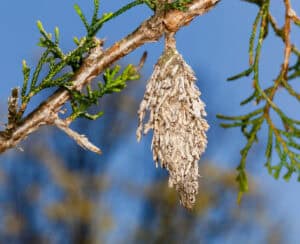
Identify and control bagworms before they damage your North Texas trees and shrubs this season.