
Carpenter Ant Control in North Texas

The smartest way to protect your trees, lawn, and Home
Locally owned and family operated, proudly serving North Texas. Get your free, no-obligation quote. Or call (972) 521-1552.
Free Quote
Carpenter Ants in Texas Homes
Carpenter ants are the largest ants most North Texas homeowners will ever find indoors, and the most misunderstood. Unlike termites, they do not eat wood. They excavate it, carving smooth galleries into moisture-softened lumber to house their colonies. Left alone for years, that excavation weakens window frames, door headers, deck supports, and the damp wood around plumbing and roof leaks. Finding big black ants inside your Fort Worth or Arlington home, especially in winter, is a sign worth taking seriously.
Trees Hurt Too Inc. provides carpenter ant control throughout Tarrant County and the surrounding communities. Our work starts with finding the nest, not just spraying the trail, because carpenter ant colonies survive anything that does not reach the queen. Carpenter ant coverage is also built into our year-round protection plan: it is included in the Premium plan and available as an add-on on the Package and Plus plans.
Why North Texas Properties Attract Carpenter Ants
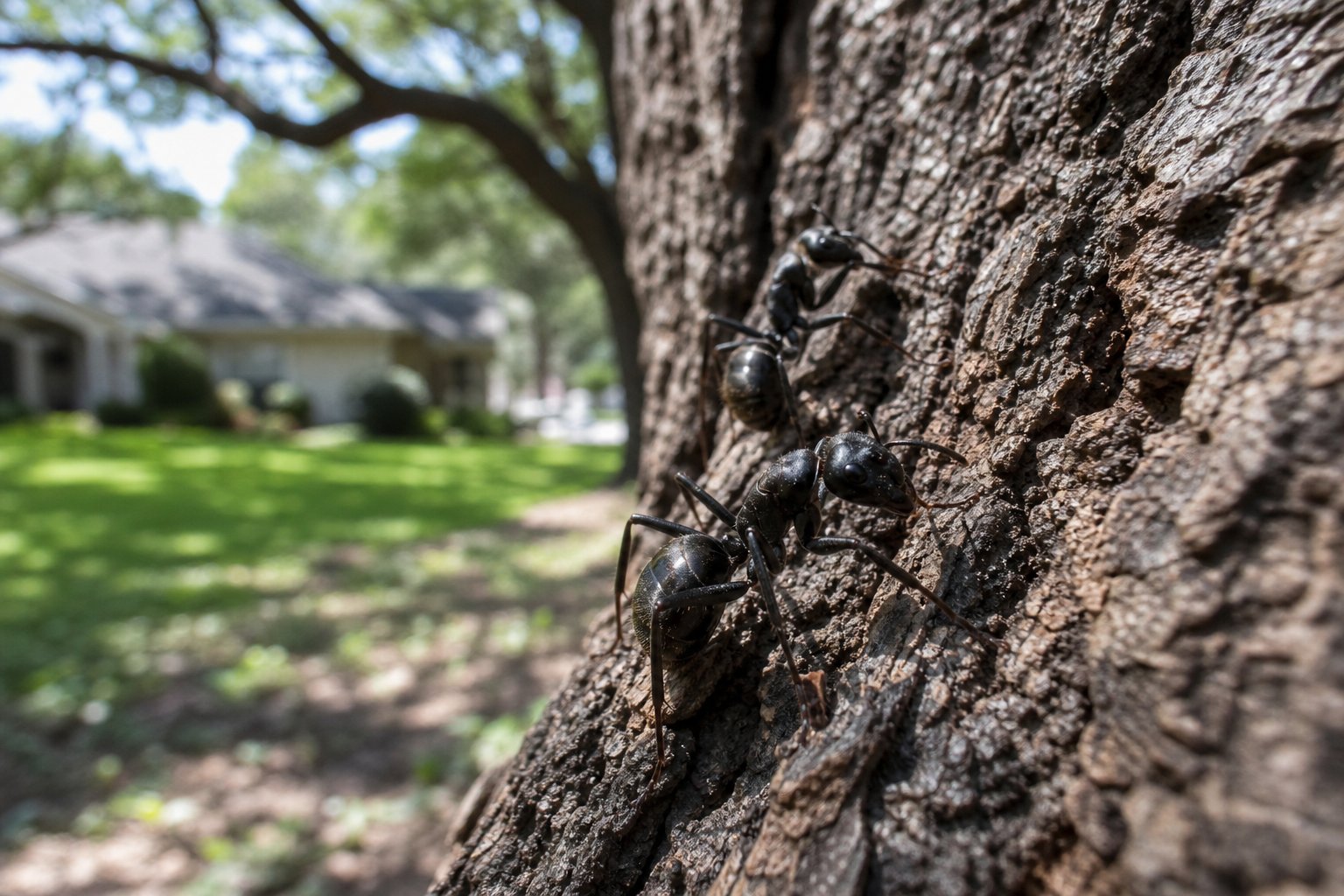
Carpenter ants follow moisture and mature trees, and Tarrant County neighborhoods have both. Established areas of Fort Worth, Arlington, Colleyville, and Grapevine are full of mature live oaks and shade trees whose dead limbs, old pruning wounds, and hollow sections make ideal parent colonies. From a tree, the colony expands outward, sending satellite colonies along fence lines, into woodpiles, and eventually into structures.
Our climate helps them too. Humid springs and irrigation-heavy summers keep wood elements damp, and slab foundations moving on North Texas clay soil open small gaps around plumbing and expansion joints that foraging ants use as highways. Roof leaks, gutter overflows, poorly sealed window frames, and wood-to-soil contact around decks and pergolas complete the invitation. The connection between trees and structures matters: a colony in a declining oak thirty feet from the house is often the true source of the ants in your kitchen. As a company built on tree health, we look at the whole property, not just the foundation line.
Signs of Carpenter Ant Activity
- Large ants, up to half an inch or more, black or reddish black, indoors at night
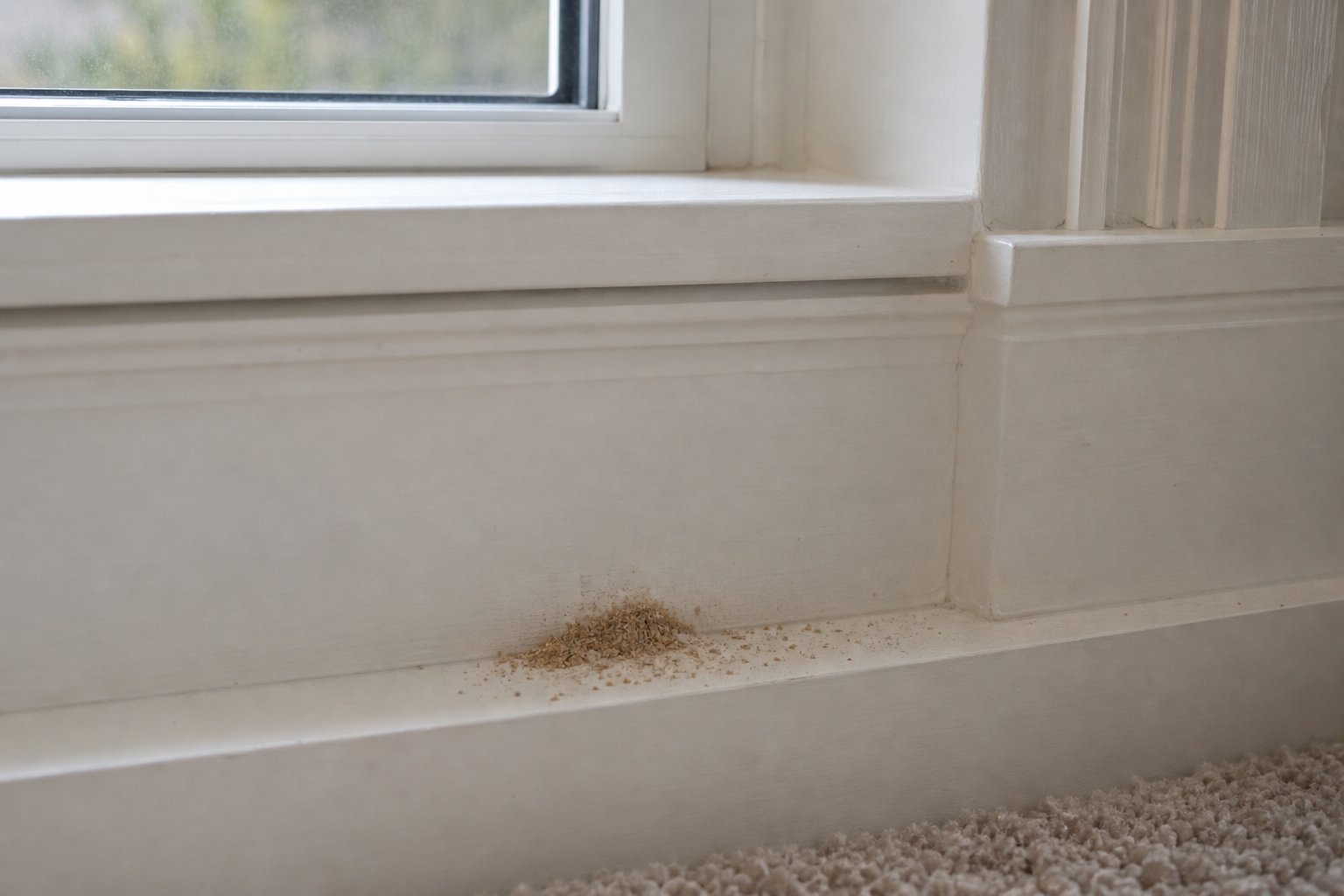
- Piles of coarse sawdust-like material (frass) beneath baseboards, window sills, or deck joints
- Faint rustling sounds inside walls on quiet evenings
- Winged ants emerging indoors in late winter or spring, a strong sign of an established indoor nest
- Smooth, clean galleries in damaged wood, unlike the mud-packed tunnels termites leave
Winged carpenter ants are often confused with termite swarmers. Ants have pinched waists, elbowed antennae, and front wings longer than the back pair; termite swarmers are straight-waisted with equal-length wings. If you are unsure which you have, send us a photo before doing anything else, because the treatments are completely different. Our ant identification page and subterranean termite guide can help you compare.
Why DIY Carpenter Ant Treatment Falls Short
Spraying the ants you see removes a handful of foragers and warns the rest of the colony. Carpenter ant colonies are structured around a parent nest, usually outdoors in a tree or stump, plus satellite nests that may be inside the structure. Surface sprays never reach the queen, and repellent products can cause a colony to split or shift deeper into wall voids. Store-bought baits are frequently the wrong formulation for the colony's current feeding preference, which shifts between proteins and sugars through the season. Meanwhile the moisture condition that attracted the ants keeps softening wood for the next colony.
How Trees Hurt Too Controls Carpenter Ants
- Full-property inspection. We trace foraging trails, check trees, stumps, fences, and woodpiles for the parent colony, and inspect likely satellite sites inside the home.
- Colony-targeted treatment. Non-repellent products and professional baits are placed along trails and at nest sites so foragers carry treatment back to the colony, including the queen.
- Void and gallery treatment. Confirmed indoor nests are treated directly inside the affected voids.
- Moisture and access correction. We identify the leaks, wood-to-soil contact, and tree conditions feeding the problem, and because we are tree health professionals, we can also address the declining limbs and trunk cavities where parent colonies live.
- Ongoing prevention. Quarterly perimeter service keeps foraging pressure off the structure and catches new activity early.
The Carpenter Ant Year in North Texas
Late winter and spring. Mature colonies release winged reproductives, which is when homeowners see swarms and mistake them for termites. Indoor swarmers in February through April are the strongest single indicator of a nest inside the structure. Foraging ramps up as temperatures climb.
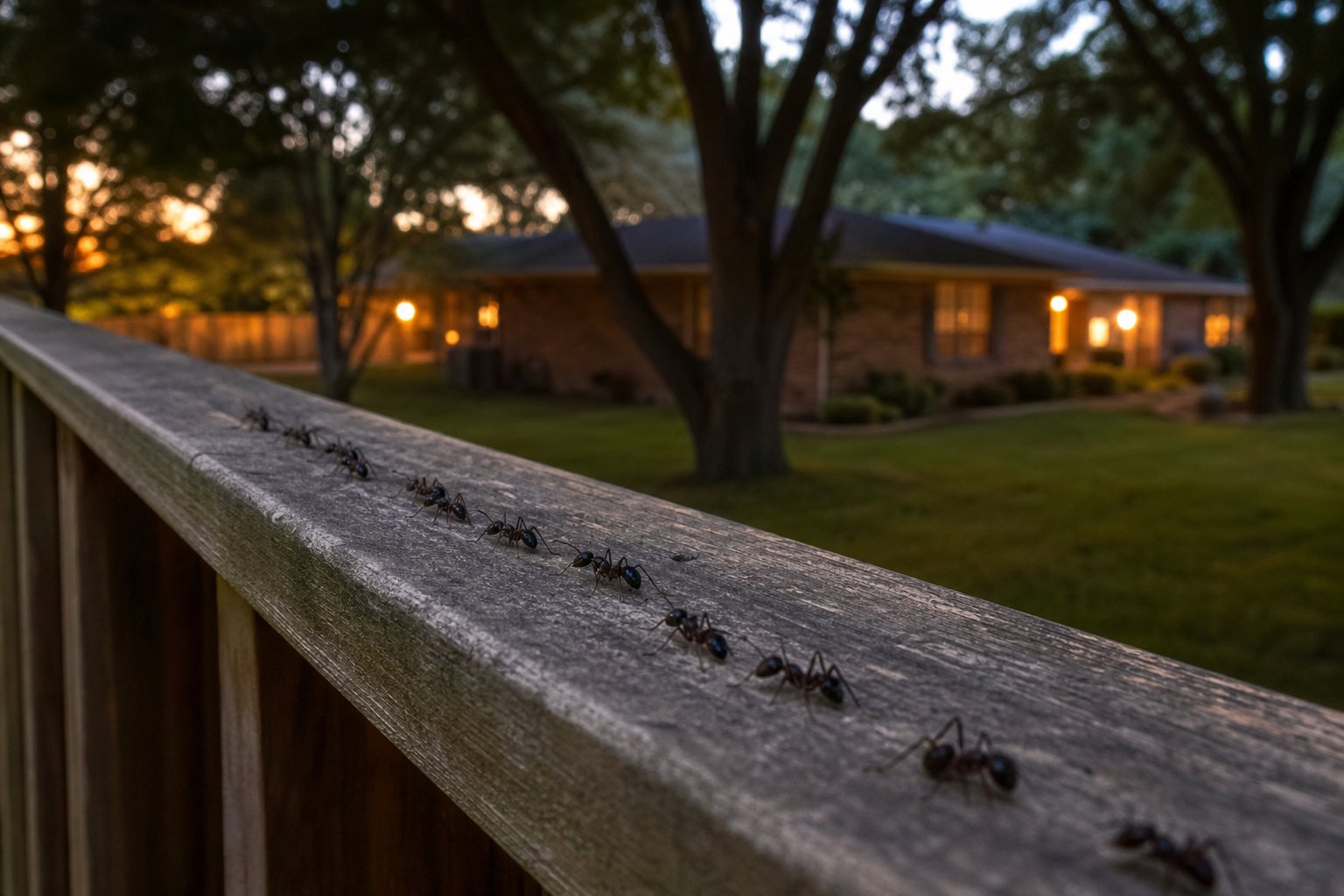
Summer. Colonies forage heavily at night, following scent trails between the parent nest, satellite nests, and food. Trails along fence tops, hose bibs, and foundation lines are easiest to spot now with a flashlight an hour after dark.
Fall and winter. Outdoor activity slows, but satellite colonies inside heated walls keep working year-round. Winter sightings indoors deserve attention rather than dismissal, because ants that should be dormant outside are telling you where they actually live.
Mild Tarrant County winters compress the quiet season, so colonies here grow faster year over year than in colder climates. A colony noticed casually one summer is meaningfully larger by the next.
Where We Provide Carpenter Ant Control
Trees Hurt Too Inc. serves homeowners throughout Tarrant County and nearby communities, including Fort Worth, Arlington, Mansfield, Burleson, Keller, Southlake, Grapevine, Colleyville, Hurst, Euless, Bedford, North Richland Hills, Grand Prairie, and Irving. Properties with mature trees anywhere in our service area fit the profile this species looks for, which is exactly where our combined pest and tree health background earns its keep.
Membership Coverage for Carpenter Ants
Carpenter ant control is included in the Pest Package Premium plan and available as an add-on on the Pest Package and Pest Package Plus plans. Plans start at $47, $67, and $77 per month, all with quarterly service, free callbacks between visits, and a quarterly inspection. Common house-invading ants are already covered by the basic service on every plan; the carpenter ant coverage adds the nest-location work and colony-targeted treatment this species requires. Compare the membership options to see which plan fits your property.
Frequently Asked Questions: Carpenter Ants in Texas
Do carpenter ants mean my house has termites too?
Not directly, but the two problems share a cause: moisture-compromised wood. Wood soft enough for carpenter ants to excavate is also attractive to termites. A carpenter ant find is a good prompt to have both looked at; our termite prevention service covers the preventive side.
How much damage do carpenter ants actually cause?
Damage builds slowly compared to termites, but it is real. Years of excavation can weaken sills, headers, deck framing, and trim, and repair costs grow the longer a satellite colony works unnoticed. Early treatment keeps the damage cosmetic rather than structural.
Why do I only see a few big ants at a time?
Carpenter ants forage mostly at night, and only a small fraction of the colony leaves the nest. A few large ants in the kitchen each morning can represent a mature colony nearby. Activity indoors during winter is especially significant, because it usually means the nest is inside the structure, not out in the yard.
Are the black ants in my trees the same ones in my house?
Often, yes. Parent colonies commonly live in tree cavities, dead limbs, and stumps, then establish satellite nests in structures within foraging range. Treating the house without addressing the tree colony invites reinfestation, which is why our inspection covers your trees as carefully as your foundation.
Can I just cut off the tree limb the ants are living in?
Removing a single limb rarely removes the colony, and pruning decisions on a mature tree deserve an arborist's judgment. Trees Hurt Too does not cut or remove trees, but our tree health professionals can assess the cavity, treat the colony, and advise on the tree's condition as part of one visit.
How long does carpenter ant treatment take to work?
Foraging typically declines within days of baiting, and colony activity winds down over the following weeks as treatment reaches the queen and brood. Follow-up matters; we confirm the colony is gone rather than assuming silence means success.
Do carpenter ants bite people?
Carpenter ants can deliver a defensive bite if handled or trapped against skin, and larger workers have jaws strong enough to feel it. They have no stinger and no venom of medical significance, and they do not seek people out. The concern with this species is wood, not bites.
What can I do to prevent carpenter ants?
Fix roof and plumbing leaks quickly, keep gutters clear, store firewood off the ground and away from the house, trim vegetation touching the roofline, and have declining trees evaluated. Quarterly perimeter service handles the rest by stopping foragers before they establish trails into the home.
Helpful Links:
Find the Nest, Protect the Home
Trees Hurt Too Inc. has served Fort Worth and surrounding Tarrant County for over 28 years, with tree health expertise no ordinary pest company can match. Call or text (972) 521-1552 or request your free, no-obligation quote today.