
Preventive Termite Protection in Tarrant County

The smartest way to protect your trees, lawn, and Home
Locally owned and family operated, proudly serving North Texas. Get your free, no-obligation quote. Or call (972) 521-1552.
Free Quote
Termite Prevention in Texas Starts Before the First Sign
Termite protection has two very different price tags in North Texas. There is the cost of preventing termites, a modest ongoing investment, and the cost of responding after they have been feeding quietly inside a wall for two years. Subterranean termites work hidden, from the soil up, behind slab edges and inside walls, and homeowner insurance policies generally treat the damage as preventable. Prevention is not a luxury add-on here; it is the cheap half of a decision every Tarrant County homeowner eventually makes, either on purpose or by default.
Trees Hurt Too Inc. provides preventive termite protection for homes throughout Fort Worth, Arlington, and the surrounding Tarrant County communities, as a Certified Applicator in Texas for termite control. This page covers prevention: protecting a home that does not have visible activity, so it never develops any. Homes with active termites need our termite control service instead. Termite prevention is available as an add-on on all three plans of our preventive protection membership.
Why Tarrant County Is Termite Country
Subterranean termites live in the soil, and North Texas soil suits them. Our clay holds moisture near the surface, and the slab foundations common across the region sit directly in contact with that soil. As clay swells and shrinks through wet springs and hot summers, hairline movement at slab edges, expansion joints, and plumbing penetrations creates the narrow access points termites use. A colony needs a gap about the width of a business card to reach wood framing.
Mild winters keep colonies active nearly year-round, and the warm, wet weeks of spring trigger swarming season, when winged termites emerge to start new colonies. Irrigated landscapes, mulched beds against foundations, and the mature trees of established neighborhoods in Fort Worth, Arlington, and Mansfield keep soil moisture high and food nearby. Old stumps and buried construction debris feed colonies while they scout for something bigger. The pressure is constant; the only question is whether a home is defended when a colony finds it. Our subterranean termite guide covers the species itself in detail.
Prevention Beats Response
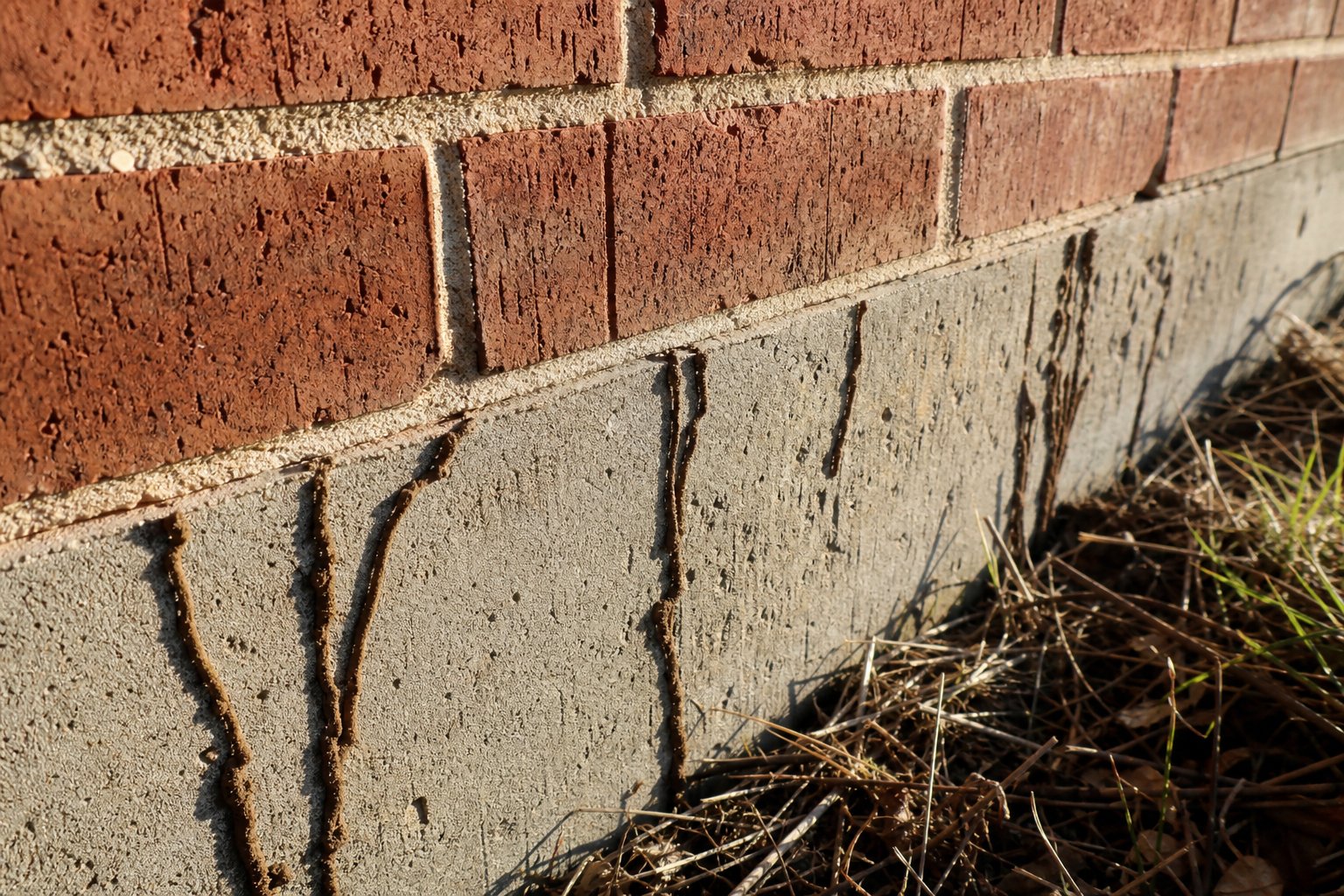
Subterranean termites give almost no early warning. They enter from soil you cannot see under the slab, travel inside mud tubes, and eat wood from the inside out, leaving painted surfaces intact. By the time a homeowner notices a soft baseboard, a swarm indoors, or blistered paint, feeding has usually been under way for months or years. That is the case for prevention in one sentence: with termites, the first visible sign is a late sign.
Preventive protection flips the timeline. Monitoring catches foraging activity in the soil before it reaches the structure, preventive treatment stops termites at the perimeter, and annual inspection verifies the home stays clear, year after year, for a small fraction of what structural repair costs.
What Homeowners Can and Cannot Do Alone
Good habits genuinely lower termite risk. Keeping mulch pulled back from the slab, fixing leaks and drainage promptly, storing firewood off the ground and away from the house, removing old stumps, and keeping soil or planting beds from burying the slab edge all make a property less inviting. Every one of those steps is worth doing.
What homeowner effort cannot do is see underground or maintain a treated barrier. Termite entry happens at hidden points under and beside the slab, and DIY spot treatments from a hardware store protect a few inches of soil at best. Professional prevention exists because the threat operates below grade, where only monitoring devices and properly applied treatments reach.
How Trees Hurt Too Prevents Termites
- Baseline inspection. We inspect the foundation perimeter, weep holes, plumbing penetrations, garage expansion joints, and the conditions around the home that raise risk, from grade lines to stumps.
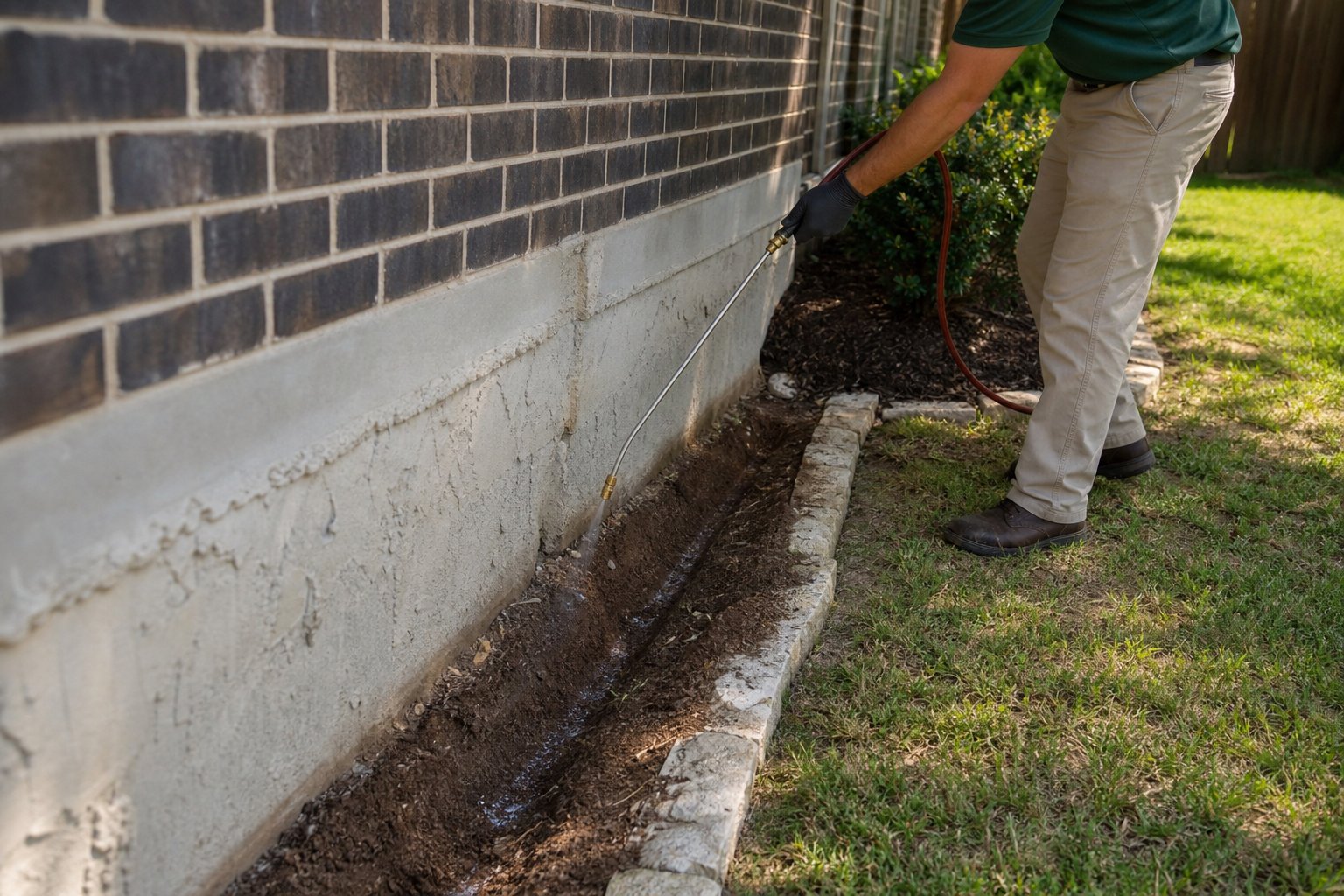
- Preventive treatment and monitoring. Protection is placed around the structure to intercept foraging termites in the soil before they reach framing, matched to your property's construction and conditions.
- Conducive-condition correction. We flag the moisture, mulch, wood contact, and drainage issues that attract colonies, with practical fixes for each.
- Ongoing verification. Scheduled inspections confirm the protection is intact and the home remains clear, so prevention stays current instead of expiring quietly.
Every application is made by licensed professionals following the science-based, eco-friendly standards we bring to all of our pest control services.
Early Signs That Are Worth a Phone Call
Prevention includes knowing what deserves a second look. None of these findings proves an infestation, but each one justifies an inspection while the situation is still cheap to address:
- Pencil-width mud tubes on foundation walls, piers, or garage corners
- Winged insects emerging indoors in spring, or piles of shed wings on window sills
- Paint that blisters or bubbles on wood surfaces with no water source above
- Wood trim that sounds hollow or gives under gentle pressure
- Mud packed into a construction joint or crack where it does not belong
Swarmer identification matters most, because winged carpenter ants get mistaken for termite swarmers every spring in Tarrant County. Ants have pinched waists and elbowed antennae; termite swarmers are straight-waisted with two pairs of equal-length wings. A photo sent to our team settles it in minutes, and the answer decides whether you need this page or our carpenter ant service.
Termite Prevention When Buying or Selling
Real estate is where termite history gets expensive. Homes with documented, current preventive protection and a clean inspection record answer the buyer's biggest invisible-risk question before it is asked, while homes with unexplained past damage invite renegotiation. Sellers benefit from starting protection well before listing; buyers benefit from an independent look at any home they are serious about, especially in the established neighborhoods of Fort Worth, Arlington, and Grand Prairie where decades of soil contact have given colonies plenty of time to find structures. Prevention started at move-in is the cleanest version: the home begins your ownership verified clear and stays that way on the record.
Termite Prevention in the Membership
Termite prevention is available as an add-on on all three membership plans: Pest Package, Pest Package Plus, and Pest Package Premium, which start at $47, $67, and $77 per month. Pairing it with a plan makes practical sense, because the quarterly visits already put trained eyes on your foundation perimeter four times a year, and members receive a discount on add-on services. You can enroll in quarterly pest protection and add termite prevention in the same conversation.

Frequently Asked Questions: Termite Prevention
Does my home need termite prevention if I have never seen a termite?
Never seeing a termite is normal even while a colony feeds, because subterranean termites stay hidden inside wood and soil. Prevention exists precisely for homes with no visible activity; it is dramatically less expensive than responding to established feeding, and it keeps the home continuously verified as clear.
When is termite season in North Texas?
Colonies forage nearly year-round in our mild climate. Swarming, the visible part, peaks in spring after warm rains, when winged termites emerge from mature colonies. A swarm on your property means a mature colony is close; a swarm indoors means it is inside the structure and past the prevention stage.
What is the difference between prevention and termite control?
Prevention protects a structure with no known activity: barriers, monitoring, and annual verification. Control responds to an active infestation, with treatment aimed at removing the colony from the structure. Our termite control page covers the response side; this page is about never needing it.
Do mulch beds really attract termites?
Mulch piled against a slab holds moisture and shelters foraging termites at exactly the wrong spot. Mulch is fine in beds; the fix is keeping a visible gap of a few inches between mulch and the foundation line so the slab edge stays dry and inspectable.
Are tree stumps in my yard a termite risk?
Old stumps and dead roots are standing food supplies that support colonies while they scout the neighborhood, and buried construction debris does the same. Removing stumps and keeping woodpiles elevated and away from the house takes the free meals off the table.
How often should a Texas home be inspected for termites?
Annually, at minimum, given year-round colony activity in North Texas soil. Homes with prior activity nearby, heavy irrigation, or wood-to-soil contact deserve closer attention. Membership customers get foundation-perimeter eyes quarterly as part of regular service, with formal termite verification on schedule.
Is preventive termite treatment safe for my family and landscape?
Yes. Applications are placed by licensed professionals, targeted at the soil zones termites travel, and selected with families, pets, and plantings in mind, consistent with the eco-friendly approach we use across every service.
Helpful Links:
Protect the Structure Before Termites Find It
Trees Hurt Too Inc. has served Fort Worth and surrounding Tarrant County for over 28 years. Termite prevention is the least expensive termite decision you will ever make, and the best time for it is before there is anything to find. Call or text (972) 521-1552 or request your free, no-obligation quote today.