

When winter temperatures swing up and down in North Texas, your landscape faces more than just chilly mornings and dry air. These dramatic temperature swings trigger rapid freeze: thaw cycles that cause the soil to expand, contract, and shift more than most homeowners realize. One of the most surprising problems homeowners encounter is young trees that appear to rise or tilt out of the soil. This phenomenon is known as frost heave, and while it’s far more commonly associated with northern states, it absolutely happens here, especially during winters with repeated hard freezes.
Understanding what frost heave is, why it affects younger trees the most, and how to prevent it can save you from long-term root damage and costly replacements. Let’s dig into how Texas soils behave in winter and what that means for the health of your trees.
What Is Frost Heave?
Frost heave is a soil movement process that happens when moisture in the ground freezes, expands, and physically lifts the soil upward. Even though it sounds like something that only affects colder northern states, it can happen anywhere the soil experiences freeze–thaw cycles, including North Texas. When temperatures drop quickly, the water in the upper soil layers freezes and forms ice lenses (flat, layered ice structures). As these ice lenses grow, they take up more space and push the surrounding soil upward.
This upward pressure can shift anything resting in or on the soil, especially newly planted trees with small, lightweight rootballs. A young tree that hasn’t yet developed strong lateral roots becomes easy for frost heave to lift, tilt, or partially expose. Once lifted, the root system can dry out, tear, or lose its anchoring strength, leading to long-term health problems.
Older trees, which have deeper and wider root systems, are far less likely to move during freeze events. Their roots extend below the frost line and act as natural anchors, keeping them stable even when the top few inches of soil expand and contract.
Why Frost Heave Happens in Texas
Although it may seem like a northern issue, frost heave is surprisingly common in Texas due to our unique soil conditions and unpredictable winter weather patterns. North Texas soils are dominated by heavy clay, which holds water tightly and expands significantly when frozen. Because our freeze depth is shallow, typically just a few inches, most of the movement happens right where young roots are trying to establish.
Several regional factors increase frost heave risk in North Texas:
- Clay soil expansion: Clay-rich soils swell dramatically when frozen, amplifying the upward force beneath rootballs.
- Sudden overnight freezes after warm days: Warm soil followed by abrupt freezing creates extreme contraction and expansion in short periods.
- Poor soil drainage: Waterlogged soil freezes unevenly, producing more destructive ice layers beneath young trees.
- Shallow root systems in young trees: New plantings haven’t developed deep anchoring roots, making them easy to lift.
- Dry winter conditions followed by freezing rain: Dry, cracked soil absorbs water quickly; when that water freezes, the soil shifts aggressively.
Together, these conditions create the perfect environment for frost heave: leading to soil movement, root disruption, and instability for young trees across North Texas.
Why Young Trees Are More Vulnerable
Young trees simply can’t anchor themselves the way mature trees can. Their developing root systems are small, shallow, and concentrated in the top 6–12 inches of soil: the same layer that responds most dramatically to freeze–thaw cycles. During their first few years in the landscape, young trees are still investing most of their energy into expanding their root network, which means they do not yet have the strength or depth needed to withstand upward soil pressure.
Unlike mature trees with deep, wide-spreading roots that lock them firmly into place, young trees rely heavily on the stability of their rootball. When the soil expands during a freeze, the rootball can be pushed upward before it has a chance to settle and integrate with the surrounding soil. Even small shifts can break new feeder roots, drying them out, or causing the tree to lean.
Key Vulnerabilities in Young Trees
- Light rootball weight makes young trees especially easy to lift or tilt during freeze–thaw cycles.
- Soil not yet compacted around roots after planting leaves air pockets that freeze and expand, increasing movement.
- Insufficient mulching exposes the soil surface to rapid temperature swings, accelerating frost heave.
- Fall-planted trees with minimal root establishment are at the highest risk because they haven’t yet grown stabilizing lateral roots.
Even wellplanted Live Oaks, Red Oaks, and popular ornamentals like Crepe Myrtles and Desert Willows can experience frost heave when their roots are still developing. Their ability to establish successfully depends heavily on stable soil conditions, and winter disruptions can set their growth back significantly or lead to long-term health challenges.
Signs Your Tree Has Been Affected by Frost Heave
Catching frost heave early can make the difference between saving a young tree and losing it by spring. Because the damage occurs below the soil surface, the signs may be subtle at first. Regular winter inspections, especially after hard freezes, help spot problems before the tree suffers long-term stress.
What to Look For
- Sudden leaning or tilting: If the tree wasn’t leaning before a freeze and now sits at an angle, the rootball may have been pushed upward or shifted.
- Visible roots or lifted rootball edges: Exposed roots or a raised planting area indicate the soil has expanded and displaced the tree.
- Gaps between the soil and root flare: Frost heave often pulls the tree upward, leaving small air gaps around the base.
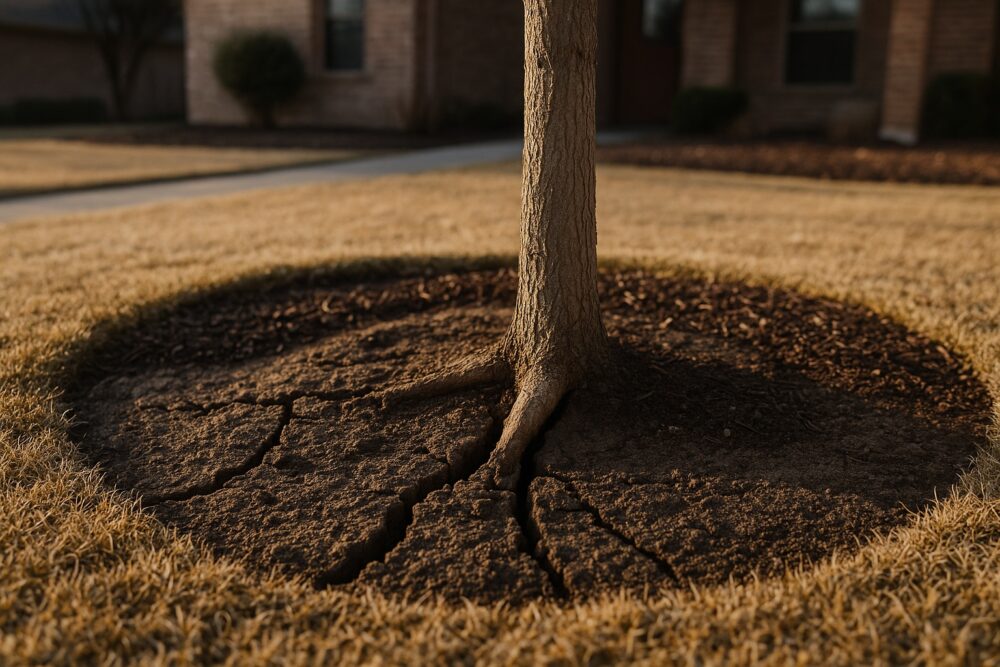
- Cracking or separation around the planting hole: Freeze–thaw cycles can cause the soil around young trees to split, revealing movement below the surface.
- Drying or wilting foliage during warm spells: If the roots were lifted or torn, they may not supply enough water during temporary warm-ups.
- Loose or wobbly trunk when gently moved: A tree that shifts easily by hand likely lost critical anchoring roots.
Even a slight movement can expose young roots to cold air, create damaging air pockets, and interrupt water uptake. Left unaddressed, these issues can lead to slow spring leaf-out, dieback, or complete planting failure, making early detection essential.
How Frost Heave Damages Tree Roots
The root damage caused by frost heave can be subtle, often going unnoticed through winter, until the tree begins showing stress in spring. Because young trees rely heavily on newly formed roots near the surface, any disruption in soil stability can interfere with their ability to anchor, hydrate, and grow.
Frost heave doesn’t just move the tree; it interferes with the root system in multiple ways, some of which can create long-term setbacks.
Types of Damage
- Root tearing: As the soil expands upward, tender feeder roots can tear away from the rootball or snap entirely. These are the very roots responsible for early water and nutrient absorption.
- Root desiccation: When the rootball lifts even slightly, parts of the root system become exposed to cold air pockets. This causes dehydration during a time when the tree’s ability to recover is already limited.
- Instability: Disturbed or shallow roots may no longer grip the surrounding soil, reducing structural support. A tree that becomes unstable in winter will struggle to establish properly in spring.
- Reduced nutrient uptake: Root systems damaged by tearing, lifting, or air exposure cannot transport water and nutrients efficiently. This often results in delayed leaf-out, sparse canopies, or poor growth during the next season.
- Interrupted establishment: Frost heave can break newly formed root tips, forcing the tree to divert energy toward repair rather than expanding its root network.
For species like Texas Live Oaks, which depend heavily on establishing a strong lateral root system in their early years, even minor frost heave can create long-term impacts. Slowed growth, reduced vigor, and greater susceptibility to pests and drought may show months, or even years, after the initial damage occurred.
What to Do if Your Tree Has Already Lifted
Don’t panic, frost heave damage is often repairable when addressed early. The key is acting quickly before exposed or damaged roots dry out, tear further, or lose their ability to absorb water once spring growth begins. Even a slightly lifted tree can usually be reset successfully with a few careful steps.
Steps to Fix a Lifted Tree
- Reposition the tree gently to its original depth. Avoid forcing or twisting the trunk, which can cause additional root tearing. Realign the tree so the root flare sits level with the surrounding soil.
- Repack soil evenly around the rootball. Use loose, crumbly soil to fill any gaps created during lifting, pressing lightly to eliminate air pockets without compacting too tightly.
- Water thoroughly to help settle the soil. Deep watering encourages the soil to resettle naturally around the roots, restoring crucial contact for nutrient uptake and anchoring.
- Add fresh mulch to stabilize temperature. A 2–3 inch layer around the root zone helps insulate the soil, prevent further freeze–thaw shifts, and protect newly reset roots.
- Stake if needed, especially for trees planted in fall. Staking can provide temporary stability, but it should allow slight movement to promote root growth. Always remove stakes by early summer to avoid girdling.
- Schedule a professional inspection if leaning is severe. A certified arborist can identify hidden root damage, determine whether the tree can be saved, and ensure it is reset safely.
Failing to correct frost heave promptly can lead to slow spring leaf-out, canopy thinning, or complete dieback. Early intervention gives young trees the best chance to reestablish strong roots and recover fully before the growing season.
When to Call a Professional
Some frost heave issues can be corrected by homeowners, but there are situations where professional intervention is not only helpful, it’s essential. If your tree continues to lift after multiple freeze–thaw cycles, or if you notice visible leaning, exposed roots, or repeated soil cracking, it’s a sign that the root system may already be compromised. A tree that leans more than a few degrees should be evaluated immediately, as ongoing movement can lead to permanent instability or long-term health decline.
Professional tree care can:
- Identify root damage early: Arborists can assess torn, dried, or weakened roots that aren’t visible at the surface.
- Correct planting depth and soil structure: Many frost heave problems are worsened by improper planting; professionals can reset the tree and amend the soil for long-term stability.
- Stabilize the tree safely: Proper staking techniques reduce stress on the trunk and roots while still encouraging natural movement and growth.
- Provide winter and spring fertilization: Targeted nutrients help trees recover from root shock and support vigorous regrowth once temperatures rise.
- Build a long-term tree and shrub care plan: Preventive treatments, soil moisture management, and seasonal monitoring all reduce the chances of frost-related damage recurring.
If you’re unsure whether the damage is minor or serious, it’s always safer to have the tree evaluated. Explore our Tree and Shrub Care services for tailored protection and expert guidance designed specifically for North Texas landscapes.
How Frost Heave Compares to Other Winter Tree Problems
Frost heave is just one cold-season threat in North Texas.
Frost Heave vs. Winter Drought
- Drought dries soil, making frost heave more likely
- Frost heave lifts trees; drought shrinks root capacity
Frost Heave vs. Winter Root Rot
- Heave exposes roots to air; rot comes from trapped moisture
- Both threaten young trees but require opposite moisture strategies
Frost Heave vs. Rodent Damage
- Rodents chew roots under mulch
- Frost heave physically shifts the rootball
For rodent-related issues, learn more about rodents here.
Preparing for Spring: Why Winter Tree Care Matters
The work you do during the winter months sets the foundation for how well your young trees will perform once temperatures rise. Winter isn’t a “quiet season” for trees: it's when roots continue to grow, soil conditions influence future stability, and hidden stress can either be prevented or made worse. By addressing frost heave risks and maintaining consistent soil moisture, you support the development of a stronger, more resilient root system.
Proper winter tree care helps:
- Maintain strong root establishment: While foliage rests, roots remain active. Protecting them from shifting soil and dehydration ensures steady development.
- Prevent early-season stress: Trees weakened by winter issues struggle to push out new growth in spring, often resulting in sparse canopies or delayed leaf-out.
- Reduce dieback during sudden warm-ups: North Texas frequently swings from cold to warm overnight. Trees with intact, well-insulated roots cope better with these rapid changes.
- Improve nutrient uptake during spring growth: When soil contact is maintained and roots remain undamaged, the tree can absorb water and nutrients more effectively as growth resumes.
- Support long-term canopy density: A tree that starts strong in winter is far more likely to develop a full, healthy canopy in spring and beyond.
Healthy spring canopies start with stable winter soil. By prioritizing winter tree care now, you're giving your young trees the greatest chance to thrive during the growing season and establishing a solid foundation for long-term landscape success.
Frost Heave Final Thoughts
Frost heave may not be the most obvious winter threat in Texas but its impact on young trees can be significant, especially during years with unpredictable freeze patterns. Even small shifts in the soil can disrupt root development, weaken early stability, and delay spring growth. By taking a proactive approach with proper mulching, consistent soil moisture management, and regular inspections after freeze events, you can greatly reduce the risk of root damage and protect your landscape investment.
Remember that young trees are still working hard to establish themselves beneath the surface. Giving them the right support during winter sets the stage for healthy spring growth and long-term vigor. If you ever feel uncertain about soil movement, leaning, or root exposure, partnering with certified professionals ensures your trees receive expert guidance and seasonal care tailored to North Texas conditions.
With the right winter preparation and ongoing attention, your young trees can thrive through every freeze, thaw, and temperature swing, and reward you with strong, resilient growth for years to come.
Protecting young trees through winter doesn’t have to be overwhelming. Whether you’re dealing with soil movement, root exposure, or simply want to get ahead of seasonal stress, our certified arborists are here to help. Trees Hurt Too provides tailored winter care, soil moisture management, and complete tree and shrub care programs designed specifically for North Texas landscapes.
Schedule a professional evaluation today and give your young trees the strong, stable foundation they need for a healthy spring and beyond.