

Hypoxylon canker is one of the more disheartening diseases a North Texas homeowner can face. The fungus responsible, known scientifically as Biscogniauxia, lives quietly inside healthy trees for years without causing visible harm. Drought, root damage, or soil compaction weakens a tree's natural defenses, and the dormant fungus activates, killing sapwood from the inside out.
There is no fungicide that cures hypoxylon canker. Treatment focuses on reducing the tree stress that allows the disease to progress. This means removing infected wood before the canker reaches the main trunk, and supporting long-term tree health through deep root feeding and soil care. When caught early, a structured management plan can slow the decline and extend the life of an affected tree.
Managing a North Texas tree with hypoxylon canker requires understanding the disease, the realistic treatment options, and the preventive care that protects healthy trees. If your tree already shows symptoms, visit the hypoxylon canker treatment page for service details.
What Hypoxylon Canker Does to Your Trees
Hypoxylon canker is a fungal disease that kills the sapwood of stressed hardwood trees, cutting off water and nutrient movement through the trunk and branches. The fungus grows through the wood first, then into the bark, and the tree dies from within.
Scientists now classify the pathogen as Biscogniauxia, though many arborists still use the older name hypoxylon. It lives naturally inside most hardwood trees without causing harm. Problems begin when the tree's defenses weaken. Drought, root damage from construction, soil compaction, or physical trunk wounds lower a tree's vigor, and the dormant fungus activates.
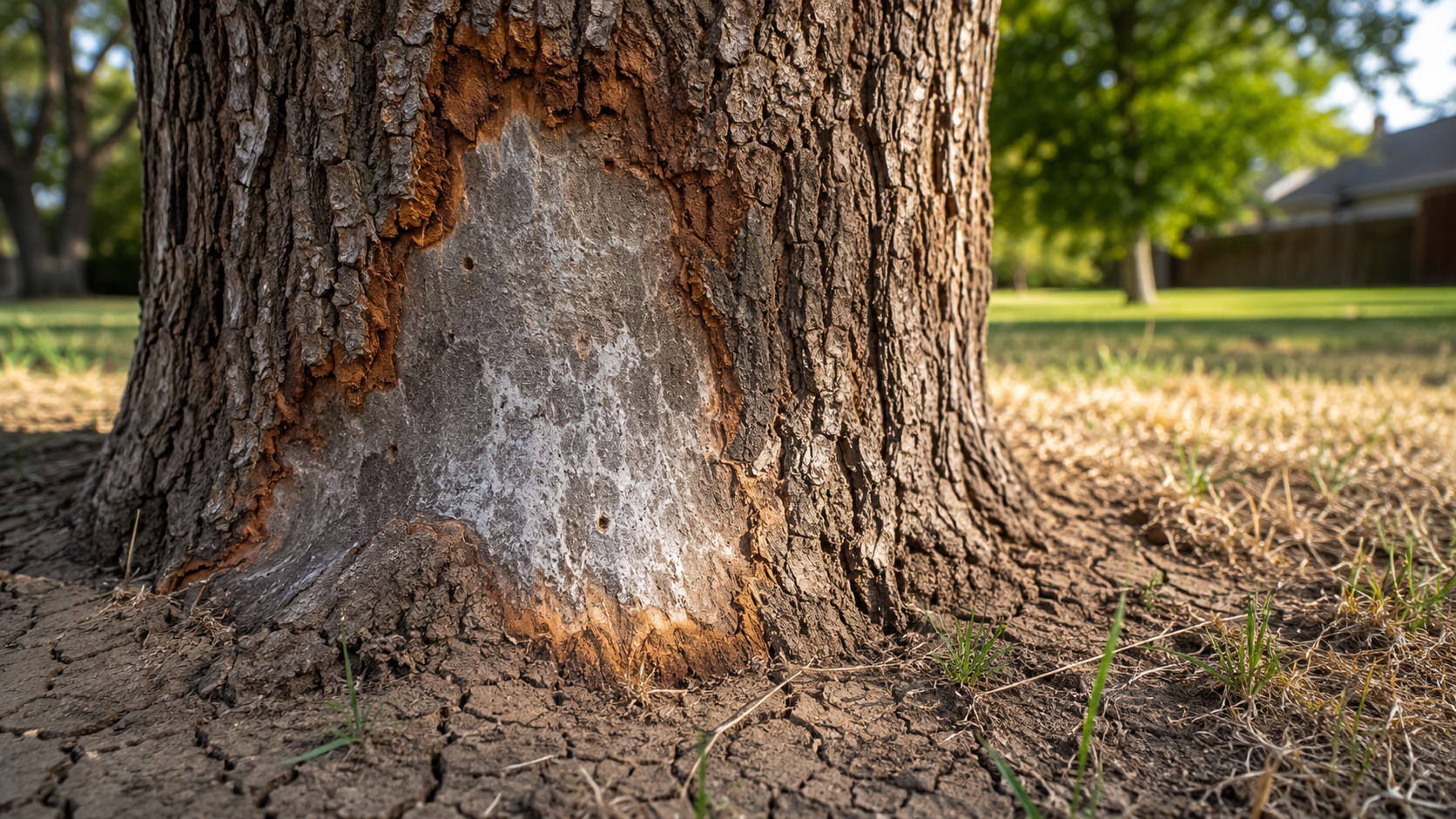
Once active, the fungus spreads through the sapwood and forms fungal mats beneath the bark. As the disease progresses, bark begins to peel and slough away. What appears beneath follows a recognizable pattern. In early stages the tissue is white-to-brown. It shifts to silver-gray as the disease advances, and finally turns black as the fungus matures and begins releasing airborne spores.
What does hypoxylon canker actually do to my tree?
Hypoxylon canker attacks from inside the tree, not from the surface. The fungus kills sapwood, the living layer that moves water and nutrients up from the roots to the canopy. When enough sapwood dies, the tree cannot feed itself. Limbs die back, the canopy thins, and the trunk can become structurally unsafe. In severely stressed trees, the process can move from first visible symptoms to tree death within one to three years.
Red oak, post oak, live oak, maple, pecan, hickory, and sycamore are most often affected across Fort Worth and North Texas. Hackberry, elm, and yaupon are also susceptible. Any stressed hardwood tree carries risk, regardless of species. Following the 2023 drought, arborists across Tarrant County saw a sharp rise in hypoxylon canker diagnoses. Aging red oak and post oak trees were most often affected.
Signs Your Tree May Have Hypoxylon Canker
Early signs of hypoxylon canker include yellowing or thinning leaves, crown dieback, and bark that peels or sloughs away from the trunk or major branches. Beneath peeled bark, a visible fungal mat confirms the disease is active.
Leaf symptoms typically appear first. Leaves on infected branches turn yellow, then brown. Dead leaves often remain clinging to branches rather than dropping, which is a specific pattern worth noting. The canopy begins to thin as entire branches die back from the tips inward.
How do I know if my tree has hypoxylon canker?
The clearest sign is bark peeling or sloughing away from the trunk or a major branch, with a fungal mat visible beneath. The mat changes color as the disease progresses:
- White-to-brown in early stages, with a dusty or powdery texture
- Silver-gray in the middle stage, sometimes mistaken for spray paint at first glance
- Black in advanced stages, with hard, spore-producing structures forming on the exposed wood
Watch for these additional warning signs:
- Yellowing or browning leaves on one or more branches
- Dead leaves that cling to branches rather than fall
- Thinning canopy or whole branch dieback
- Cankers forming at branch unions or wound sites
- Yellow-orange edges around discolored or sunken bark sections
For a detailed visual walkthrough of each stage, the identifying hypoxylon canker in North Texas guide covers specific indicators at each phase of the disease.
Is There a Cure for Hypoxylon Canker?
No fungicide exists that prevents or cures hypoxylon canker. Chemical injections into the trunk or soil are not effective because the fungus lives within the wood itself, where those treatments cannot reach it.
This is the hardest reality for many homeowners to accept. There is no treatment that kills the pathogen once it has taken hold inside the sapwood. That changes the approach to management entirely. The goal is not eliminating the fungus. The goal is keeping the tree strong enough to resist the disease's advance. This means removing infected wood before it spreads to the main trunk, and giving the tree the best conditions to extend its functional life.
When less than 15% of the tree shows signs of infection and the canker has not reached the main trunk, targeted management can help. In those cases, proper care can allow a tree to remain stable for several more years. A tree assessed in the early stages has substantially better options. By the time widespread bark loss and crown dieback appear, the realistic choices narrow considerably. Early action matters.
How to Manage and Slow Hypoxylon Canker
Hypoxylon canker management centers on two goals: removing infected wood to slow the spread, and reducing the tree stress that lets the fungus keep advancing. A Licensed Plant Health Care Professional can evaluate the extent of the infection and build a care plan around these priorities.
A professional management plan for hypoxylon canker typically involves the following steps:
- Corrective pruning: Infected branches get removed during dry weather to prevent the canker from spreading toward the main trunk. Haul away and destroy all infected wood rather than chipping it into mulch. The fungus stays active in deadwood, and chipping spreads contaminated material.
- Deep root feeding: Carbon-based nutrients and mycorrhizal fungi go directly to the root zone. This gives stressed trees the energy to seal wounds and slow the disease's advance. Deep root feeding for Tarrant County trees supports the soil biology that healthy trees depend on. With mycorrhizal fungi included, root surface area can expand by up to 700 times.
- Soil health and moisture management: Soil compaction and poor drainage create the stressed root conditions where hypoxylon canker thrives. Aerating the root zone, improving drainage, and correcting pH gives roots room to function and take up water.
- Consistent deep watering during drought: North Texas summers regularly push temperatures above 100 degrees Fahrenheit. Extended drought is a primary driver of the stress that activates this disease. Deep, slow watering through the drip line during dry periods directly lowers the stress load on the tree.
- Ongoing arborist monitoring. Regular certified arborist assessments track the disease's progression. These assessments determine when the risk to people and property outweighs the benefit of keeping the tree. At that point, professional tree removal becomes the responsible path forward.
How to Prevent Hypoxylon Canker in North Texas Trees
Preventing hypoxylon canker means preventing the tree stress that triggers the disease. A tree with healthy soil, consistent hydration during drought, and undamaged roots can typically resist the fungus even when it is present in the tissue.
These steps form the foundation of effective prevention for North Texas hardwood trees:
- Water deeply during drought: Use a soaker hose or slow drip to move water through the drip line and deep into the root zone. Surface watering does not reach the roots effectively in North Texas clay soil, particularly during periods of extreme heat.
- Protect roots from mechanical damage. Lawn mowers, string trimmers, and construction equipment near the root zone create wounds that open the door to infection. Keep equipment away from the trunk and avoid cutting surface roots.
- Apply mulch around the base: A 3-to-4-inch mulch layer around the tree's base insulates soil, reduces heat stress, retains moisture, and protects surface roots. Keep mulch pulled back from direct contact with the bark.
- Schedule professional fertilization: Trees with access to adequate nutrients have more energy to close wounds and resist fungal activity. A professionally applied program using natural and carbon-based products builds the biological foundation that healthy trees need.
- Prune only when necessary: Every pruning cut is a potential entry point for spores. Prune only when needed, use proper technique, and avoid pruning during wet conditions when spore release is highest.
Protecting North Texas Trees from Fort Worth to Mansfield
Trees Hurt Too Inc. serves homeowners and property managers in Fort Worth, Arlington, Mansfield, Grapevine, Southlake, Keller, and throughout Tarrant County. The team provides hypoxylon canker diagnosis and management for North Texas hardwood trees. Licensed Plant Health Care Professionals and ISA Certified Arborists have worked with North Texas trees for over 28 years.
North Texas growing conditions create specific tree health challenges. Tarrant County clay soils hold less oxygen and drain poorly, putting root systems under constant stress. The DFW region experienced extended drought and extreme heat in 2023. That period raised hypoxylon canker cases substantially, particularly in neighborhoods with aging post oak and red oak trees.
Hypoxylon canker cases in communities like Colleyville, Bedford, and Irving often go undiagnosed until the disease has reached the main trunk. An on-site evaluation gives property owners a clear picture of what the disease has affected. It also determines what realistic options exist for management and whether removal is the safer choice for the property and neighbors.
For additional context on disease biology and spread, the University of Minnesota Extension hypoxylon canker resource provides reliable background from university researchers.
Get a Professional Assessment for Your Tree
Trees Hurt Too Inc. has served Fort Worth and surrounding Tarrant County for over 28 years. Call or text to schedule a consultation.
Call: (972) 521-1552 | Text: (972) 521-1552 | treeshurttoo.com
Frequently Asked Questions About Hypoxylon Canker Management
Is there a cure for hypoxylon canker?
No cure exists for hypoxylon canker. No fungicide prevents or cures the disease once the fungus is active in the sapwood. Treatment focuses on reducing tree stress and removing infected branches before the canker reaches the main trunk. Consistent nutrition supports what the tree can still defend.
Can a tree recover from hypoxylon canker?
Full recovery is not possible once the disease takes hold. If caught early and the infection affects less than roughly 15% of the tree, a management plan can slow the disease's progression significantly. Trees treated promptly with corrective pruning and professional root zone care can remain stable for several additional years.
How does hypoxylon canker spread from tree to tree?
The fungus produces airborne spores that release from fungal mats on infected trees, typically following rain events at temperatures above 60 degrees Fahrenheit. These spores land on nearby trees but cause no harm unless the host tree is already under stress. Healthy, well-nourished trees resist infection even when exposed.
What trees in North Texas get hypoxylon canker most often?
Red oak and post oak are most commonly affected in the Fort Worth and DFW area, especially following drought years. Live oak, Mexican oak, pecan, hackberry, maple, and sycamore are also at risk. Any hardwood tree under stress from drought, soil compaction, or root damage is vulnerable.
Should I remove a tree with hypoxylon canker?
Removal depends on infection extent, the tree's structural condition, and proximity to structures and people. When the canker has reached the main trunk or structural failure risk is high, removal is the responsible choice. The same applies when a large portion of the canopy is affected. An ISA Certified Arborist can evaluate the specific risk.