

Sunscald and Bark Damage Trees DFW
Protect Your Trees from Sunscald and Bark Damage As May arrives in the Dallas-Fort Worth area, homeowners begin to enjoy …


Locally owned and family operated, proudly serving North Texas. Get your free, no-obligation quote. Or call (972) 521-1552.
Free QuoteOak decline is one of the most common and most urgent tree health situations our ISA Certified Arborist evaluates across North Texas. When a mature oak begins showing progressive canopy thinning, premature leaf drop, or die-back moving down through the branch structure, the question that determines everything else is: what is causing this decline? In the North Texas environment, the answer is rarely simple. Oak decline in DFW can result from oak wilt vascular disease, hypoxylon canker triggered by years of drought stress, borer beetle activity working invisibly beneath the bark, root rot developing in poorly drained clay soils, bacterial leaf scorch progressively blocking water transport, chlorosis from alkaline soil, chronic root zone compaction, or some combination of several of these simultaneously. Each cause requires a different treatment. Getting the diagnosis right before treating is not a preliminary step. It is the most important thing we do.
"When I get a call about a declining oak in North Texas, the first thing I tell the homeowner is that there is almost never one single answer. The oak that is declining this summer has usually been managing some combination of clay soil stress, drought, and disease pressure for years before anything visible appeared above ground. My job is to find what tipped it, because that is what determines whether we have treatment options and what those options are. Getting there fast matters, because with oaks, the difference between early-stage and late-stage decline can be measured in weeks." Ken, ISA Certified Arborist Tx-3265-A | Owner, Trees Hurt Too, Inc.
We provide free on-site evaluations throughout North Texas. Call (972) 521-1552 immediately if your oak tree is showing any signs of decline. Visit our tree doctor page and our Tree Health Care and Arborist Services page for more detail on our approach.
Accurately identifying the cause of oak decline in North Texas requires evaluating the full range of conditions that affect the regional oak population. Here are the conditions our certified arborist most commonly identifies in declining DFW oaks:
The most destructive tree disease in Texas. Oak wilt is a vascular fungus that blocks water movement through the tree, causing rapid canopy collapse in red oaks within weeks and slower progressive decline in live oaks. It spreads underground through root grafts between connected oaks and through sap-feeding beetles during the February through June high-risk season. Early diagnosis is critical because oak wilt progresses rapidly in red oaks and spreads to neighboring trees in live oaks. For complete detail visit our Oak Wilt Treatment page.
An opportunistic fungus that colonizes oaks already weakened by drought or soil stress. The fungus exists harmlessly in healthy oak tissue but becomes pathogenic when drought and clay soil compaction drive stress above the threshold that the tree can manage. Advanced hypoxylon canker has no cure. The most visible sign is bark sloughing to reveal dark powdery masses on the wood beneath. Learn more at our Hypoxylon Canker page.
A borer beetle that specifically targets drought-stressed oaks. The two-lined chestnut borer attacks oaks already weakened by environmental stress, boring through the cambial layer and disrupting vascular function. Heavy infestations combined with ongoing drought can kill affected oaks relatively quickly. Early diagnosis followed by systemic insecticide injection is the most effective response. Learn more at our Beetle Damage page.
Xylella fastidiosa causes progressive leaf margin browning that worsens through the growing season and returns worse each year. It is widespread in the North Texas urban oak population and creates a cumulative vascular limitation that amplifies the impact of summer heat and drought. Learn more at our Bacterial Leaf Scorch page.
Phytophthora, Armillaria, and other root rot pathogens active in North Texas clay soils mimic drought stress symptoms above ground because damaged roots cannot absorb water. Oak decline that does not respond to irrigation is frequently rooted in root rot pathogen activity rather than simple drought. Learn more at our Texas Root Rot page.
Pin oaks and other acid-preferring oak species planted in North Texas's alkaline Blackland Prairie clay soils frequently develop iron chlorosis, producing the interveinal yellowing that progressively weakens tree vigor. Chlorotic oaks are more vulnerable to every other disease and pest condition affecting North Texas trees. Learn more at our Chlorosis Treatment page.
Decades of root zone compaction in Tarrant County and Dallas County clay soils reduce the oxygen, water, and nutrient access available to established oaks. Trees that have been managing this chronic limitation for 20 to 50 years are frequently operating at a fraction of their potential health, making them vulnerable to all of the acute conditions above. Our deep root feeding program directly addresses this underlying condition.
Oakley says...
No charge. No obligation. An ISA Certified Arborist visits your property and gives you honest answers before recommending anything.
These symptoms can indicate oak decline and warrant immediate professional evaluation. Time is critical when oak health is deteriorating.
For a complete visual guide to oak decline symptoms visit our North Texas Tree Disease Identification page.
Treatment for oak decline is entirely dependent on accurate diagnosis of the specific cause or causes. Our ISA Certified Arborist evaluates every factor before recommending any treatment.
Addressing the clay soil compaction and nutrient limitations that create the underlying vulnerability is the most important long-term component of oak decline management in North Texas. Learn more at our deep root feeding page and moisture management page.
Your Tree Cannot Wait
Early diagnosis is the difference between saving and losing a tree. Call our ISA Certified Arborist directly for same-week evaluations throughout the DFW area.
(972) 521-1552Free on-site evaluation • No obligation • Honest answers
We evaluate and treat oak decline throughout the DFW metroplex. Oak decline evaluations are urgent and available throughout all communities in Tarrant County and Dallas County. Key communities where we frequently address oak decline include Fort Worth, Arlington, Southlake, Keller, Grapevine, and Colleyville. Call (972) 521-1552 immediately if your oak tree is showing signs of decline.
Oak decline in North Texas most commonly results from one or more of: oak wilt, hypoxylon canker from drought stress, two-lined chestnut borer infestation, root rot in poorly drained clay soils, bacterial leaf scorch, iron chlorosis, or accumulated clay soil compaction. Accurate diagnosis by our ISA Certified Arborist is essential because each cause requires a different treatment approach.
Progressive canopy thinning starting at the top and outer branches, early leaf drop, yellowing or browning leaves outside the seasonal cycle, dead branches, bark sloughing or cracking, sawdust frass near the trunk, or wilting despite adequate irrigation. For a visual guide visit our North Texas tree disease identification page.
It depends on the cause and how far the decline has progressed. Early intervention always provides the best chance. Our certified arborist gives an honest assessment of what is achievable for each specific tree based on the diagnosed condition and current state.
Oak wilt is a specific vascular disease requiring fungicide injection treatment. General oak decline is a broader term for progressive deterioration from multiple contributing factors. Our certified arborist distinguishes between them through comprehensive evaluation. Learn more at our Oak Wilt Treatment page.
Red oaks infected with oak wilt can die within two to four weeks of symptom appearance. Hypoxylon canker can kill severely stressed trees within one to two growing seasons. Chronic stress decline from soil compaction progresses more slowly. Borer infestation speed depends on species and population. Early evaluation always provides the best chance of intervention.
Treatment depends entirely on the diagnosed cause. Our certified arborist diagnoses the specific condition before recommending any treatment. Visit our sick tree treatment page for more detail on our approach to oak decline evaluation and treatment.
Yes. Trees Hurt Too provides completely free on-site tree evaluations throughout the DFW area with no obligation. Call (972) 521-1552 or request your evaluation through our contact page.
Trees Hurt Too provides ISA Certified Arborist oak decline diagnosis and treatment throughout North Texas. View our complete service area or call (972) 521-1552. For additional information on oak health research visit the Texas A&M AgriLife Extension.
Protect Your Trees Year-Round
Our certified arborist-supervised annual programs include:
On-site evaluation and custom program quote
Get My Custom Program QuoteNo contracts • Cancel anytime
Stay informed about lawn care, tree care and pest related issues in your area!
Protect Your Trees from Sunscald and Bark Damage As May arrives in the Dallas-Fort Worth area, homeowners begin to enjoy …
Why Trees Drop Leaves in May in the Dallas-Fort Worth Area If you’ve noticed leaves scattered across your lawn in …
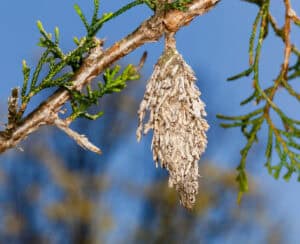
Identify and control bagworms before they damage your North Texas trees and shrubs this season.