
Sunscald and Bark Damage Trees DFW
Protect Your Trees from Sunscald and Bark Damage As May arrives in the Dallas-Fort Worth area, homeowners begin to enjoy …


Locally owned and family operated, proudly serving North Texas. Get your free, no-obligation quote. Or call (972) 521-1552.
Free QuoteOak galls are one of the most common and most frequently misunderstood conditions affecting oaks throughout the DFW area. The unusual growths that appear on oak leaves, stems, and twigs, ranging from small round balls and fuzzy white masses to the distinctive horns of the horned oak gall, cause genuine alarm in homeowners who have not encountered them before. Understanding what they are, which types cause real harm and which are largely cosmetic, and when professional intervention is warranted requires the diagnostic expertise of an ISA Certified Arborist. Trees Hurt Too, Inc. evaluates oak gall infestations throughout North Texas, accurately identifies the causative species, assesses the actual impact on tree health, and recommends treatment only when the infestation level genuinely warrants it.
"I get more calls about oak galls in spring than almost any other single condition because they look alarming to people who have not seen them before. The large round oak apple galls especially look like something terrible is happening. But in most cases, leaf galls on an established healthy tree are cosmetic, the tree will shed those leaves in fall and produce a new clean flush next spring. The ones I take seriously are the stem galls, particularly horned oak galls, because those form in the woody tissue and they do not go away when the leaves drop. Those can cause real structural damage over time." Ken, ISA Certified Arborist Tx-3265-A | Owner, Trees Hurt Too, Inc.
We provide free on-site evaluations throughout North Texas. Call (972) 521-1552 if you are concerned about gall formations on your oaks, or visit our Tree Health Care and Arborist Services page.
The vast majority of oak galls in North Texas are caused by tiny cynipid gall wasps. These wasps lay eggs in oak tissue during spring, and chemicals injected with the egg stimulate the oak to produce abnormal, nutrient-rich gall tissue that shelters and feeds the developing larva. Each gall wasp species produces a very specific gall structure on a very specific type of oak tissue at a very specific time of year. This specificity means that the shape and location of a gall can tell an experienced certified arborist precisely which species caused it.
Not all oak galls carry the same risk. The distinction between gall types is critical to making appropriate management decisions:
Galls that form on oak leaf tissue. Examples include oak apple galls, wool sower galls, and hedgehog galls. These are almost always cosmetic on established healthy trees. The tree sheds the affected leaves at the end of the season and produces a clean new flush the following spring. Even heavy leaf gall infestations rarely cause lasting harm to healthy established trees.
Galls that form in the woody tissue of branches and twigs. Examples include horned oak galls caused by Callirhytis cornigera and gouty oak galls caused by Callirhytis quercuspunctata. These are far more serious because they form in the structural tissue of the tree and do not disappear when leaves drop. Stem galls can girdle branches and block water and nutrient movement in the woody tissue. Heavy infestations over multiple years cause branch dieback and structural weakening.
Oakley says...
No charge. No obligation. An ISA Certified Arborist visits your property and gives you honest answers before recommending anything.
Our ISA Certified Arborist assesses whether the specific gall type, infestation level, and tree health status justify treatment. For leaf galls on healthy established trees, treatment is usually not recommended because the cosmetic impact does not justify the intervention. For stem galls on high-value trees, particularly horned oak galls with heavy infestations causing branch dieback, treatment may be warranted.
Systemic insecticide applications timed to the adult wasp emergence and egg-laying period in spring can reduce new gall formation on trees with severe stem gall infestations. The timing must be precise because the treatment window during adult flight is brief. Our certified arborist determines treatment timing based on local emergence monitoring and historical flight period data for the specific gall wasp species involved.
For branches with severe stem gall infestations causing significant girdling and dieback, addressing the affected branches removes the established gall population and reduces future infestation pressure from adults emerging from existing galls.
Vigorous well-nourished trees tolerate gall pressure more effectively than stressed trees. Our deep root feeding program maintains the root zone nutrition that keeps North Texas oaks above the health threshold where gall pressure causes serious impact. Visit our shrub and tree pest control page for more information on our integrated pest management approach.
We evaluate and manage oak gall infestations throughout the DFW metroplex wherever North Texas oaks are growing. Oak gall evaluations are important across all communities in Tarrant County and Dallas County wherever pin oaks, red oaks, and live oaks are established. Call (972) 521-1552 to schedule your free evaluation.
Your Tree Cannot Wait
Early diagnosis is the difference between saving and losing a tree. Call our ISA Certified Arborist directly for same-week evaluations throughout the DFW area.
(972) 521-1552Free on-site evaluation • No obligation • Honest answers
Oak galls are abnormal growths of plant tissue triggered by gall-forming insects, most commonly cynipid gall wasps, that lay eggs in oak tissue during spring. The specific gall structure identifies the causative insect species. Galls range from cosmetic leaf formations to damaging stem and twig galls that can girdle branches over time.
It depends on the type. Most leaf galls are cosmetic on established healthy trees. Stem galls, particularly horned oak galls and gouty oak galls, can cause significant branch dieback and structural damage over time by girdling woody tissue and disrupting water movement. Our certified arborist distinguishes between types and recommends treatment only when the infestation level genuinely warrants it.
Horned oak galls and gouty oak galls are the most damaging stem gall types. Oak apple galls, wool sower galls, and bullet galls are common leaf and twig gall types that are generally less harmful on established trees. North Texas has a wide diversity of gall wasp species corresponding to its significant native oak population.
Leaf galls rarely kill established trees. Severe stem gall infestations including horned oak galls can cause significant branch dieback and structural weakening over multiple seasons, particularly on younger or already-stressed trees.
Systemic insecticide applications timed to adult wasp emergence reduce new gall formation on high-value trees with serious stem gall infestations. Affected branches with severe girdling damage may need to be addressed. Supporting tree health through deep root feeding is important for improving tolerance. Our certified arborist determines whether treatment is warranted based on gall type and infestation severity.
Yes. Trees Hurt Too provides completely free on-site tree evaluations throughout the DFW area with no obligation. Call (972) 521-1552 or request your evaluation through our contact page.
Trees Hurt Too provides ISA Certified Arborist oak gall diagnosis and management throughout North Texas. View our complete service area or call (972) 521-1552. For additional information on oak gall research visit the Texas A&M AgriLife Extension.
Protect Your Trees Year-Round
Our certified arborist-supervised annual programs include:
On-site evaluation and custom program quote
Get My Custom Program QuoteNo contracts • Cancel anytime
Stay informed about lawn care, tree care and pest related issues in your area!
Protect Your Trees from Sunscald and Bark Damage As May arrives in the Dallas-Fort Worth area, homeowners begin to enjoy …
Why Trees Drop Leaves in May in the Dallas-Fort Worth Area If you’ve noticed leaves scattered across your lawn in …
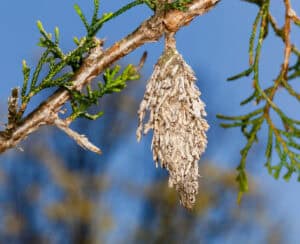
Identify and control bagworms before they damage your North Texas trees and shrubs this season.