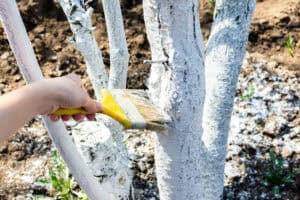
Sunscald and Bark Damage Trees DFW
Protect Your Trees from Sunscald and Bark Damage As May arrives in the Dallas-Fort Worth area, homeowners begin to enjoy …


Locally owned and family operated, proudly serving North Texas. Get your free, no-obligation quote. Or call (972) 521-1552.
Free QuoteSeiridium canker is the most serious disease affecting Leyland cypress trees in North Texas, and it is responsible for the progressive branch dieback and whole-plant death that many DFW homeowners see in their privacy screen plantings. The fungus, Seiridium cardinale, infects the bark and cambium of susceptible cypress species through wounds and natural openings, producing distinctive resinous cankers that girdle branches and stems, killing everything above the infection site. Leyland cypress planted widely throughout Tarrant County and Dallas County as privacy screens and landscape specimens are fundamentally susceptible to this disease, and North Texas's extreme summer heat and clay soil drought stress create the environmental conditions that make the trees most vulnerable. Trees Hurt Too, Inc. provides ISA Certified Arborist evaluation for seiridium canker throughout the DFW area, giving honest guidance on what management options exist and whether replacement with more suitable species makes more sense than continued treatment.
"Seiridium canker on Leyland cypress is one of those situations where I have to give people information they do not always want to hear. Leyland cypress is not well-suited to the North Texas climate. It faces significant heat and drought stress in our summers, it is inherently susceptible to seiridium canker, and once a planting is infected there is no cure. What I tell people honestly is that we can manage the progression and I can help them assess whether that makes sense or whether redirecting that investment toward replacement with a more appropriate species is the better decision for their property." Ken, ISA Certified Arborist Tx-3265-A | Owner, Trees Hurt Too, Inc.
We provide free on-site evaluations throughout North Texas. Call (972) 521-1552 if your Leyland cypress trees are showing brown branches or resinous cankers on the bark, or visit our Tree Health Care and Arborist Services page.
Seiridium cardinale spores are spread by wind and rain splash to susceptible host plants. The fungus enters through wounds, natural bark openings, and sometimes through intact bark during periods of high tree stress. Once established beneath the bark it grows through the cambium and phloem, disrupting nutrient transport and stimulating the tree to produce copious resin as a defensive response. This resin production, visible as amber or orange resin bleeding from affected bark areas, is a characteristic sign of infection. The fungus progressively girdles the infected branch or stem, killing all tissue above the canker as water and nutrient movement is cut off. On the main stem, cankers that fully girdle the trunk kill the entire plant above the infection point.
Leyland cypress is a sterile hybrid of two Pacific Coast cypress species, neither of which evolved to tolerate the heat, drought, and clay soil conditions of North Texas. Every summer these trees face thermal and moisture stress that is outside their natural adaptational range. This chronic stress progressively weakens their bark defenses and makes them highly susceptible to seiridium canker infection. In warmer, drier regions like North Texas, seiridium canker invariably finds stressed hosts and the disease has become one of the most reliable causes of Leyland cypress death in residential landscapes throughout DFW.
Oakley says...
No charge. No obligation. An ISA Certified Arborist visits your property and gives you honest answers before recommending anything.
For a complete visual guide visit our North Texas Tree Disease Identification page and our tree fungus treatment page.
Removing cankered branches reduces the pathogen population on the plant and slows progression by eliminating active spore-producing tissue. Cuts must be made well below visible canker margins into healthy wood, and tools must be sanitized between cuts to prevent mechanical spread. For cankers on the main stem, the management calculation changes significantly because cutting below a main stem canker affects the entire plant above that point.
Preventing mechanical spread through contaminated tools is critical during any work on Leyland cypress plantings with known seiridium canker. All tools must be disinfected with a 10 percent bleach solution or other appropriate disinfectant between plants and between cuts on infected material.
Reducing the heat and drought stress that makes Leyland cypress vulnerable is the most important factor in slowing seiridium canker progression. Our moisture management program and deep root feeding program support plant health and improve tolerance to the environmental conditions that activate the disease.
For Leyland cypress plantings with widespread established seiridium canker, our certified arborist provides guidance on replacement species that are better adapted to North Texas conditions. More heat and drought tolerant alternatives including Arizona cypress, Eastern red cedar, and other native or adapted conifers offer improved longevity in the DFW climate.
Your Tree Cannot Wait
Early diagnosis is the difference between saving and losing a tree. Call our ISA Certified Arborist directly for same-week evaluations throughout the DFW area.
(972) 521-1552Free on-site evaluation • No obligation • Honest answers
We evaluate seiridium canker on Leyland cypress and other susceptible conifers throughout the DFW metroplex. Leyland cypress seiridium canker is common across all communities in Tarrant County and Dallas County wherever these trees have been planted as privacy screens. Call (972) 521-1552 to schedule your free evaluation.
Seiridium canker is a fungal disease caused by Seiridium cardinale that infects bark and cambium, producing resinous cankers that girdle branches and stems, killing everything above the infection site. It is the most serious disease of Leyland cypress in North Texas and the most common cause of branch dieback and whole-plant death in Leyland cypress plantings throughout DFW.
Sunken resinous cankers on bark with amber or orange resin bleeding, foliage beyond the canker turning brown while other parts remain green, and progressive branch dieback. For a visual guide visit our North Texas tree disease identification page.
There is no fungicide cure for established seiridium canker infections. Management involves removing cankered material with strict tool sanitation to reduce the pathogen population, combined with stress reduction programs. Replacement with more disease-resistant species is often the most cost-effective long-term solution for heavily infected plantings.
Leyland cypress is inherently susceptible to seiridium canker and is poorly adapted to North Texas's extreme summer heat and clay soil drought stress. This chronic environmental stress weakens bark defenses and makes these trees highly vulnerable to infection in a region where the climate is outside their natural adaptational range.
Our certified arborist gives honest guidance on this question based on the extent of infection in each specific planting. For plantings with widespread established cankers, replacement with more suitable species such as Eastern red cedar, Arizona cypress, or other adapted conifers often makes more sense than continued management investment.
Yes. Trees Hurt Too provides completely free on-site tree evaluations throughout the DFW area with no obligation. Call (972) 521-1552 or request your evaluation through our contact page.
Trees Hurt Too provides ISA Certified Arborist seiridium canker diagnosis and management throughout North Texas. View our complete service area or call (972) 521-1552. For additional information on conifer canker research visit the Texas A&M AgriLife Extension.
Protect Your Trees Year-Round
Our certified arborist-supervised annual programs include:
On-site evaluation and custom program quote
Get My Custom Program QuoteNo contracts • Cancel anytime
Stay informed about lawn care, tree care and pest related issues in your area!
Protect Your Trees from Sunscald and Bark Damage As May arrives in the Dallas-Fort Worth area, homeowners begin to enjoy …
Why Trees Drop Leaves in May in the Dallas-Fort Worth Area If you’ve noticed leaves scattered across your lawn in …
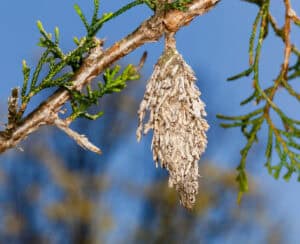
Identify and control bagworms before they damage your North Texas trees and shrubs this season.