

Fall lawn aeration in Tarrant County, Texas carries a strict timing rule that most homeowners miss. The warm-season grasses covering most North Texas lawns, Bermuda, St. Augustine, and Zoysia, need aeration while the soil is still active and warm. September is the last viable window. October is too late.
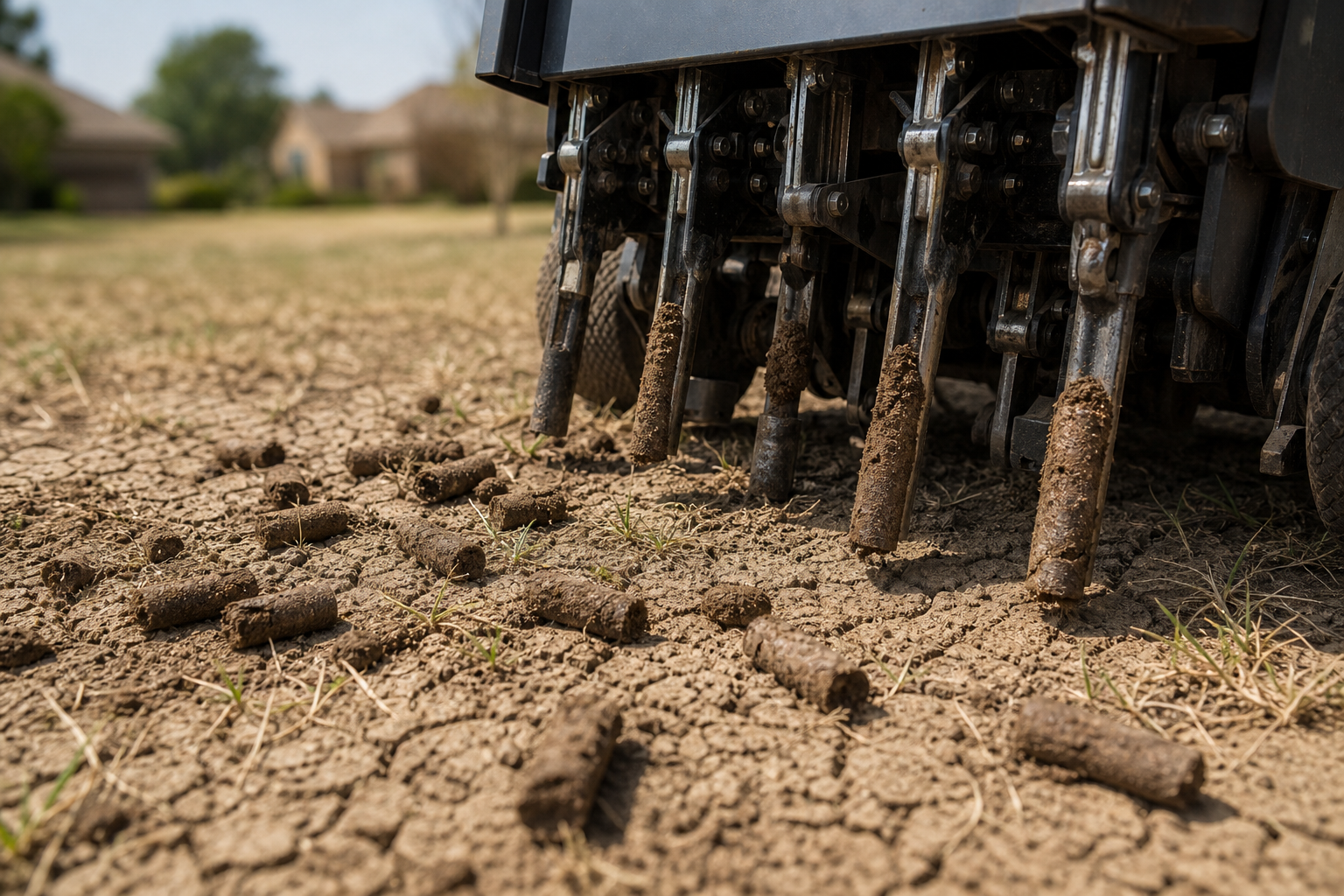
Core aeration removes plugs of soil roughly 2 to 3 inches deep and half an inch in diameter, pulled about 2 to 3 inches apart across the lawn surface. This opens the root zone to water, nutrients, and air in a way that spike aeration cannot match. Spike aeration compacts the surrounding soil rather than removing material.
Tarrant County clay soil compacts under foot traffic, irrigation cycles, and heat. By late summer, that compaction actively works against root growth. A September aeration relieves it at exactly the right time, with enough growing season left for the grass to recover before dormancy.
This post covers why fall aeration timing matters for warm-season grasses, how to read the signs of compaction in a North Texas lawn, what happens during core aeration, and what to do after the machine leaves your yard.
Why Tarrant County Lawns Need Aeration
Tarrant County soil is primarily clay-based and compacts under repeated weight and weather cycles. Compacted soil restricts root growth, reduces water infiltration, and limits how much fertilizer actually reaches the root zone.
Signs of compaction appear throughout the growing season. The lawn feels hard underfoot when dry. Bare patches form and refuse to fill in despite adequate water. Runners lie on top of the soil rather than growing into it. Thatch deeper than half an inch builds up on the surface.
Water sheeting off the lawn instead of soaking in is another strong signal. When that happens in Fort Worth or Arlington during summer irrigation, the grass is telling you the soil surface can no longer absorb at the rate you are applying water. Aeration restores that capacity.
Foot traffic from children and pets, compaction from heavy rains followed by heat, and the repeated expansion and contraction of clay as it wets and dries all accelerate compaction across the season. By September, most Tarrant County lawns have accumulated a full summer of that pressure.
When to Aerate Warm-Season Grasses in North Texas
The ideal aeration window for Bermuda, St. Augustine, and Zoysia is late May through June, when these grasses are actively growing and can recover quickly. September is the last viable window before dormancy approaches.
Why timing matters for warm-season grass recovery
Core aeration pulls holes in the soil surface. Those holes stay open for one to two weeks before they close and the plugs decompose. During that window, the grass needs to be actively growing to take advantage of the improved conditions.
Warm-season grasses in North Texas begin slowing down as fall arrives. The soil temperature threshold for active root growth is approximately 55 degrees Fahrenheit. In Tarrant County, soil temperatures stay above that threshold through September and typically into early October.
Aerating in early September gives the grass 4 to 6 weeks of active growth before the first frost, which in this area typically arrives in mid-November. That is enough recovery time. Aerating in October or November eliminates that buffer entirely.
The risk of aerating too late in fall
When aeration happens after a warm-season grass approaches dormancy, the open soil holes dry out without closing properly. Winter desiccation affects exposed soil much more aggressively than soil under a healthy grass surface. Those open holes also become ideal germination sites for winter annual weeds.
September aeration avoids both problems. The soil is still warm from summer, cooler air temperatures reduce stress on the grass during recovery, and enough active growth remains to seal the aeration holes before dormancy begins.
How Core Aeration Works
Core aeration uses a machine fitted with hollow tines that punch into the soil and pull out plugs. Each plug is approximately 2 to 3 inches long and half an inch in diameter. The machine spaces the pulls about 2 to 3 inches apart across the lawn surface.
The plugs are left on the lawn surface. They break down in one to two weeks, returning organic matter and nutrients to the soil. Raking them up removes that benefit entirely, so leave them in place.
Moist soil, not wet or muddy, gives the best results. Watering the lawn thoroughly the day before aeration allows the tines to penetrate more deeply and pull cleaner plugs. Saturated soil causes the machine to slip and muddy. Dry, hard soil stops the tines before they reach full depth.
Spike aeration, using a solid tine or a lawn roller fitted with spikes, does not remove material. It pushes soil aside, which compacts the surrounding area rather than relieving it. Core aeration consistently outperforms spike aeration for improving water infiltration and root zone conditions in Tarrant County clay.
What to Do After Lawn Aeration in Fall
The two weeks after aeration are the most productive window for improving soil conditions before dormancy. Fertilizer and soil amendments applied at this time reach the root zone directly through the open holes.
Fall fertilization after aeration
Apply fall fertilizer after aeration, not before. Nutrients reach the root zone far more effectively when the soil surface is open. For Bermuda and Zoysia lawns in Mansfield, Burleson, and Keller, a potassium-rich, slow-release formula supports cold hardiness going into dormancy.
Avoid fast-release nitrogen in fall. Fast-release nitrogen forces a flush of green growth that is highly vulnerable to early cold. Slow-release formulas deliver nutrients steadily over weeks rather than all at once.
Fall pre-emergent weed control timing
September and early October is the correct window for fall pre-emergent weed control in Tarrant County. This application targets winter annual weeds, annual bluegrass, henbit, and chickweed, all of which germinate when soil temperatures drop to the 55 to 65 degree range.
Pre-emergent works by preventing germination. It must be in the soil before seeds germinate, not after. Applying it immediately after aeration allows it to reach the soil where weed seeds sit. This is a different application from the spring pre-emergent that targets crabgrass in February and March.
Avoid heavy traffic for 2 to 4 weeks
New aeration holes need time to stabilize before foot traffic resumes. Keep children and pets off the lawn for at least two weeks after aeration if possible. Heavy traffic on freshly aerated soil can collapse the holes before they provide full benefit to the root zone.
Aeration and Moisture Management in North Texas
One overlooked benefit of fall aeration is how it interacts with moisture management as irrigation schedules decrease. As temperatures cool through September and October, lawns need less water. But the transition from summer irrigation levels to reduced fall levels can leave the root zone too dry if the soil cannot absorb and hold moisture efficiently.
Aeration improves water infiltration rate directly. After a summer of compaction in North Texas, water that used to sheet off the surface now moves into the root zone where it belongs. This makes every irrigation cycle more efficient during the transition period.
Homeowners in North Richland Hills and Euless often notice that a well-aerated fall lawn needs noticeably less supplemental water in October than it did before aeration. The soil's ability to hold available moisture improves significantly once the compaction layer is broken.
Core Aeration as Part of a Broader Lawn Health Program
Aeration works best as one step in a connected lawn care plan rather than an isolated event. The combination of aeration, fall fertilization, and pre-emergent weed control in September and early October sets Tarrant County lawns up for a healthier dormancy and a stronger spring green-up.
Trees Hurt Too's lawn care program integrates soil health work including aeration timing, fertilization, and moisture management across the full growing year. The moisture management service addresses soil water retention through the fall transition. The Full Service Lawn and Ornamental Package covers all eight service visits annually, including fall soil preparation.
The LawnStarter Texas aeration guide confirms the timing considerations for warm-season grasses in the state.
Lawn Aeration Service Area in Tarrant County
Trees Hurt Too Inc. provides lawn aeration and fall lawn care services across Tarrant County and surrounding communities. Service areas include Fort Worth, Arlington, Bedford, Euless, Hurst, Keller, Mansfield, Burleson, North Richland Hills, Colleyville, Southlake, Grapevine, and Grand Prairie.
Homeowners across these communities deal with the same Tarrant County clay soil and the same fall aeration timing challenges. A lawn that goes into dormancy with properly aerated, fertilized soil comes out of it in better condition in spring than one that spent winter compacted and nutrient-depleted.
Frequently Asked Questions About Fall Lawn Aeration in North Texas
Can I aerate my Bermuda lawn in October in Tarrant County?
October is too late for safe core aeration of warm-season grasses in Tarrant County. Bermuda, St. Augustine, and Zoysia need 4 to 6 weeks of active growth after aeration before dormancy. With first frost typically arriving in mid-November, October aeration leaves too little recovery time. Early September is the last viable window.
Should I water before lawn aeration?
Water the lawn thoroughly the day before aeration. Moist soil allows the tines to penetrate more deeply and pull cleaner plugs. Do not overwater to the point of muddy, soggy soil, which causes the machine to slip. Dry, hard soil prevents the tines from reaching their full depth.
What happens to the soil plugs left on the lawn after aeration?
Soil plugs break down in one to two weeks on the lawn surface. Leave them in place. They return organic matter and nutrients directly to the soil as they decompose. Raking them up removes this benefit. After two weeks, most plugs are no longer visible in the turf.
Is core aeration better than spike aeration for North Texas clay soil?
Core aeration consistently outperforms spike aeration in clay soil. Spike aeration pushes soil aside rather than removing it, which compacts the surrounding area. Core aeration removes material from the soil, creating real space for water, air, and roots. In Tarrant County clay, core aeration is the correct method.
Schedule Your Fall Lawn Aeration in Tarrant County
Trees Hurt Too Inc. has served Fort Worth and surrounding Tarrant County for over 28 years. Call or text to schedule a consultation.
Call: (972) 521-1552 | Text: (972) 521-1552 | treeshurttoo.com