

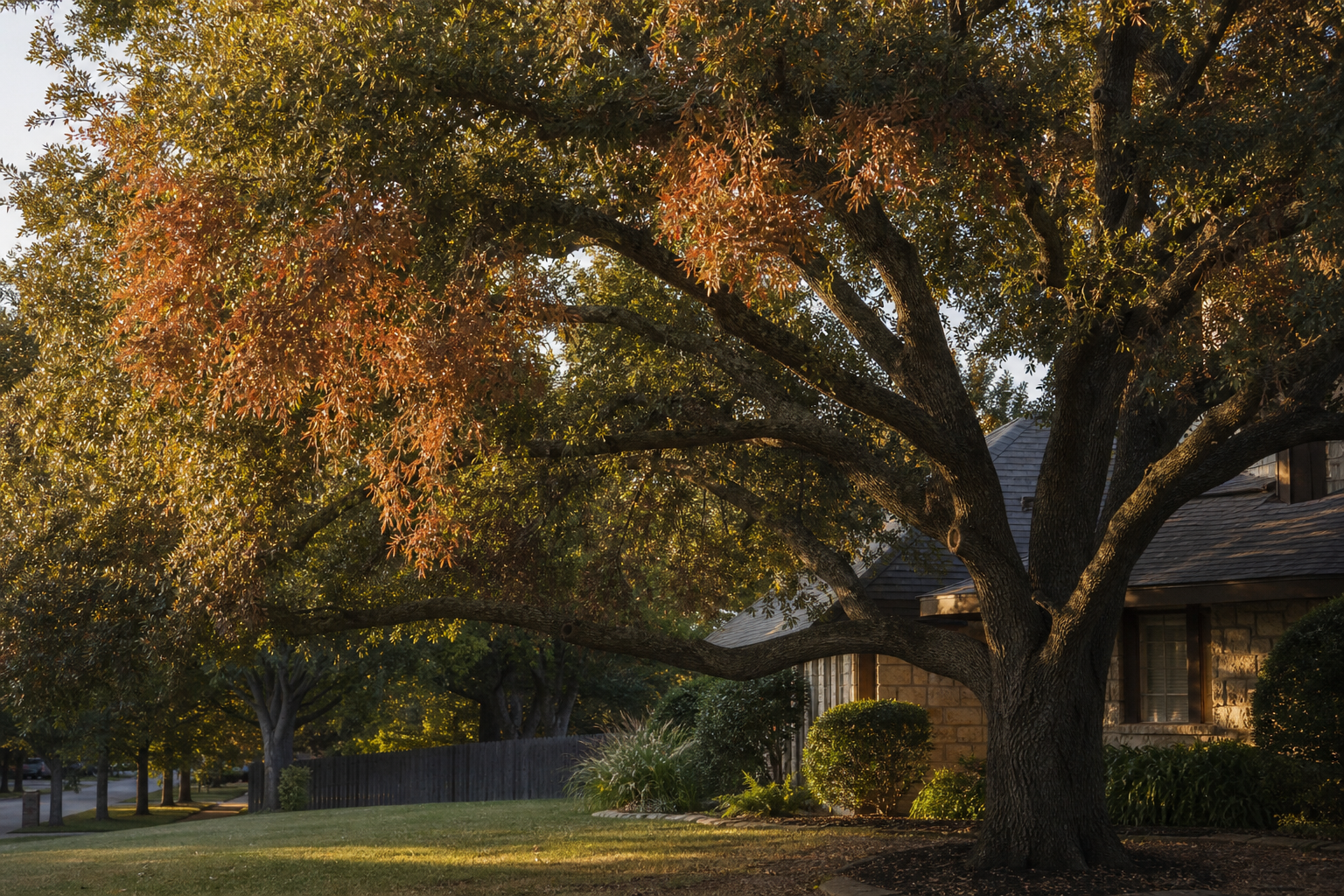
Oak leaf drop in fall in North Texas does not mean the same thing for every oak. Whether leaves falling from your tree signals a healthy seasonal cycle or a disease problem depends entirely on which species you have. Getting that distinction wrong can lead a homeowner to ignore a serious problem or panic over a completely normal process.
North Texas has two fundamentally different oak situations in fall. Deciduous oaks, including red oak, Shumard oak, water oak, post oak, and bur oak, drop their leaves in fall as a normal part of their dormancy cycle. October and November leaf drop on these species is expected and healthy. Texas live oaks behave very differently. Live oaks are semi-evergreen and do not drop leaves in fall as part of their normal cycle. Live oak leaf drop occurs in spring, not fall.
That means a live oak dropping significant numbers of leaves in September or October is not going through its normal cycle. It is under stress, responding to disease, or experiencing a root problem. Knowing the difference between these two situations guides every decision about whether and how to respond.
This post covers the normal fall and spring leaf patterns for North Texas oaks, the conditions that signal disease or stress, how to perform a basic branch test at home, and when to call an ISA Certified Arborist.
Do North Texas Oaks Drop Leaves in Fall?
Deciduous oaks in North Texas do drop leaves in fall, and that process is completely normal. Live oaks do not drop leaves in fall under normal circumstances, and significant fall leaf drop from a live oak signals a problem.
Red oaks, Shumard oaks, water oaks, post oaks, and bur oaks all follow a true deciduous cycle. As days shorten and temperatures cool through October and November, these trees pull nutrients back from their leaves, the foliage changes color, and leaves fall. Bare branches in late November on a red oak or Shumard oak in Fort Worth are exactly what a healthy tree looks like at that time of year.
Texas live oaks are a separate case entirely. Live oaks are semi-evergreen, meaning they hold their leaves through the winter and replace them in spring rather than dropping in fall. If a live oak on your property in Arlington, Southlake, or Keller is dropping leaves heavily in September or October, that is not part of its seasonal pattern.
What Is Live Oak Molting and When Does It Happen?
Live oak molting is the normal spring leaf replacement process where a live oak drops at least half of its prior-year leaves and grows a fresh set. This happens in spring, typically March through early May in North Texas, and can look alarming to homeowners who do not expect it.
How to tell if live oak leaf drop is the normal spring molt
The spring molt has clear identifying features. The tree drops older leaves from the previous year while simultaneously growing new ones. The timing falls in March through early May. Different trees on the same block may molt at slightly different times due to genetic variation. Within a month of the molt starting, new leaves are visible throughout the canopy.
To confirm a live oak is going through normal spring molting, pull down a branch and look for small new buds forming at the tips. Bend a branch tip gently. A pliable branch is a live branch. A branch tip that snaps easily is dead, which is a different problem entirely. This branch test from the Texas Trees Foundation provides a quick field confirmation that does not require professional equipment.
Leaves yellowing and then browning during the spring molt are normal. The tree is redirecting resources from old leaves to new growth. The color change is part of the process, not a sign of disease.
When Fall Live Oak Leaf Drop Is a Problem
Heavy leaf drop from a Texas live oak in September or October is not the spring molt. That molt happened months earlier. Fall leaf drop on a live oak points to one of several possible causes: extended summer drought stress, oak wilt, root rot, or hypoxylon canker.
Oak wilt symptoms in live oaks during fall
Oak wilt in live oaks produces characteristic symptoms that differ from the normal molt pattern. Leaves begin bronzing from the margins inward, starting at the outer edges and moving toward the leaf center. Leaves drop while they are still partially green, which does not happen in normal molting. The disease spreads through root grafts between adjacent live oaks, so nearby trees showing similar symptoms at the same time is a strong warning sign.
Oak wilt is one of the most destructive tree diseases in Texas. Fort Worth, Grapevine, and Colleyville homeowners with mature live oaks should treat unexplained fall leaf drop with urgency rather than assuming it will resolve on its own.
Hypoxylon canker following drought stress
Hypoxylon canker is a fungal disease that typically follows drought stress or other conditions that weaken the tree. The most recognizable sign is cracking bark with gray or orange-brown fungal mats visible under the peeling sections. General leaf drop and canopy thinning often accompany the bark symptoms.
This disease most commonly appears in trees that experienced significant drought stress, which describes many North Texas oaks after recent hot summers. A tree that came through a dry summer looking thin and stressed may show hypoxylon canker symptoms by fall.
Root rot and general decline
Root rot causes leaf drop in a less specific pattern than oak wilt or hypoxylon canker. The leaves yellow generally across the canopy rather than showing the marginal bronzing pattern associated with oak wilt. Decline is gradual and may have been progressing for more than one season before it becomes noticeable in fall leaf drop.
Normal Fall Leaf Drop in Deciduous North Texas Oaks
For deciduous oaks, fall leaf drop is healthy and expected. Red oaks, Shumard oaks, and water oaks throughout Fort Worth, Irving, and Grand Prairie follow this pattern every year. The normal signs are clear.
Normal deciduous oak fall leaf drop shows leaves changing color across the canopy in an even pattern. The change moves gradually from the outer canopy inward. Leaves drop progressively rather than all at once. New buds are visible on bare branches after the leaves fall, confirming the tree is alive and preparing for spring.
Abnormal fall leaf drop on a deciduous oak looks different. Leaves drop while still mostly green, without the gradual color change that precedes normal senescence. The drop is asymmetric, concentrated on one side of the canopy or on specific branches rather than distributed evenly. Bark symptoms, cracking, oozing, discoloration, or fungal growth, accompany the leaf drop.
Signs of Disease vs. Normal Fall Leaf Drop in North Texas Oaks
Both live oaks and deciduous oaks can show disease-related symptoms in fall, but the signals differ from normal seasonal behavior in specific ways.
Signs that indicate a disease or stress response rather than normal leaf drop include:
- Leaves dropping while still mostly green
- Marginal bronzing on live oak leaves moving inward from leaf edges
- Asymmetric drop concentrated on one branch or one side of the canopy
- Bark cracking, discoloration, oozing, or visible fungal growth
- Adjacent oaks showing similar symptoms at the same time
- Spring flagging earlier in the year, which is the appearance of dead branch tips in a live canopy
- The tree failing to leaf out normally the previous spring
Any one of these signs warrants a closer look. Multiple signs together indicate a problem that needs professional assessment.
When to Call an Arborist About Fall Oak Leaf Drop
A live oak dropping significant leaves in September or October always warrants a call. That is not normal behavior, and the conditions that cause it, oak wilt, root rot, and hypoxylon canker, are all serious and progressive.
For deciduous oaks, call an arborist when the drop pattern differs from previous years, when leaves are falling while still mostly green, when bark symptoms appear alongside the leaf drop, or when the tree did not fully recover to a normal canopy earlier in the growing season.
ISA Certified Arborists at Trees Hurt Too provide free on-site evaluations for homeowners in Fort Worth, Arlington, Keller, Southlake, Colleyville, Grapevine, Irving, and surrounding Tarrant County communities. Early diagnosis changes the outcome for trees with oak wilt or other progressive diseases. A tree assessed and treated in fall has better prospects than one left through winter without intervention.
The oak wilt treatment page covers the specific treatment approach for North Texas live oaks. The tree health diagnosis service handles evaluation for unknown decline. The North Texas tree disease identification guide provides additional detail on distinguishing between common diseases.
The Texas Trees Foundation resource on live oak leaf drop provides additional background on the distinction between normal molting and stress-related drop.
Protecting Your Oaks Heading Into Fall
Trees that enter fall in good health handle the seasonal transition and any additional stress better than trees that are already compromised. Fall fertilization, appropriate moisture management, and a professional health assessment before dormancy all support oak health through the winter period.
For live oaks in Fort Worth and surrounding Tarrant County, fall is the right time to schedule a health check before the trees go dormant. Conditions visible in September and October, when the tree is still in leaf, are easier to assess accurately than bare-branch conditions in December.
For homeowners with both live oaks and deciduous oaks on the same property, understanding that these trees follow completely different fall leaf patterns prevents misdiagnosis in both directions. The live oak holding its leaves while the red oak next to it drops every leaf is not a sign that one tree is sick. That is exactly what healthy behavior looks like for each species in North Texas.
Frequently Asked Questions About Oak Leaf Drop in Fall
Why is my live oak dropping leaves in September in North Texas?
Texas live oaks normally drop leaves in spring, not fall. September leaf drop from a live oak indicates stress or disease rather than a normal seasonal cycle. Common causes include summer drought stress, oak wilt, hypoxylon canker, and root rot. Any significant fall leaf drop from a live oak warrants evaluation by an ISA Certified Arborist.
What does normal fall leaf drop look like on a red oak in Fort Worth?
A healthy red oak drops leaves in October and November after a gradual color change across the canopy. Leaves turn yellow, orange, or brown progressively from the outer canopy inward before falling. New buds are visible on bare branches after the leaves have dropped, confirming the tree is healthy and preparing for spring.
How do I tell if my live oak is dead or just dormant after fall leaf drop?
Bend a branch tip gently. A pliable branch tip indicates a living branch. A branch tip that snaps easily is dead. Look for small green buds forming at branch tips, which confirm the tree is alive. If branch tips are brittle throughout the canopy and no buds are forming, contact an ISA Certified Arborist for a full evaluation.
Can oak wilt spread from a tree with fall leaf drop to neighboring oaks?
Yes. Oak wilt spreads through root grafts between adjacent live oaks. If one live oak is showing fall leaf drop with marginal bronzing and wilting green leaves, neighboring live oaks sharing a root system are at risk. Prompt professional assessment and treatment can prevent spread to connected trees.
Get a Free Fall Oak Health Evaluation in Tarrant County
Trees Hurt Too Inc. has served Fort Worth and surrounding Tarrant County for over 28 years. Call or text to schedule a consultation.
Call: (972) 521-1552 | Text: (972) 521-1552 | treeshurttoo.com