

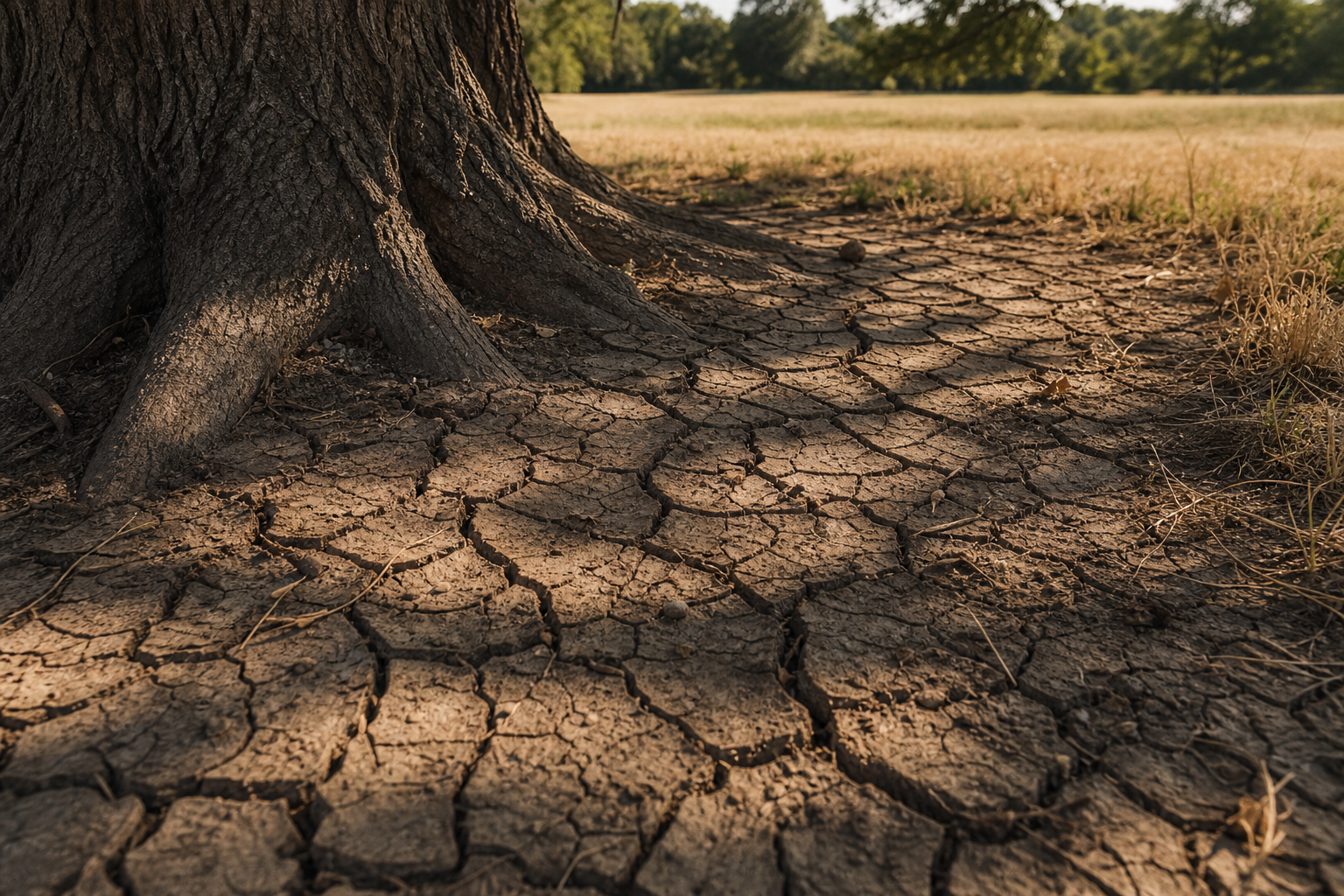
North Texas summers test trees in ways that are not always obvious from the surface. The soil cracks, the surface dries out, and the fine feeder roots that handle most water and nutrient uptake begin to die. Root zone moisture management for trees during a Texas summer addresses that problem directly, extending the time water stays available to roots between irrigation cycles.
Tarrant County clay soil loses moisture fast once surface cracks form in July and August heat. Those cracks divert applied water away from roots rather than directing it toward them. Trees growing near pavement, along south-facing walls, or in restricted root zones face the highest risk. This post explains how root zone moisture management works, when to apply it, and how it connects to the deeper health of your trees.
What Root Zone Moisture Management Does for Trees
Root zone moisture management reduces the rate at which water evaporates from soil, keeping moisture accessible to tree roots for longer periods between watering cycles. Standard irrigation or rainfall saturates the soil, but most of that moisture leaves as vapor before roots can absorb it. The right soil treatment captures that vapor and converts it back to liquid water at the root level.
The science behind this approach involves hygroscopic and humectant compounds that attach to plant root hairs. Once in place, these compounds attract subsurface moisture vapor and condense it back into liquid droplets that roots can use. The result is a significant reduction in evaporative loss from the soil profile.
The practical benefit for North Texas trees is clear. Trees in clay soil already face a drainage challenge: the soil holds water in wet conditions and then bakes hard in summer heat. Moisture management addresses the dry side of that cycle, bridging the gap between irrigation events during the hottest months.
Why North Texas Clay Soil Creates Chronic Moisture Stress
Tarrant County clay soil cracks when it dries. Those surface cracks create channels that direct applied water along the crack walls and away from the root zone where fine feeder roots live. A homeowner who runs an irrigation system in August may put water on the surface without any of it reaching the root hairs that actually absorb it.
Fine feeder roots are the workhorses of water and nutrient uptake. When soil dries to the point where these roots die back, the tree continues to stress even after rain or irrigation resumes. Root regrowth takes weeks. During that window, the tree cannot fully replace the water it loses through its leaves each day.
Soil nutrients compound the problem. When soil moisture drops, the nutrients already present in the soil become unavailable to roots. A tree can sit in nutrient-rich soil and still experience a deficiency because the water required to carry those nutrients into the root system is gone.
Trees in Fort Worth, Arlington, and Irving that grow near pavement or in compacted soil face the worst conditions. The urban heat island effect raises soil temperatures, roots cannot spread freely, and both moisture and nutrient stress build through July and August.
How Hydretain Works in the Tree Root Zone
Hydretain is a soil moisture management product that contains hygroscopic and humectant compounds. Applied into the root zone, these compounds attach directly to root hairs. They act as tiny water-attracting molecules, pulling subsurface moisture vapor, which is the gas form of water that normally evaporates and escapes, back into liquid droplets that roots can absorb.
Hydretain reduces watering frequency by up to 50 percent. Each application lasts up to 3 months. For North Texas trees entering the August stretch, a single application in late July or early August covers the most intense drought period through October.
How Do You Apply Hydretain to Trees?
Application method depends on tree size and access to the root zone. The key measurements are based on trunk diameter at breast height (DBH):
- Granular form: 1.5 to 2 pounds per inch of trunk DBH; broadcast from the base of the tree to just past the drip line; water into the root zone within 5 days of application
- Liquid form: 4 to 8 fluid ounces per inch of trunk DBH; diluted before application; delivered by spray, soil injection starting 1 to 3 feet from the trunk, or drip irrigation
Soil injection delivery places the product directly into the root zone at depth, bypassing cracked surface soil entirely. This method is particularly effective for large trees and for trees in compacted soil where surface application may not penetrate reliably.
Visit the Hydretain official resource page for additional product data and application guidance.
When to Apply Root Zone Moisture Management in Texas Summer
Timing matters for getting full benefit from moisture management applications. A late spring or early summer application in May or June provides the most coverage, protecting trees through the entire July-August peak stress window. The product takes a few days to move into the root zone after watering in, so apply before heat stress becomes visible in the canopy.
An August application still delivers value. Applying now extends protection through October, covering the second wave of heat stress that follows summer drought and the transition into fall. Trees that received no moisture management earlier in the season benefit from an August application even if it catches part of the season rather than the whole window.
Late spring combined with an August application gives trees the best continuous coverage through the full Texas summer stress period.
Which Trees Benefit Most from Moisture Management
Any tree in the North Texas summer benefits from better soil moisture retention. Some situations make moisture management especially valuable:
- Trees growing within 10 feet of pavement or concrete, where soil temperatures are highest
- Trees on south- or west-facing exposures that receive direct afternoon sun through summer
- Trees in restricted root zones, such as between a sidewalk and a building foundation
- Trees that have shown visible stress signs in prior summers, including early leaf drop, wilting, or canopy dieback
- Newly planted trees in their first two summers, before the root system is established
- Trees in Mansfield, Grand Prairie, and Burleson neighborhoods where irrigation systems may not reach the full drip line
Combining Moisture Management with Deep Root Feeding
Moisture management addresses one side of summer tree stress. The other side is nutrition. When trees cannot access water reliably, they also cannot move nutrients from the soil into their tissue. Treating both problems together gives trees a stronger foundation for surviving the summer and recovering in fall.
Deep root feeding delivers carbon-based nutrients and mycorrhizal fungi directly into the root zone. Mycorrhizal fungi expand the effective surface area of tree roots by up to 700 times, creating a vastly larger network for capturing both water and nutrients. A tree with a healthy mycorrhizal network absorbs more from every unit of available moisture.
Combining a moisture management application with a deep root feeding program means the tree has both more available water and a greater capacity to absorb it. These two treatments work together, not as alternatives.
Learn more about deep root feeding for Tarrant County trees and our soil moisture management services.
Signs Your Trees Need Moisture Management Now
Some trees show visible stress before roots die back significantly. Others show no obvious signs until damage has already occurred. Watch for these indicators in your North Texas trees during July and August:
- Leaves curling or wilting during afternoon hours, even after morning irrigation
- Early leaf drop, with healthy-looking leaves falling before September
- Leaves turning pale green or yellow without an obvious disease pattern
- Soil around the tree cracking in a visible network of lines that extends out to the drip line
- A tree that looked fine in May now showing thinning in parts of the canopy
Any of these signs warrants a closer look at root zone conditions. An ISA Certified Arborist can assess soil moisture, root health, and canopy condition together and determine whether moisture management alone addresses the problem or whether additional treatment is needed.
Root Zone Moisture Management FAQ
Does root zone moisture management replace watering?
No. Root zone moisture management reduces how often you need to water and makes each watering event more effective. Trees still need irrigation during Texas summer. The treatment captures subsurface moisture vapor that would otherwise escape, extending the period between waterings by up to 50 percent per Hydretain application data.
How long does one Hydretain application last?
Each application lasts up to 3 months. For North Texas trees, a May application covers the season through August. An August application extends through October and into the early fall transition. The product must be watered into the root zone within 5 days of granular application to activate correctly.
Can moisture management help a tree that already shows drought stress?
Yes. A moisture management treatment applied to a stressed tree helps halt further root dieback by improving water availability in the existing root zone. Recovery still requires time, since fine feeder roots need weeks to regrow. Combining moisture management with a root assessment and, if appropriate, a deep root feeding gives the tree the best conditions for recovery.
Trees Hurt Too Serves North Texas Through the Full Summer
Root zone moisture management is one of the services Trees Hurt Too Inc. provides across Fort Worth, Arlington, Keller, North Richland Hills, Mansfield, Burleson, Grand Prairie, Irving, and communities throughout Tarrant County. Our ISA Certified Arborists and Licensed Plant Health Care Professionals assess each tree's specific situation before recommending treatment. No blanket protocols.
An on-site consultation covers soil conditions, canopy health, and root zone access so the treatment plan fits your trees and your property. We have served North Texas since 1998.
Protect Your Trees from Texas Summer Moisture Stress
Trees Hurt Too Inc. has served Fort Worth and surrounding Tarrant County for over 28 years. Call or text to schedule a consultation.
Call: (972) 521-1552 | Text: (972) 521-1552 | treeshurttoo.com