

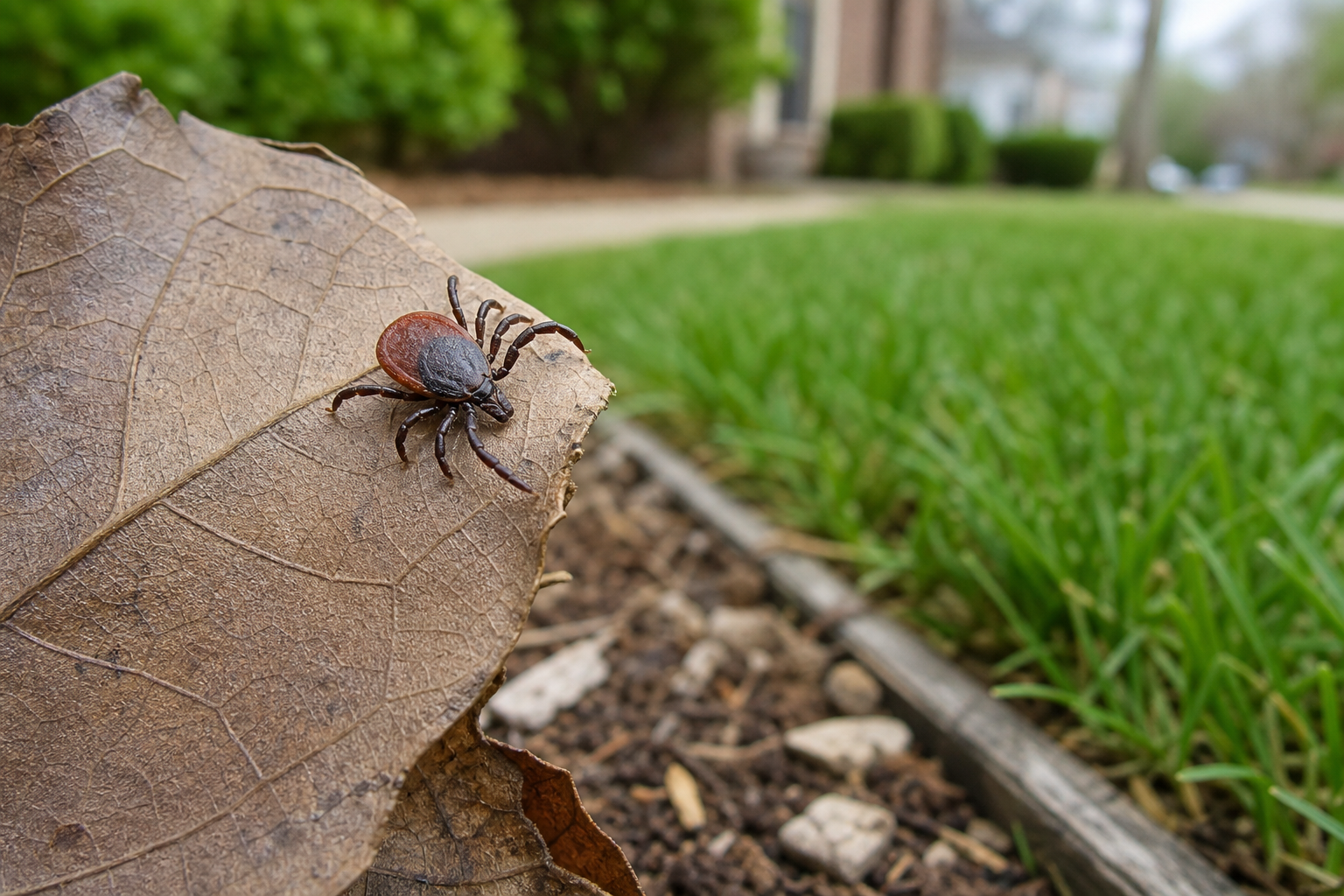
Tick season in North Texas does not end when summer does. Ticks remain active through September and October across Tarrant County, and the mild Texas climate keeps them viable well past the point when most homeowners stop thinking about them. September is still very much tick season in Fort Worth, Arlington, and surrounding communities.
According to Dr. Michael Allen, director of UNT Health Science Center's tick-borne disease research laboratory, higher-than-usual tick populations in recent years connect to mild winters and relatively wet springs. Ticks complete a two-year life cycle. Two consecutive mild winters can produce a larger-than-normal population in the following season. That cycle describes conditions North Texas has experienced in recent years.
The drop in awareness that comes with cooler fall weather creates real risk. Families in Keller, Mansfield, and Colleyville spend more time in their yards in September and October when temperatures are comfortable, exactly when ticks are still active in the same spaces.
This post covers which tick species are active in North Texas, where ticks hide in yards, which diseases they carry, how to remove a tick correctly, and how yard perimeter treatments reduce tick pressure through fall.
Are Ticks Still Active in North Texas in the Fall?
Ticks in North Texas remain active through September and into October. Tick activity peaks April through September, but in Texas's climate, ticks continue surviving and seeking hosts until temperatures cool consistently enough to reduce their activity. September is a high-risk month, not a wind-down month.
The fall season in North Texas is particularly relevant because outdoor activity increases as summer heat fades. Families who stayed inside through July and August begin spending evenings and weekends in their yards in September. Ticks do not know the season changed on a calendar. They respond to temperature and host availability, and both remain favorable through most of fall in Tarrant County.
Tick populations can vary significantly from year to year based on the previous winter's severity. Mild winters allow more ticks to survive through the dormant period and emerge in greater numbers. This pattern means a year following two mild winters can bring noticeably heavier tick pressure than previous years in the same yard.
What Tick Species Live in North Texas?
Three tick species are present in North Texas yards and natural areas, each with different behaviors and disease associations.
The American dog tick is the most common tick species in Texas. Found in grassy and wooded areas throughout Tarrant County, it is a generalist feeder that attacks dogs, wildlife, and humans. The lone star tick is the most aggressive biter in Texas and is abundant throughout North Texas. Its aggressive host-seeking behavior makes it the species most likely to be encountered during fall outdoor activities in Burleson, Euless, and Southlake.
The black-legged tick, also called the deer tick, is less common in North Texas than in eastern Texas but is present in the DFW area. This species is associated with Lyme disease transmission and warrants attention even though it is not the dominant species here.
Where Do Ticks Hide in North Texas Yards?
Ticks concentrate in specific microenvironments within yards rather than spreading uniformly across open lawn. Understanding their preferred habitat is the first step in reducing exposure.
The edge zone where maintained lawn meets wooded areas, brush, or natural vegetation is the highest-risk location in any yard. Ticks move from their wildlife hosts into the grass along these transition zones and wait on vegetation for a passing human or pet host. Properties in Keller, Colleyville, and Southlake that back up to natural areas or creek corridors carry higher tick pressure along those back edges.
Additional tick habitat includes:
- Under tree canopies where leaf litter accumulates and stays moist
- Along fence lines with adjacent natural vegetation
- Shaded areas with dense ground cover, especially where soil stays moist
- Wood piles and brush piles near structures
- Areas with heavy deer, raccoon, or bird activity, since wildlife carries ticks into yards
Open, sunny, well-maintained lawn areas carry far less tick risk than the shaded, edge, and litter zones described above. Ticks do not survive well in dry, exposed conditions.
What Diseases Do North Texas Ticks Carry?
Several tick-borne diseases occur in North Texas, with varying levels of risk depending on the species involved.
Rocky Mountain spotted fever is the most common tick-borne illness in Texas. Caused by the bacterium Rickettsia rickettsii, it produces fever, severe headache, and a characteristic rash. Despite its name, it occurs throughout the southern United States and is well-established in North Texas. Early treatment with antibiotics is effective, but delayed treatment carries serious consequences.
Ehrlichiosis and anaplasmosis are bacterial infections transmitted by lone star ticks and black-legged ticks. Both produce flu-like symptoms including fever, muscle aches, and fatigue. These diseases occur regularly in North Texas and are reportable to the Texas Department of State Health Services.
Lyme disease is not endemic in Texas, but travelers can bring infected ticks back from other regions where Lyme is more prevalent. The symptoms overlap with other tick-borne illnesses, so any flu-like illness following tick exposure warrants prompt medical attention regardless of where the tick may have come from.
A tick must typically be attached for 24 to 48 hours before it can transmit most pathogens. Prompt removal is one of the most effective disease prevention steps available to homeowners and their families.
How to Remove a Tick Safely
Proper tick removal reduces the risk of pathogen transmission and prevents additional fluid injection from a mishandled tick. The technique matters.
- Use fine-point tweezers. Grasp the tick as close to the skin surface as possible, at the head rather than the body.
- Pull upward with steady, even pressure. Do not twist, jerk, or rotate the tick during removal.
- Do not crush the tick body during removal. Crushing injects additional fluid and increases transmission risk.
- After removal, clean the bite site thoroughly with rubbing alcohol or soap and water.
- Save the tick in a sealed container or photograph it for identification purposes.
- Monitor for fever, rash, or flu-like symptoms for 2 to 4 weeks after the bite.
Texas DSHS and the UNT Health Science Center laboratory both offer tick identification and testing services. If symptoms develop after a tick bite, contact a physician and mention the tick exposure and timing. Free tick testing is available through the Texas DSHS program. The Texas DSHS tick-borne disease resource provides current information on local disease prevalence and reporting.
How to Protect Your Yard from Ticks in Fall
Yard management and perimeter treatments together reduce tick pressure substantially. No single approach eliminates all risk, but combining habitat modification with a treatment program addresses the problem from multiple angles.
Habitat modifications that reduce tick risk in North Texas yards include:
- Reduce leaf litter accumulation near structures and in lawn areas
- Remove brush piles and wood stacks within several feet of the home
- Create a barrier of wood chips or gravel between wooded areas and the maintained lawn, approximately 3 feet wide
- Reduce wildlife harborage near the home since deer, rodents, and birds carry ticks into the yard
A professional flea and tick perimeter treatment applied to the yard significantly reduces tick populations in the treated zone. Trees Hurt Too offers flea and tick yard treatments as part of its pest control services for homeowners in Fort Worth, Arlington, Mansfield, Burleson, Euless, and surrounding Tarrant County communities.
Fall is an important application window because tick pressure remains high through September and October. A treatment applied in September protects yards through the remaining weeks of active tick season and reduces the overwintering population that will emerge in spring.
The flea and tick control service page details the treatment approach. The pest control service overview covers how these services connect to a broader yard protection program. For homeowners dealing with multiple yard pests, the lawn pests page provides a broader picture of seasonal pest pressure in Tarrant County.
Personal Protection from Ticks Outdoors
Personal protection measures work alongside yard treatment to reduce the risk of tick bites during outdoor activities in fall.
DEET-based repellents provide effective protection against ticks using the same application approach as mosquito prevention. Apply to exposed skin before spending time in high-risk areas. Permethrin-treated clothing provides a different layer of protection: permethrin kills ticks on contact, before they reach skin. Treating outdoor clothing with permethrin and allowing it to dry before wearing provides durable protection through multiple washes.
Tuck pants into socks when walking in areas with tall vegetation, leaf litter, or brush edges. After any outdoor activity in a potentially tick-prone area, conduct a full-body check including the scalp, behind the ears, armpits, and behind the knees. A thorough check performed within a few hours of exposure catches most ticks before they attach long enough to transmit disease.
Tick Control Services Across Tarrant County
Trees Hurt Too serves homeowners across Fort Worth, Arlington, Keller, Mansfield, Burleson, Colleyville, Southlake, Euless, and surrounding Tarrant County communities with yard pest control services including flea and tick treatments. Protecting your yard through fall keeps tick pressure lower heading into the following spring season as well.
Scheduling a fall tick treatment while outdoor activity is still high and tick populations are still active in September and October gives your yard the most benefit. The treatment window that covers the remaining warm weeks of fall is the right time to act before tick activity slows with the first sustained cold.
Frequently Asked Questions About Ticks in North Texas in Fall
When does tick season end in North Texas?
Tick season in North Texas does not end with summer. Ticks remain active through September and October in Tarrant County. Activity slows once temperatures cool consistently, but September is still a high-risk month. Homeowners should maintain tick awareness and yard protection through the end of October in Fort Worth and surrounding communities.
What is the most aggressive tick species in North Texas?
The lone star tick is the most aggressive biter in North Texas and is abundant throughout Tarrant County. It actively seeks hosts rather than waiting passively on vegetation. The lone star tick transmits ehrlichiosis and anaplasmosis and is the species most commonly encountered during fall outdoor activities in North Texas.
How long does a tick need to be attached to transmit disease?
Most tick-borne pathogens require the tick to be attached for 24 to 48 hours before transmission occurs. This is why prompt removal is so important. Finding and removing a tick within the first few hours of attachment significantly reduces disease transmission risk for most tick-borne illnesses common in North Texas.
Schedule a Fall Tick Treatment for Your Tarrant County Yard
Trees Hurt Too Inc. has served Fort Worth and surrounding Tarrant County for over 28 years. Call or text to schedule a consultation.
Call: (972) 521-1552 | Text: (972) 521-1552 | treeshurttoo.com